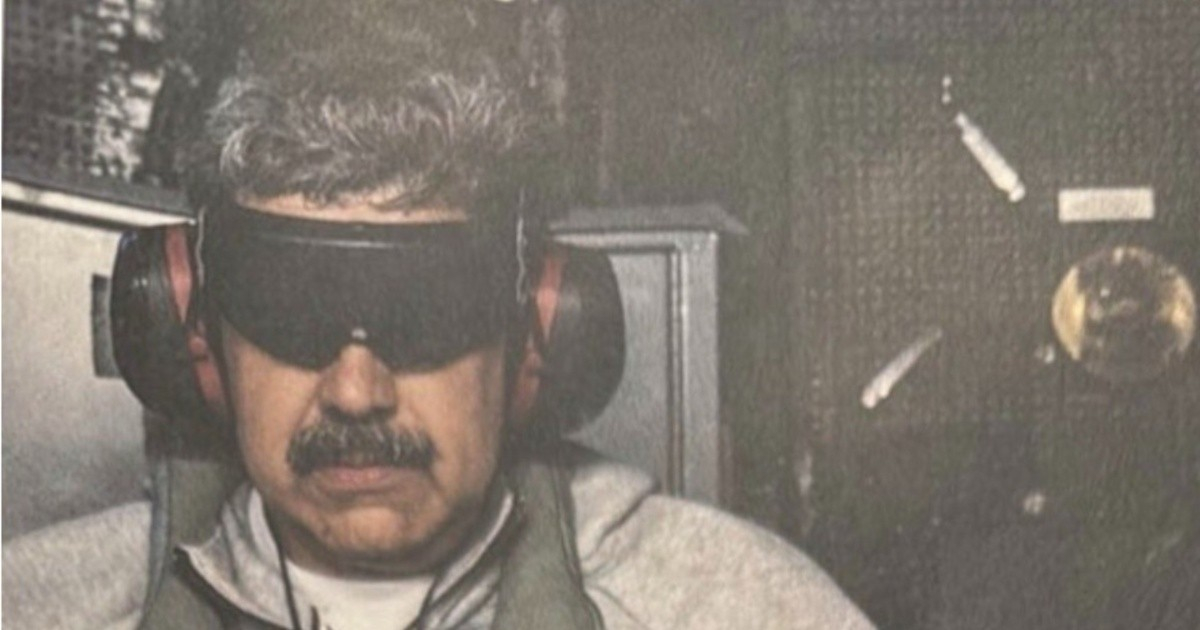
In a covert mission lasting nearly ten months, the 22nd Marine Expeditionary Unit of the United States operated in the Caribbean, culminating in the capture of Nicolás Maduro on January 3rd. This revelation comes from a report by ABC, based on an interview with the operation's commander at the Pentagon.
Colonel Thomas "Banshee" Trimble, who led the unit, detailed what he described as an "unprecedented deployment in the Americas," which included combat missions in Haiti, the interception of sanctioned oil tankers, and ultimately securing the U.S. embassy in Caracas.
Unexpected Orders Redirect the Mission
The mission took an unexpected turn when the unit, initially headed from Norfolk to Europe and the Middle East, was abruptly redirected southward. "When we were instructed to head south, we discarded eight and a half months of planning," Trimble explained.
The force, which comprised approximately 2,200 Marines, including infantry, aircraft, and special forces, operated from the USS Iwo Jima, a massive amphibious assault ship over 250 meters long, serving as their floating military base.
Initial Engagements in Haiti
The complete amphibious group, including the USS San Antonio and the USS Fort Lauderdale, totaled around 4,500 military personnel. Their first assignment came quickly: to bolster the U.S. embassy in Port-au-Prince, Haiti, where the Marines faced armed gangs controlling much of the capital.
As described by Colonel Trimble, there were "multiple violent incidents" where the Marines "came under fire and returned fire," although they suffered no casualties. "We fortified our positions and were well-prepared to understand the rules of engagement," Trimble stated.
Combating Narcoterrorism and Sending a Message
Simultaneously, the unit was involved in Operation Southern Spear, expanded formally on November 13, 2025, by Secretary of Defense Pete Hegseth to combat narcoterrorism in the Caribbean and intercept sanctioned oil tankers linked to the Venezuelan regime.
As a show of force, the unit conducted amphibious landing exercises in Puerto Rico, capable of deploying up to 1,000 Marines in a single day, sending a clear signal to Caracas.
Culmination: Operation Absolute Resolve
The mission reached its climax in the early hours of January 3, 2026, when Operation Absolute Resolve successfully captured Maduro and his wife Cilia Flores in a fortified bunker in Caracas.
The raid, executed by the elite Delta Force with CIA support, commenced at 2:10 a.m. and lasted roughly two and a half hours. Seven U.S. military personnel were injured, while 24 Venezuelan security officials and 32 Cuban military and police officers, part of Maduro's protective ring, were killed.
Both Maduro and Flores were transported to New York to face narcoterrorism charges in the Southern District of the city. The total cost of the deployment was estimated at around $3 billion, with daily expenses peaking at $20 million.
Trimble encapsulated the operation's rationale: "This was in defense of the homeland. We were operating in America's backyard."
On March 14, the U.S. flag was raised at the embassy in Caracas for the first time in seven years, marking the conclusion of nearly a year of military preparations in the Caribbean.
Insights into the Operation to Capture Maduro
What was the primary objective of the U.S. Marines' operation in the Caribbean?
The main goal was to capture Nicolás Maduro and secure the U.S. embassy in Caracas after a series of missions, including combating narcoterrorism and intercepting sanctioned oil tankers.
How did the U.S. Marines manage to capture Maduro?
Maduro was captured during Operation Absolute Resolve, a raid executed by Delta Force with CIA support, which took place in a fortified bunker in Caracas.
What challenges did the U.S. Marines face during the operation?
The Marines encountered armed gangs in Haiti and had to engage in combat, but they managed to fortify their positions and conduct their operations without suffering any casualties.