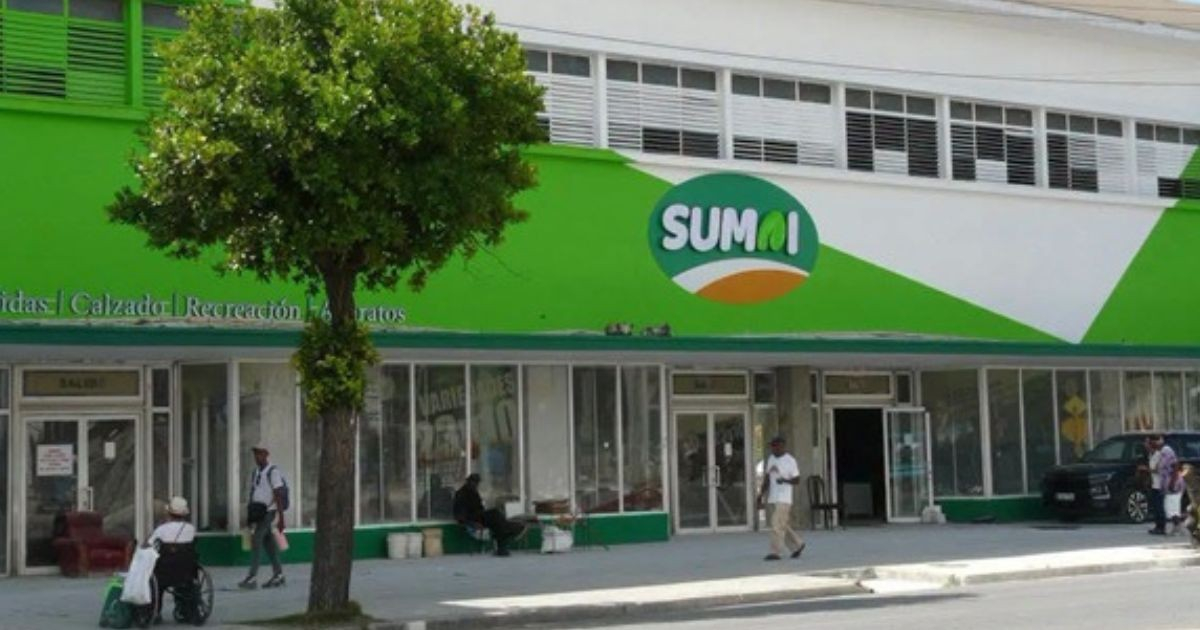
The joint venture company, SUMAI S.A., a pioneering collaboration between Cuba and China, is gearing up to launch a retail outlet in the bustling Vedado district of Havana. This establishment, located at the intersection of 23 and 10, will offer an array of products from solar panels to food items, all exclusively priced in U.S. dollars.
Although the company has yet to announce an official opening date, its executives confidently state that the project is progressing steadily.
Officially introduced in January 2025, SUMAI S.A. is a collaboration between the Cuban firm ALBUS S.A. and the Chinese company Hangzhou Iunke Industrial Development Co., Ltd. This partnership is part of the Latin America Investment and Trade Platform (PICLA), a joint Cuba-China initiative under the Belt and Road Initiative.
Eimy Iturralde, SUMAI S.A.'s commercial director, explained that the company was established in response to the regime's policy of opening wholesale and retail trade to foreign investment, approved in October 2022. The aim is to provide "a more extensive, varied, and competitive offering."
Comprehensive Product Range in Vedado
The Vedado location will cater to both wholesale and retail customers, featuring a catalog that includes renewable energy equipment, construction materials, hardware, appliances, food, household supplies, and school materials.
SUMAI S.A. has been granted permission to operate solely in U.S. dollars, accepting payments in cash or through authorized cards in the country, with special terms for wholesale buyers.
Initial Success and Expansion Plans
Before debuting in Havana, SUMAI conducted a trial phase in Camagüey starting December 31, 2025. The test run garnered significant public interest, especially for its sale of 590-watt monocrystalline solar panels with a maximum efficiency of 23.2%, amid the island's severe electrical crisis.
This energy crisis, marked by a generation deficit exceeding 2,000 MW and power outages lasting over twenty hours daily by the end of 2025, makes the offering of energy solutions one of the most sought-after products for Cubans with access to foreign currency.
Political Significance and Future Prospects
SUMAI's arrival in Vedado, one of Havana's most populous and prominent neighborhoods, extends the reach of an initiative that the regime touts as progress. However, in reality, it remains accessible only to those with access to U.S. dollars, a minority in a nation where the average monthly salary does not exceed 20 dollars.
The company was officially established in the presence of the Minister of Internal Trade, Betsy Díaz Velázquez, and the Chinese ambassador to Cuba, Hua Xin, highlighting the political significance the regime places on this alliance with Beijing.
As part of its expansion strategy, SUMAI plans to establish a network of stores across several provinces, with planned locations in Havana, Camagüey, Matanzas, and Pinar del Río. Meanwhile, in 2026, the PICLA platform has already extended operations to Holguín.
Understanding SUMAI S.A.'s Impact in Cuba
What is the primary aim of SUMAI S.A. in Cuba?
SUMAI S.A. aims to offer a broader, more varied, and competitive range of products by opening Cuba's wholesale and retail markets to foreign investment.
Why is SUMAI S.A.'s operation significant for Cubans?
The company provides essential energy solutions amidst Cuba's severe power crisis, but its products are only accessible to those with U.S. dollars, posing challenges for the average Cuban citizen.
How does SUMAI S.A. plan to expand in Cuba?
SUMAI S.A. plans to open stores in multiple provinces, including Havana, Camagüey, Matanzas, and Pinar del Río, with operations already extending to Holguín by 2026.