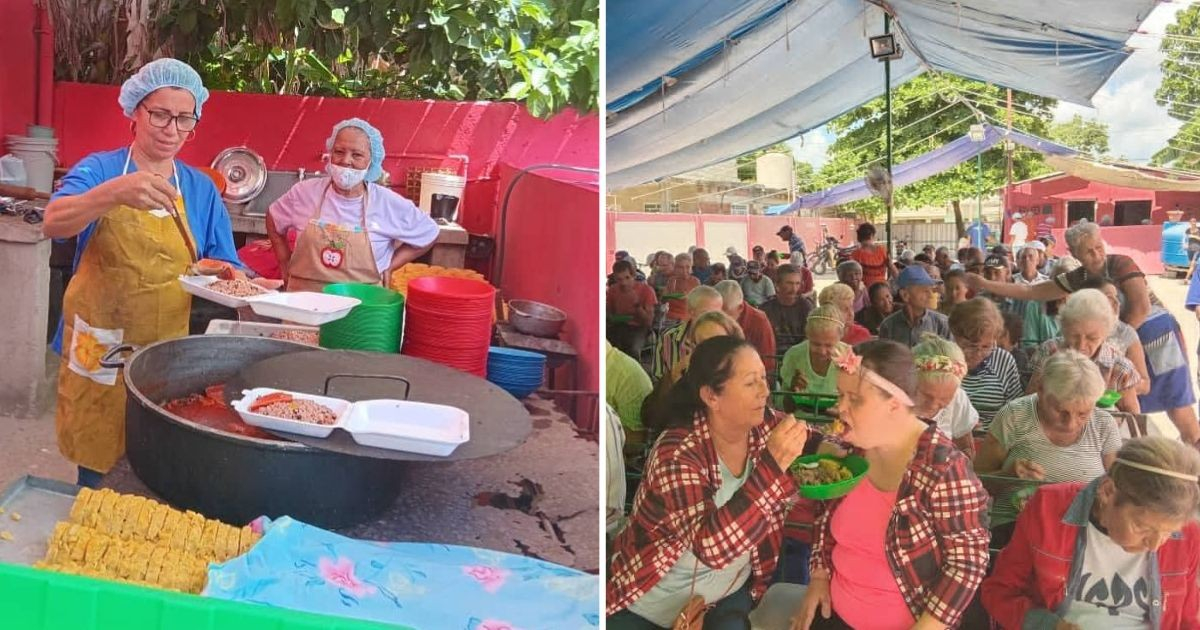
The Viento Recio Ministry in Las Tunas has provided meals to 190 vulnerable individuals and prepared extra portions in foam containers for those living on the streets, as shared by Apostle Mayim Jorge, the church's leader, on Facebook.
"Today, 190 people had lunch, and those foam containers are meant for the helpless, needy, and vulnerable on the streets, those who are overlooked," the pastor wrote.
This meal service was added to the breakfasts that the church served on Monday and Tuesday of that week to 140 individuals, illustrating the ever-expanding scope of this operation.
A team of volunteers rises at four in the morning to prepare meals for the elderly, children, and people with mobility issues who seek assistance from the ministry.
Mayim Jorge acknowledged the increasing challenge of maintaining this effort: "Every day, it becomes more difficult to sustain this. The products are more expensive, scarcer, and practically, with each gathering, the number of diners grows."
Expanding Efforts Across the Region
The project extends beyond a single location. On June 24, the same pastor reported that they had fed over 400 individuals in need just at the Casa de Restauración church in Las Tunas, with pastors at other congregations within the network providing meals to an additional 200 people.
This initiative has spread across nearly all churches in the apostolic network, including those outside the city, such as the one led by Pastor Lorenzo Rosales and his wife Maridiglenis in Palma Soriano.
"There is real hunger out there. Look at those faces. We are helping and providing for a famished generation," Mayim Jorge stated as he shared images from the day's efforts.
Confronting a Widespread Food Crisis
This humanitarian endeavor takes place amid an unprecedented food crisis. According to 2026 data, 96.91% of Cubans struggle to access food, and 33.9% of households reported at least one member went to bed hungry in the 30 days preceding the survey.
In the face of this collapse, churches have become the primary food assistance network on the island, filling the void left by the state in community dining facilities for the elderly, children, and homeless individuals.
In May 2026, the UN issued a humanitarian appeal for $94 million to assist nearly two million people in Cuba, with a funding shortfall exceeding $60 million.
Government Obstacles to Aid Efforts
Rather than facilitating this aid, the regime has obstructed it. In June, the Cuban government banned a breakfast program that the same church was providing to pregnant women at a maternity home in Las Tunas, demanding that permission be sought from the Communist Party of Cuba for each food delivery.
Mayim Jorge refused any agreement with the authorities and strongly condemned the situation: "The pregnant women had never had milk, cheese, or ham. It's unacceptable. That's how they are, neither eating nor letting others eat."
Despite these pressures, the pastor reaffirmed the congregation's commitment: "We have chosen to be channels of blessing during this time."
Understanding the Food Crisis in Cuba
What role do churches play in Cuba's food crisis?
Churches have become the main network for food assistance, stepping in where the state has failed to provide for the elderly, children, and homeless individuals.
How has the Cuban government responded to church-led aid programs?
The government has obstructed aid efforts, such as banning food programs for pregnant women and requiring permission from the Communist Party for food deliveries.
What challenges do Cuban churches face in providing food assistance?
Churches struggle with rising costs and scarcity of products, alongside an increasing demand as more individuals seek their help.