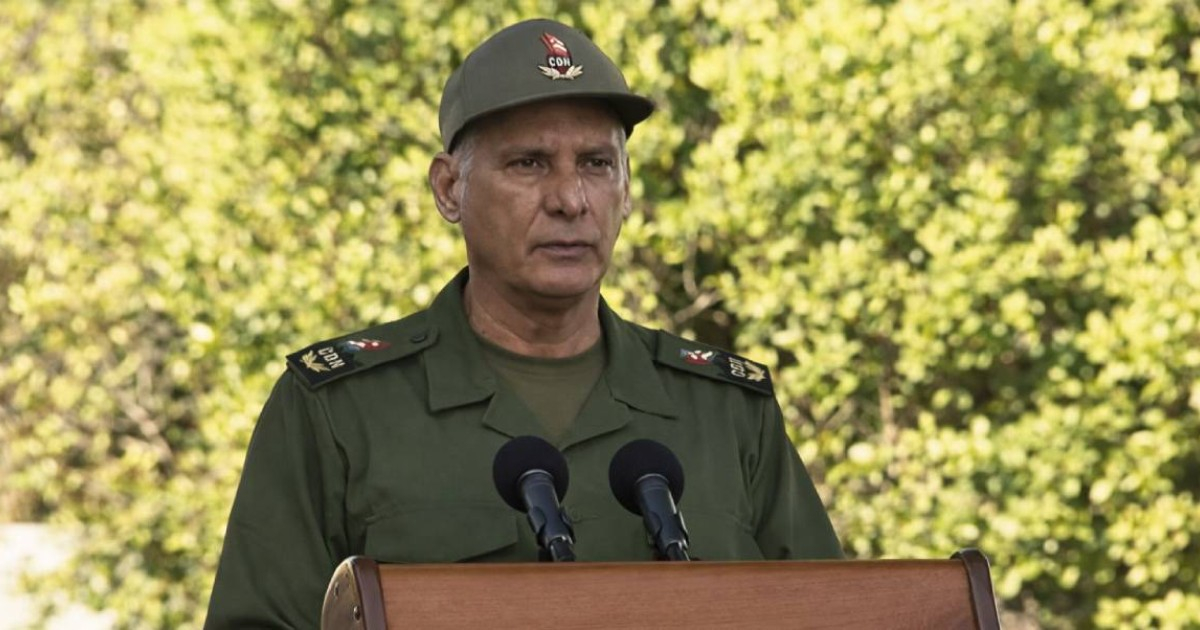
In a pointed response to President Donald Trump's recent remarks, Cuban leader Miguel Díaz-Canel declared on Thursday that Cuba is prepared to defend its sovereignty "to the last drop of blood." This declaration was made during an exclusive interview with journalist Yalda Hakim from the British channel Sky News, recorded at the Cuban Presidential headquarters in Havana.
Díaz-Canel's comments were a direct answer to Trump's statements made the previous day in North Dakota, where the U.S. president boldly stated that Cuba is "finally coming into our orbit" after many decades.
The Cuban Regime's Stance on Potential Military Action
When questioned by Hakim about the seriousness with which Cuba takes the possibility of military action—especially considering Trump's past actions against Venezuela and Iran—Díaz-Canel was unequivocal: "We are ready to fight to the last drop of blood to protect our rights, independence, sovereignty, and achievements."
Before making this firm declaration, Díaz-Canel portrayed Cuba as a peaceful nation, insisting, "We are a country of peace. We pose no threat to anyone. We extend significant solidarity globally. Cuba is not a country in conflict. We are not a colony. We will not surrender our sovereignty nor our independence."
Escalating Tensions and Accusations Against the U.S.
However, the Cuban president's tone hardened when addressing the pressure from Washington: "The threats, the continuous rhetoric regarding aggression against our country by the U.S. government, and the almost daily expressions as part of a strategy of media intoxication and psychological warfare to intimidate us and destabilize our society, are an outrage and an affront to our people's dignity."
Díaz-Canel went further, accusing the Trump administration of deceit, stating, "I believe the current U.S. government representatives have been spreading many lies. They have manipulated international public opinion significantly."
Possibility of Dialogue Amid Rising Tensions
Despite the confrontational language, Díaz-Canel hinted at the potential for dialogue, although he noted Cuba's trust in Washington remains low following Trump's actions in Venezuela and Iran.
This interview comes at a time of unprecedented tension between the two nations in decades. Since January 2026, the Trump administration has imposed over 240 sanctions against the Cuban regime, including personal sanctions on Díaz-Canel, his wife Lis Cuesta Peraza, and Colonel Alejandro Castro Espín on June 4.
Military Movements and International Reactions
On the military front, the USS Nimitz aircraft carrier was deployed in the Caribbean on May 20 as part of Operation Southern Seas 2026, with Politico reporting that the Pentagon has troops and weapons ready, awaiting a presidential directive.
In another development, Cuban Foreign Minister Bruno Rodríguez also raised his voice on Thursday, cautioning that "any threat must be taken seriously" and warning that a military assault on Cuba would result in "a bloodbath." He also labeled Marco Rubio a "liar" and questioned his validity as a diplomatic interlocutor.
Additionally, Cuba has called for an extraordinary session of the UN General Assembly on July 7 to denounce the tightening of U.S. sanctions, amid a backdrop where bilateral talks, as Rodríguez announced on Tuesday, "show no progress."
Cuba-U.S. Relations and Potential Conflicts: Key Questions
What prompted Díaz-Canel's strong response to Trump?
Díaz-Canel's response was triggered by President Trump's comments regarding Cuba's political alignment and potential U.S. influence, which were perceived as threats to Cuban sovereignty.
How has the U.S. increased pressure on Cuba recently?
The Trump administration has intensified pressure through the imposition of over 240 sanctions against Cuba, targeting both the regime and individual figures within its government.
Is there a chance for dialogue between Cuba and the U.S.?
While Díaz-Canel suggested the possibility of dialogue, he expressed skepticism due to past U.S. actions, indicating that trust remains a significant barrier.