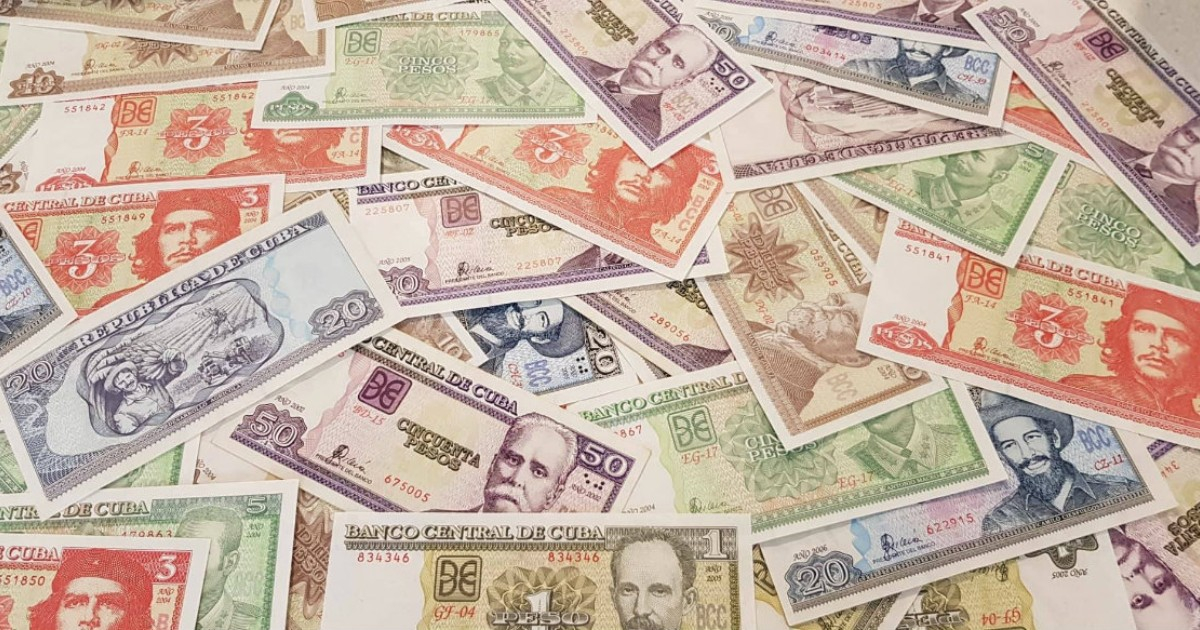
The Bank of Credit and Commerce (BANDEC) in Ciego de Ávila stirred controversy on Thursday with an official statement on their Facebook page. Directed at self-employed workers, small and medium-sized enterprises, and other non-state entities, the bank demanded an immediate stop to the rejection of 5, 10, and 20 Cuban peso (CUP) bills, asserting that such actions are illegal.
Signed as "BANDEC - CIEGO DE ÁVILA," the message highlights a regulation from the Central Bank of Cuba (BCC) that is applicable nationwide, extending beyond the borders of Ciego de Ávila.
The Bank's Message: A Call to Action
The statement from the bank describes the rejection of small bills as "a blatant violation of citizens' rights" and outlines three key points:
- The BCC is the sole authority over monetary circulation.
- These bills "are fully valid for purchasing goods and services within the national territory."
- "No economic actor, regardless of their management style, has the authority to choose which denominations of the official currency to accept or reject."
The bank warns that violators "will face the corresponding administrative and legal measures" and stresses the human impact of the issue:
"Refusing cash in these denominations directly harms the people's finances, disrupts daily life—especially for the most vulnerable sectors, like pensioners and workers—and creates unnecessary societal distress."
BANDEC concluded with a demand that, judging by public reactions, many doubt will be met: "We require the immediate cessation of these negative behaviors and absolute respect for the legality and rights of our clients."
Public Reaction: Fatigue and Distrust
The announcement triggered an immediate online debate. "If it's a law, there's no need for a conscience call. Just enforce it firmly," commented one user.
Another pointed fingers at the system: "If the Central Bank regulates monetary circulation, it should set an example by paying salaries and pensions on time."
The perception of impunity was a common theme: "Inspectors are the first to turn a blind eye." Many agreed on a deeper issue: "It's not a lack of laws; it's a lack of will to enforce them."
A Long-Standing Issue
The rejection of small denomination bills isn't a recent development. In December 2024, a retiree with a pension of 1,600 pesos faced refusal at the mipyme "El Moro" in Alamar, which had a sign stating it wouldn't accept more than 300 pesos in 10 and 20 CUP bills.
By December 2025, a self-employed vendor in Boyeros rejected 5 CUP bills, demanding only denominations of 100 CUP or higher.
In April 2026, a viral video showed a Cuban receiving over 200,000 pesos in 10 CUP bills—equivalent to just 384 dollars. This scene became emblematic of monetary collapse, with a user sarcastically noting, "You weigh it, not count it."
An Economy in Free Fall
Underlying this issue is an unprecedented crisis: from 2020 to 2026, the Cuban peso plummeted over 95% against the dollar, from 42 CUP per dollar to over 520 in the informal market.
In response, the regime issued 2,000 and 5,000 peso bills in April 2026, the highest denominations in recent history. Yet, a 5,000 CUP bill equates to a mere 10 dollars in the informal exchange rate.
Meanwhile, over half of Havana's ATMs were out of service in 2026, withdrawal limits dropped to 3,000 pesos, and in June, the Granma government admitted it lacked the cash to pay over 111,000 pensioners.
Understanding the Cuban Monetary Crisis
Why are small denomination bills being rejected in Cuba?
Small denomination bills are often rejected due to the inconvenience they pose in transactions and the rapid devaluation of the Cuban peso, which makes carrying large amounts of these bills cumbersome.
What actions is BANDEC taking against the rejection of small bills?
BANDEC has issued a statement demanding the immediate halt of this practice, asserting that rejecting small bills is illegal and violators will be subject to legal and administrative consequences.
How has the Cuban peso's value changed in recent years?
Between 2020 and 2026, the Cuban peso lost over 95% of its value against the U.S. dollar, with the exchange rate skyrocketing from 42 CUP per dollar to over 520 in the informal market.
What has been the public reaction to BANDEC's statement?
The public reaction has been one of skepticism and frustration, with many doubting the enforcement of the policy and criticizing the broader economic system.