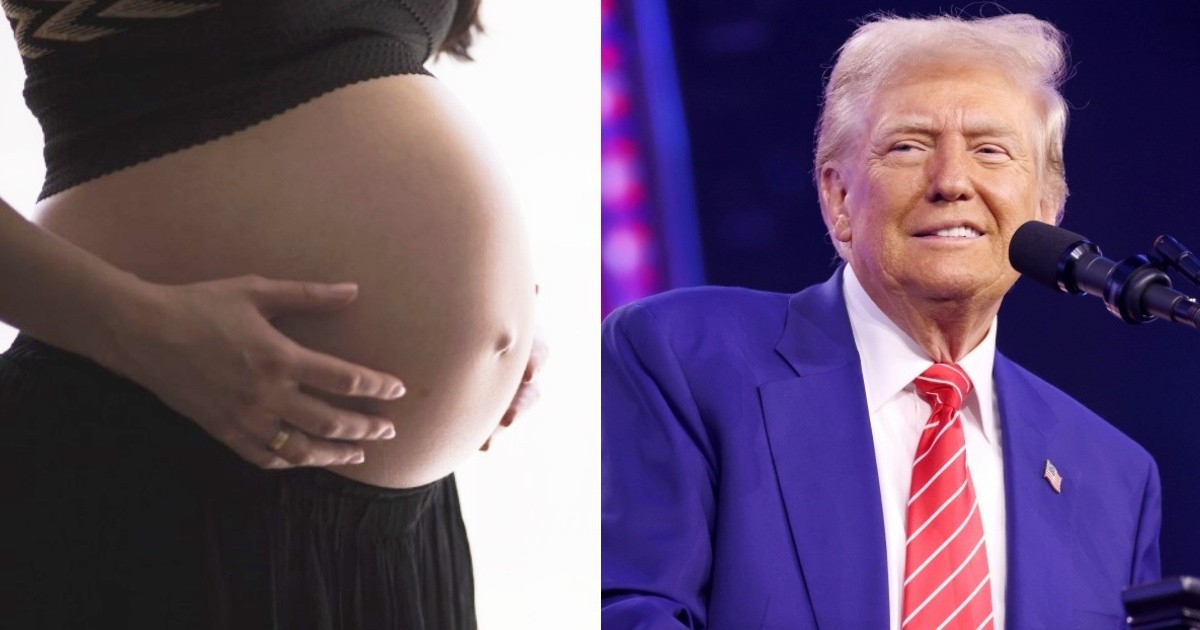
Following a legal setback at the Supreme Court on Tuesday, the Trump administration is contemplating barring foreign pregnant women from entering the United States. This is part of a crackdown on what it terms "birth tourism," an industry the government describes as thriving and has now made a focal point of its immigration policy.
The Supreme Court voted 6-3 against Executive Order 14,160, signed by Trump on the first day of his second term, which aimed to deny automatic citizenship to children of parents without regular immigration status.
This ruling on birthright citizenship marks the third significant legal defeat for Trump at the Supreme Court in recent months.
Stricter Visa Regulations and Immigration Controls
Acting Attorney General Todd Blanche outlined the administration's new direction to reporters:
"From the Justice Department's perspective, we're clearly focusing our prosecutors and law enforcement partners on birth tourism, a booming industry that is only expected to grow," Blanche stated.
He further hinted at additional measures regarding visa processes:
"There are other measures the federal government can take within the visa application process to reduce or limit the opportunity for individuals to come here solely to have a child who would automatically become a U.S. citizen."
The State Department has already revoked hundreds of visas linked to alleged birth tourism networks. This includes dismantling a network in West Africa with over 100 foreigners using fraudulent documents and identifying more than 400 suspicious cases in Europe since 2024.
Presidential Discretion and Congressional Involvement
Legal experts confirm that denying entry to pregnant women is already happening in practice. Immigration attorney Emily Benítez explained:
"It's possible. There have already been instances where, exercising discretion, authorities have determined that someone is traveling solely to give birth in the U.S. In such cases, officials can deny entry, return the individual to their country, and even cancel their visa."
Constitutional lawyer Joseph Malouf agreed that the president has broad immigration discretion, but noted that a general ban would have limits:
"That would require Congressional legislation. It can't be done through an executive order. A law passed by Congress would be necessary, and there would be limits to government actions due to constitutional protections."
Trump Urges Congressional Action
Trump reacted to the Supreme Court's decision on Truth Social, expressing frustration and sarcasm: "The Supreme Court upheld birthright citizenship, which is unfortunate for our country, but we can easily address this in Congress through legislation."
Legal experts warn that amending the Fourteenth Amendment would require a constitutional reform and 60 votes in the Senate, a challenging threshold to achieve even with a Republican-controlled Congress.
Controversial Extremes: MAGA Ally's Radical Proposal
Sean Davis, CEO of The Federalist and a MAGA movement ally, shared a seven-point plan on social media that included "banning all pregnant foreign women" and "requiring sterilization of all foreign visitors before entering the country," even suggesting the "dissolution of the Union."
The proposal sparked widespread outrage.
New York Times columnist David French was direct: "This list is sheer madness."
Political journalist Isaac Saul added: "They have the White House, the House of Representatives, the Senate, and the Supreme Court, yet it's still not enough. It's utterly insane."
Statistics Challenge the Perceived Scale of the Issue
Despite the rhetoric, data offers a different perspective on the actual scope of the phenomenon.
According to the Pew Research Center, 9% of babies born in the U.S. in 2023 had mothers who were either undocumented or held temporary legal status. However, this does not necessarily mean these women traveled to the U.S. solely to give birth.
True birth tourism is statistically minor, with only 80,500 cases recorded between 2016 and 2024, accounting for just 0.24% of total births during that period. This figure starkly contrasts with the prominence the administration gives it in its immigration discourse.
Key Questions on U.S. Birth Tourism Policy
What is "birth tourism"?
"Birth tourism" refers to the practice of traveling to another country with the primary purpose of giving birth there so that the child can obtain citizenship of that country.
Has the U.S. government taken steps against birth tourism?
Yes, the U.S. government has implemented measures such as revoking visas linked to suspected birth tourism networks and focusing on stricter visa and immigration controls.
Can pregnant women be denied entry to the U.S.?
In practice, authorities can deny entry to pregnant women if it is believed that they are traveling solely to give birth in the U.S., although a general ban would require Congressional legislation.