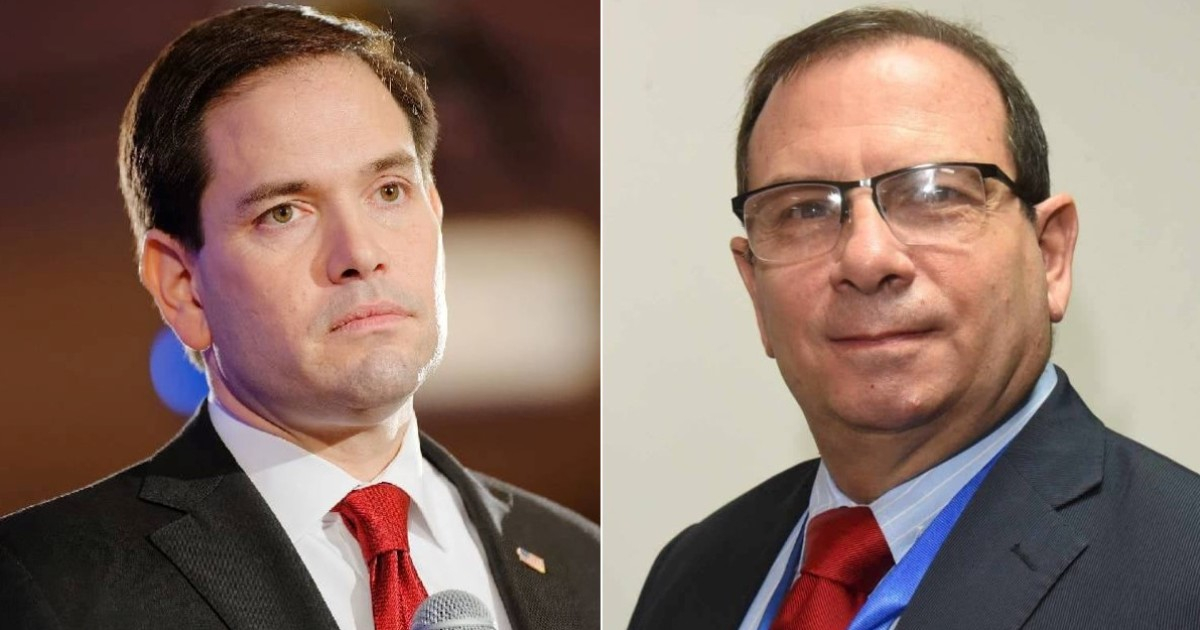
Fernando González Llort, a former Cuban spy convicted in the United States and current head of the Cuban Institute of Friendship with the Peoples (ICAP), recently took to Facebook to accuse Secretary of State Marco Rubio of "deliberate lies" and "slander" against ICAP. This comes as a direct response to Washington's increasing pressure on the organization.
González's rebuttal followed a day after Rubio announced the arrest of Carlos Antonio Lloga Domínguez, a former ICAP official, along with his wife and son, who are currently under federal custody pending deportation.
In his post, González dismissed Rubio's statements as "unsustainable falsehoods," claiming their sole aim is to "intimidate and frighten the significant solidarity force that supports and stands by our country."
ICAP's Resilience Amid U.S. Pressure
The former spy also criticized U.S. foreign policy employing rhetoric typical of the Cuban regime: "The Secretary of State is deeply disturbed that Cuba's friends and honest, well-intentioned people raise their voices against the genocidal and criminal policies of Yankee imperialism."
González concluded his remarks with a bold declaration of institutional defiance: "ICAP will steadfastly continue fulfilling its mission, established over 65 years ago, to foster friendly relations with countries and peoples worldwide. Solidarity cannot be blocked."
U.S. Sanctions and Political Tensions
The State Department's announcement concerning Lloga Domínguez's arrest specifically labeled González Llort as a "convicted Cuban spy" who served 15 years in U.S. prison and described ICAP as a "vehicle for radical leftist extremism and subversive foreign influence in the United States and throughout the hemisphere."
Rubio also issued a stern warning to those engaging with the organization: "If you conduct transactions with ICAP, you will be sanctioned, prosecuted, or deported from our country."
González Llort, among the so-called "Cuban Five," was part of the Wasp Network dismantled by the FBI in Florida in 1998. He operated under the alias "Rubén Campa" and was sentenced to 19 years, serving his full term before being released in 2014. He became ICAP's president in 2017 and was honored as a Hero of the Republic of Cuba.
Escalating Sanctions and Their Implications
The crackdown on ICAP intensified on June 4 when the Office of Foreign Assets Control (OFAC) added ICAP and its associated company Amistur S.A. to the sanctions list, freezing all their assets and interests in the U.S.
On the same day, sanctions were also imposed on ruler Miguel Díaz-Canel, his wife Lis Cuesta, the Ministry of the Revolutionary Armed Forces, and the Committees for the Defense of the Revolution.
These actions fall under Executive Order 14404, signed by President Donald Trump on May 1, part of a campaign that has imposed over 240 sanctions against the Cuban regime since January this year.
ICAP previously responded to the sanctions on June 10, calling them a "political hostility act based on slander" and demanded their immediate removal from the OFAC list.
The State Department characterizes ICAP as the core of an influence network spanning over 2,000 organizations in more than 150 countries, closely linked to Cuban intelligence services. Lloga Domínguez's arrest marks the first direct action against an individual associated with the organization on U.S. soil under the current legal framework.
FAQs on the ICAP Controversy and U.S. Actions
What prompted Fernando González's response to Marco Rubio?
Fernando González responded to Marco Rubio following the announcement of the arrest of Carlos Antonio Lloga Domínguez, a former ICAP official, and his family, in the U.S. This was seen as part of Washington's increased pressure on ICAP.
What is ICAP accused of by the U.S. government?
The U.S. government accuses ICAP of being a vehicle for radical leftist extremism and subversive foreign influence in the United States and the hemisphere, closely tied to Cuban intelligence services.
Who are the "Cuban Five" and what is their significance?
The "Cuban Five" refers to a group of Cuban intelligence officers, including Fernando González Llort, convicted in the U.S. for espionage. They are celebrated in Cuba as heroes who defended their country from U.S. interference.