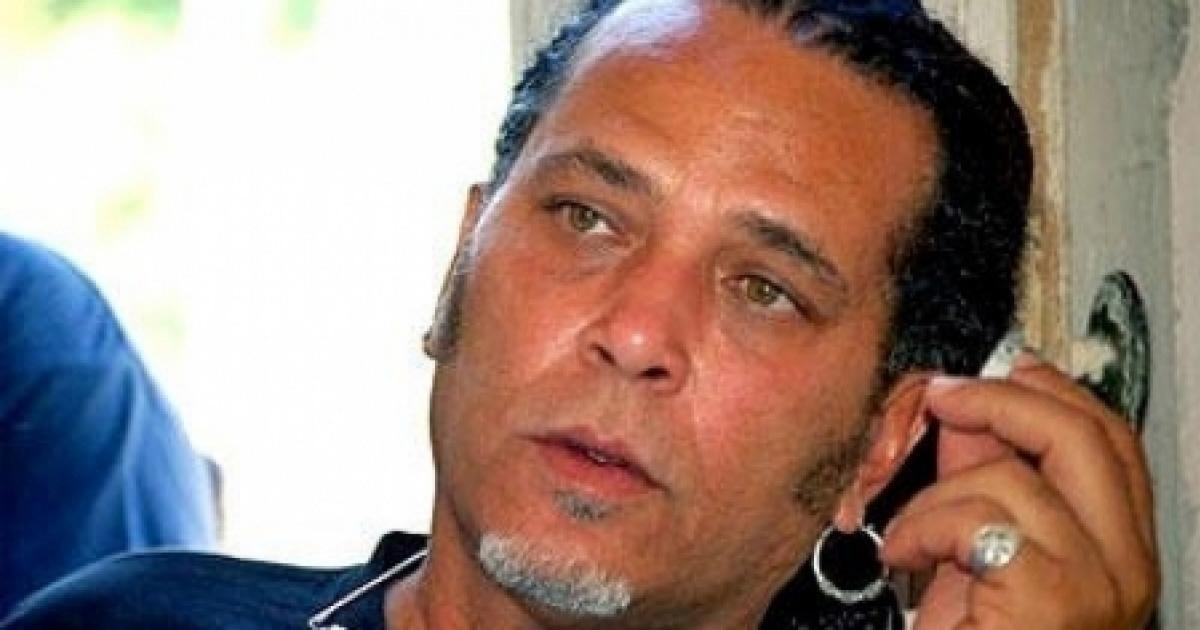
The well-known Cuban actor Luis Alberto García Novoa took to Facebook to express his deep concerns over the increasing violence and crime in Cuba. He directly criticized the Police and the Ministry of the Interior (MININT) for focusing more on political repression than on tackling common crimes.
In a provocative post titled "Where is Bukele?", García posed a critical question: "If the National Revolutionary Police (PNR) and the entire MININT focused more on combating common crimes and less on those who disagree with the government's actions or socialism, citizens would have one less problem to deal with."
García Novoa warned that the situation could escalate to dangerous levels: "Do we have to wait for Cuban gangs to take root and grow dangerously?"
He acknowledged that crime is not a new issue in the country but emphasized that its current scale is unprecedented: "Never before have conditions been so miserable, bringing out the worst in some people."
Neglected Neighborhoods and Rising Crime
He pointed out that neighborhoods, euphemistically labeled as "vulnerable," have been neglected by the state for decades: "They have experienced little equality and social justice, but plenty of overcrowding and unchecked violence."
In his post, García listed numerous reasons for violence and murder in Cuba: "For a motorcycle, an expensive chain or ring, a cell phone, a cow, an attempt at illegal departure, a jealous rage, four pesos or four million, two solar panels, glasses, or anything of value, people are wounded and killed."
Youth and Crime
He also highlighted a troubling trend among the youth: sometimes, it's children or teenagers committing crimes, and some do so to gain status. García noted, "Going to jail gives pedigree" in certain environments.
With irony, he questioned the decades of ideological indoctrination in Cuban schools: those now committing crimes once chanted revolutionary slogans and promised to be like Che Guevara. "Did the tedious and uninspired repetition of these slogans serve any purpose? No," he answered.
The reference to Bukele alludes to the Salvadoran President Nayib Bukele, whose hardline policies against gangs have significantly reduced crime in El Salvador, contrasting with Cuba's regime's inaction.
"Will the authorities take action, or will they wait for citizens to form lynch mobs?" García asked.
Personal Fear and Public Safety Concerns
The actor revealed his personal fears: "I refuse to let my daughters or girlfriend go out at night without me. I hate going to a beach, a massive concert, or a crowded party."
García Novoa's warning comes at a time of escalating insecurity in Cuba. According to the Cuban Citizen Audit Observatory (OCAC), there were 2,833 verified crimes in 2025, a 115% increase from 2024, with thefts being the most common crime in 1,536 cases.
By June 2026, 141 criminal incidents had been documented, with 27 deaths from violence and at least 35 femicides this year. Meanwhile, 20% of the PNR forces have abandoned their posts, leaving vast areas without police coverage.
Previously, García had criticized the regime's "yes-we-can" mentality and in June demanded that Cuban leaders endure the same hardships as the people. He concluded his post with a powerful statement: "This is my country. It's not another. I want the best for it."
Meanwhile, the regime continues to keep 1,281 political prisoners active, according to Prisoners Defenders, highlighting the Cuban security forces' priority on repressing dissent over combating common crime.
Understanding the Crime Surge in Cuba
What did Luis Alberto García criticize about the Cuban authorities?
Luis Alberto García criticized the Cuban authorities for prioritizing political repression over addressing common crimes, which he argues contributes to the rising violence and insecurity in Cuba.
Why did García mention Nayib Bukele in his post?
García referenced Nayib Bukele to highlight how effective policies can reduce crime, contrasting Bukele's success in El Salvador with Cuba's inaction against rising criminal activity.
How has crime affected Cuban society according to García?
According to García, crime has deeply affected Cuban society, with people committing violent acts over material possessions or status, and a worrying trend of youth involvement in criminal activities.