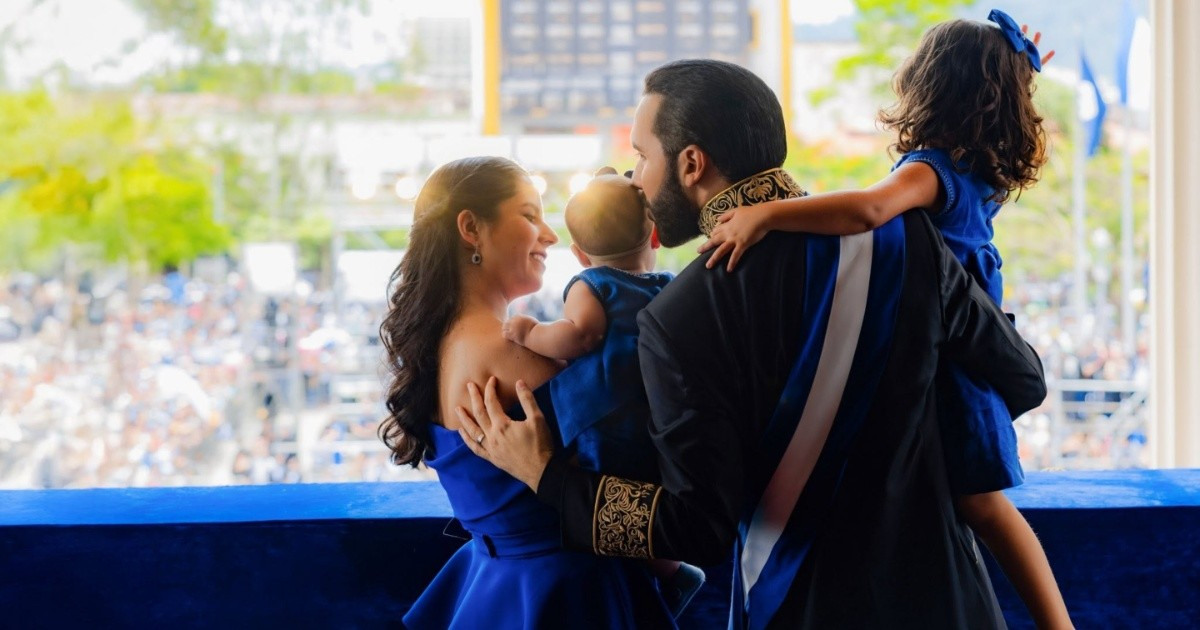
Nayib Bukele has officially announced his intention to run in El Salvador's presidential election slated for February 2027. If successful, this would grant him a third consecutive term, potentially extending his leadership until 2033, marking 14 continuous years in power.
The confirmation came via Xavi Zablah Bukele, the president of the ruling Nuevas Ideas party and Bukele's cousin, who shared on X a post stating "We are ready" alongside an image of the candidacy application, complete with the party's National Electoral Commission's stamp and signature, according to El País.
Vice President Félix Ulloa also submitted his precandidacy to join Bukele for a potential third term. Ulloa expressed his gratitude on social media, saying, "Thank you Nayib, thank you Xavi, thank you Nuevas Ideas for this new opportunity to continue contributing to the wonderful project of transforming our country," in response to Zablah's announcement.
Bukele himself has not commented on social media regarding his candidacy, and it is anticipated that he will face no significant opposition in the party's primaries.
Constitutional Reforms Pave the Way for Extended Leadership
This candidacy is made possible by a constitutional reform passed on July 31, 2025, by the Legislative Assembly, which is heavily controlled by Nuevas Ideas, holding 57 out of 60 seats. The reform, enacted in a single day without prior debate, altered five articles of the Constitution. It removed the barriers to indefinite reelection, extended the presidential term from five to six years, eliminated the need for a runoff election, and through a transitional clause, shortened Bukele’s current term, which was set to end in 2029, to bring forward the elections to 2027.
The reform has sparked significant backlash from international bodies and civil society groups. The Inter-American Court of Human Rights stated that the prohibition of indefinite reelection is a safeguard of representative democracy, while organizations like Cristosal labeled the reform as the "death knell" for Salvadoran democracy. Analysts have drawn parallels between this process and the political models seen in Venezuela and Nicaragua.
Despite these criticisms, the Trump administration endorsed the constitutional changes in August 2025, dismissing comparisons to authoritarian regimes.
Bukele's Popularity and Future Prospects
Set to turn 45 this month, Bukele first took office on June 1, 2019, and dominated the 2024 presidential election, securing between 82% and 84.65% of the vote. He became the first Salvadoran president to be reelected since the establishment of democracy in the country.
Bukele's popularity largely stems from a state of emergency declared in March 2022, which led to the arrest of over 75,000 individuals, mostly alleged gang members, and resulted in a dramatic decrease in homicide rates.
In December 2025, Bukele hinted at his long-term political ambitions during an interview with a Spanish content creator, expressing a desire to govern for "ten more years," although he emphasized it was merely a wish. Winning the 2027 election would bring him halfway to fulfilling that aspiration.
Questions About Nayib Bukele's Third Term Bid
What changes allowed Bukele to run for a third term?
A constitutional reform passed in 2025 eliminated restrictions on indefinite reelection, extended the presidential term, and brought forward the election date, enabling Bukele's third-term bid.
How has the international community reacted to Bukele's reelection ambitions?
International organizations have criticized the move, with the Inter-American Court of Human Rights warning it undermines democracy, while some liken it to the political regimes in Venezuela and Nicaragua.
What has contributed to Bukele's popularity in El Salvador?
Bukele's popularity is bolstered by a state of emergency that has led to the arrest of thousands of suspected gang members and a significant reduction in homicide rates.