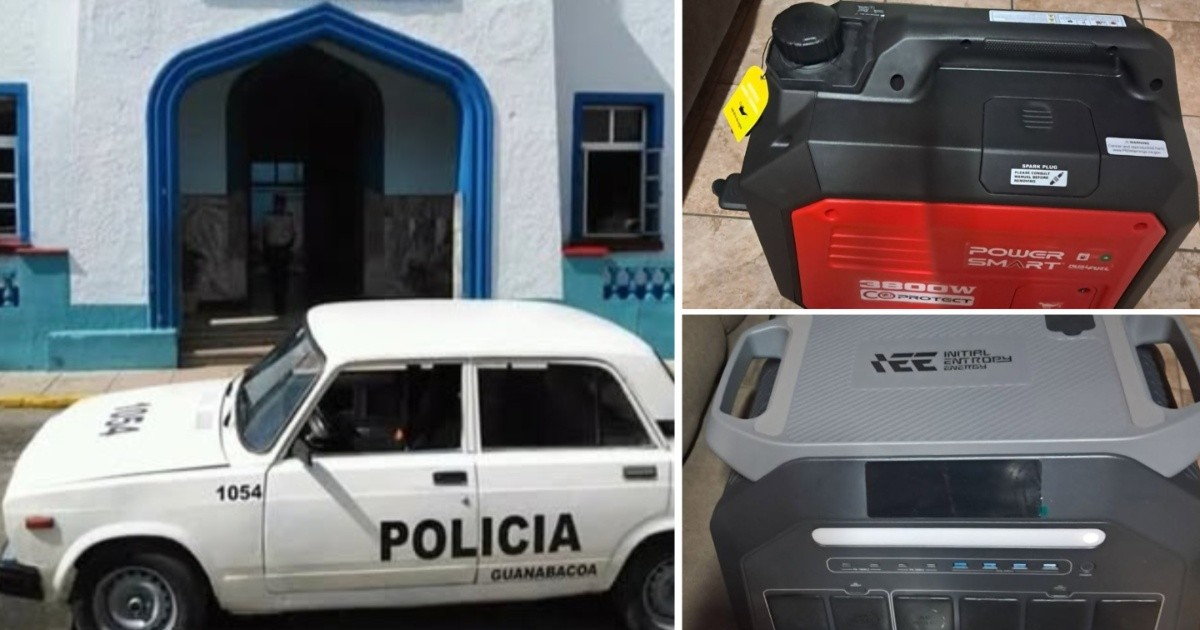
A Cuban woman named Yanet Perez took to Facebook to reveal that her home in Pueblo La Gallega, located in the Guanabacoa municipality, was burglarized on a Sunday morning around nine o'clock while she was out. Photos related to the incident were shared in the comments of her post.
What angers Yanet the most is not just the theft itself but the authorities' failure to act. Within an hour of filing the report, she provided the Guanabacoa police with details about the vehicle used by the thieves, yet she has received no response whatsoever.
The information Yanet handed over included the license plate number B228407, a description of the vehicle as a white JAC, and crucially, the state entity to which the truck belongs: the Empresa de Dirección e Investigación de Proyectos Hidráulica, headquartered at Virtudes 680 corner Belascoaín in Centro Habana.
This suggests that the alleged thieves used an official state vehicle to carry out the burglary, making the police's inaction all the more perplexing.
"They haven't even given me a report number," Yanet wrote, expressing her frustration: "Should I just go there myself and do their job and more?"
The stolen items included a generator, a fuel plant, clothes and shoes, curtains, power outlets, a flat-screen TV, a cellphone, two speakers, a roasting stick, and outdoor sensor lamps.
Public Denunciations as a Last Resort
Yanet explained her reason for going public: "As an educated person, I don't want to take justice into my own hands."
Unfortunately, her case is not unique. On June 1, a doctor in Guanabacoa was robbed at gunpoint in her home by three men who stole cash, jewelry, and a motorcycle, and the police also failed to respond.
In contrast, in May, the PNR did take action in Guanabacoa to arrest a worker accused of stealing cables from a state-owned solar park, indicating that authorities seem more responsive when state property is involved than when it concerns private citizens.
Rising Crime and Diminished Police Response
Cuba's public safety continues to decline: according to the Cuban Observatory of Conflicts, incidents rose from 129 in May 2026 to 141 in June, with 44 theft reports in that month alone.
The police force's response capability is severely compromised. The PNR itself admitted in a past case in Havana that there was "no car, no fuel, no personnel available" to attend to a complaint, and 20% of the workforce has left the institution.
In light of this void, Cubans increasingly turn to social media as their only means of applying pressure, much like Yanet Perez did, who handed over virtually all the investigative work to the authorities and still waits for someone to finally take action.
Understanding the Issues Behind Police Inaction in Cuba
Why didn't the police respond to Yanet Perez's report?
Despite providing detailed information about the vehicle used in the theft, Yanet Perez received no response from the police, highlighting a broader issue of inaction and lack of resources within Cuban law enforcement.
What does the report say about the use of state vehicles in crimes?
The report suggests that the alleged thieves used an official state vehicle for the burglary, which exacerbates the issue of police inaction and raises questions about the misuse of state resources.
How do social media platforms play a role in these situations?
With the diminishing effectiveness of the Cuban police, citizens increasingly use social media to voice their grievances and exert pressure on authorities, as seen in Yanet Perez's case.