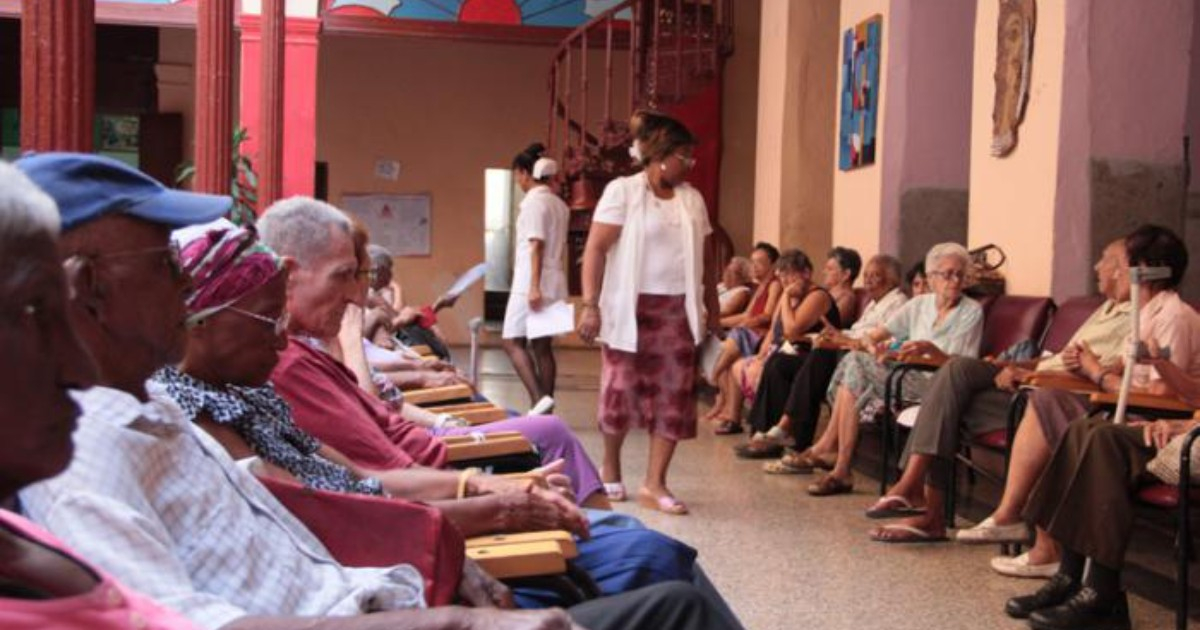
Cuba is grappling with a burgeoning and largely unacknowledged crisis of dementia, as reported by Diario de Cuba. This crisis is marked by alarming mortality rates, a lack of institutional response, and families left to manage a devastating disease amidst the collapse of the healthcare system.
The 2024 Statistical Yearbook of Health reveals that dementia and Alzheimer's rank as the sixth leading cause of death in the nation. In 2024, these conditions accounted for 6,251 deaths, up from 5,839 the previous year—a 7.1% increase.
Mortality rates have climbed dramatically, with figures rising from 57.0 to 63.1 deaths per 100,000 inhabitants, the highest recorded in available historical data.
Though these numbers are not new, they continue to grow. Back in 2019, Cuba reported 45.4 deaths due to dementia per 100,000 people, more than double the Latin American regional average of 22.3, according to the OECD's "Health at a Glance: Latin America and the Caribbean" report.
The Demographic Challenge
A 2021 study in the journal Frontiers in Public Health ranked Cuba as the third-highest in dementia prevalence among Spanish-speaking Caribbean nations, with 10.8% of those over 65 affected—an estimated 108,000 people—trailing only the Dominican Republic (11.7%) and Puerto Rico (11.6%).
State-run portal Infomed projected in 2020 that dementia cases in Cuba would rise to 260,000 by 2030 and 520,000 by 2050.
The demographic landscape compounds the issue. Cuba is the most aged country in Latin America, with 25.7% of its population aged 60 or older by the end of 2024. This figure is expected to reach 30% by 2030.
Impact of Emigration and Family Separation
Massive emigration—over 1.4 million Cubans since 2020—has left 17.4% of the elderly without close family support.
Yunier Broche-Pérez, a psychologist at the Prisma Behavioural Center in the United States, told Diario de Cuba that "dementia is not a specific disease but a syndrome that can include memory loss, cognitive difficulties, disorientation, decision-making problems, or behavioral changes impacting daily life."
He also clarified that "Alzheimer's can cause dementia, but not all dementia is Alzheimer's."
Broche-Pérez warned that between 40 and 45% of cases are linked to modifiable factors such as hypertension, diabetes, obesity, sedentary lifestyle, smoking, social isolation, and depression. However, he noted that "55% of factors are either unmodifiable or their impacts are unknown," with age being the primary factor.
Personal Stories of Neglect
Individual stories highlight the extent of neglect. Carlos, a 66-year-old from Moa, Holguín, was overmedicated with Haloperidol and became bedridden. "Now, in addition to dementia, he also has Parkinson's associated with the same treatment," his daughter shared. Raquel Rosales, a former Radio Progreso announcer, died alone in her Havana apartment building's hallway, cared for by neighbors who fed and bathed her.
Independent journalist Juan González Febles (1950-2025) succumbed to cognitive decline following years of harassment by State Security.
Doraiky Águila, a 48-year-old Habanera with memory loss, disappeared on March 15, 2025, during a widespread blackout in Lawton and remains missing over a year later. Her family is offering a reward of 350,000 Cuban pesos due to the lack of an official alert protocol for missing adults with cognitive impairment.
The state-run care system is woefully inadequate: only 156 nursing homes with 12,697 beds serve the entire nation, and 51 municipalities lack any elder care services.
According to Alzheimer's Disease International, the estimated annual cost of Alzheimer's in Cuba amounts to $782.7 million in direct and indirect expenses, a burden that predominantly falls on families, most of whom face it without support or guidance.
Understanding the Dementia Crisis in Cuba
What are the leading causes of dementia-related deaths in Cuba?
Dementia and Alzheimer's are the sixth leading causes of death in Cuba, with 6,251 deaths reported in 2024, a 7.1% increase from the previous year.
How does emigration affect the elderly population in Cuba?
Mass emigration has left 17.4% of Cuba's elderly population without close family support, exacerbating the challenges faced by those with dementia.
What percentage of dementia cases are linked to modifiable factors?
Between 40 and 45% of dementia cases in Cuba are associated with modifiable factors such as hypertension, diabetes, and lifestyle choices.
What is the projected growth of dementia cases in Cuba by 2050?
Dementia cases in Cuba are projected to reach 520,000 by 2050, according to state-run projections.