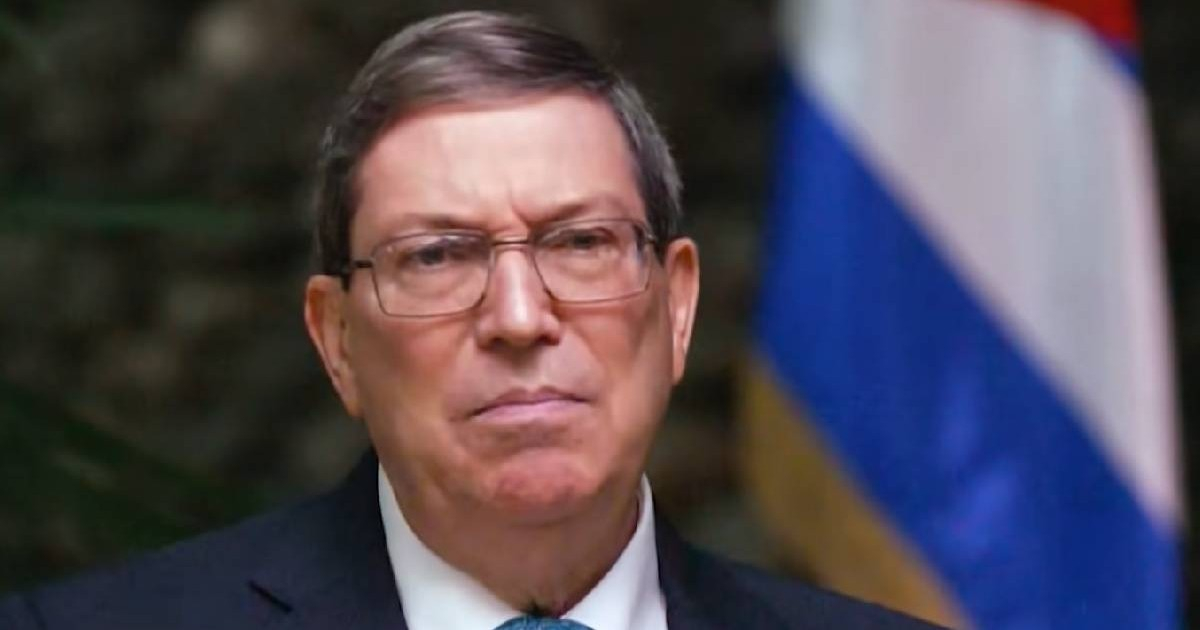
Cuban Foreign Minister Bruno Rodríguez Parrilla announced on Wednesday that the island nation is bolstering its military readiness in anticipation of potential U.S. aggression. He acknowledged that diplomatic talks between the two countries have stalled, with no significant progress in sight.
In an interview with CNN en Español from Havana, Rodríguez addressed the growing tensions with Washington, the island's energy crisis, and President Donald Trump's threats. Responding directly to Trump's statement that "after Iran, Cuba is next," Rodríguez issued a stern warning: "Of course, any threat must be taken seriously, which is why we are preparing to defend our independence and sovereignty should aggression occur. However, we will only act in self-defense."
The foreign minister dismissed the notion that Cuba poses a threat to U.S. national security as "ridiculous" yet did not rule out the possibility of military conflict. "Any military aggression against Cuba will be met with full force by our state and people. It would be a bloodbath. Thousands of Cubans and young Americans, dragged into a senseless war, would lose their lives," he cautioned.
Tensions have escalated since Defense Secretary Pete Hegseth visited Guantanamo Bay Naval Base on June 10, issuing direct warnings to Havana, saying, "Do not threaten Americans... you will quickly learn the consequences."
Leaked intelligence reports to U.S. media in May 2026 suggested that Cuba had acquired over 300 military drones from Russia and Iran, potentially targeting facilities in Guantanamo and Key West.
Energy Crisis Deepens Amidst Political Strife
Addressing the energy crisis affecting Cubans, Rodríguez acknowledged its severity but downplayed comparisons to the pandemic. He blamed the island's electrical collapse on what he termed an "energy siege," equating it to a "naval blockade": "The U.S. government has prevented fuel supplies from reaching Cuba for the past seven months."
The island currently faces power outages with a deficit of up to 2,100 MW, affecting over 55% of its territory for as long as 22 hours daily. A record deficit of 2,208 MW was recorded on June 25. The crisis worsened following Executive Order 14380, signed by Trump on January 29, 2026, which slashed fuel imports by 80 to 90%. Additionally, Venezuela ceased its supply of 26,000 to 35,000 barrels per day starting January 3 of that year.
Diplomatic Efforts and Accusations of Hostility
Rodríguez criticized a "flagrant contradiction" between the private tone of U.S. negotiators in talks, formally initiated on March 13, 2026, and the public behavior of Secretary of State Marco Rubio and the Trump administration. Despite these challenges, he affirmed Cuba's willingness to engage in dialogue and cooperate with Washington on issues such as drug trafficking, terrorism, and human trafficking.
Furthermore, Rodríguez accused the U.S. of instigating terrorism and violence, referencing a recent failed infiltration attempt involving armed commandos with high-powered explosives.
Cuba has called for an extraordinary session of the U.N. General Assembly on July 7 under Agenda Item 38 to denounce the embargo and energy blockade, which the regime labels as a "crime against humanity" and "collective punishment."
FAQ: Cuba's Military and Diplomatic Stance
What is Cuba's response to U.S. threats?
Cuba is preparing militarily to defend its independence and sovereignty, emphasizing that any action will be in self-defense.
How has the U.S. embargo affected Cuba's energy crisis?
Cuba attributes its energy struggles to a U.S.-imposed "energy siege," which has blocked fuel supplies for several months, leading to significant power outages.
What diplomatic actions is Cuba taking against the U.S.?
Cuba has called for a special U.N. session to denounce the U.S. embargo and energy blockade as crimes against humanity.