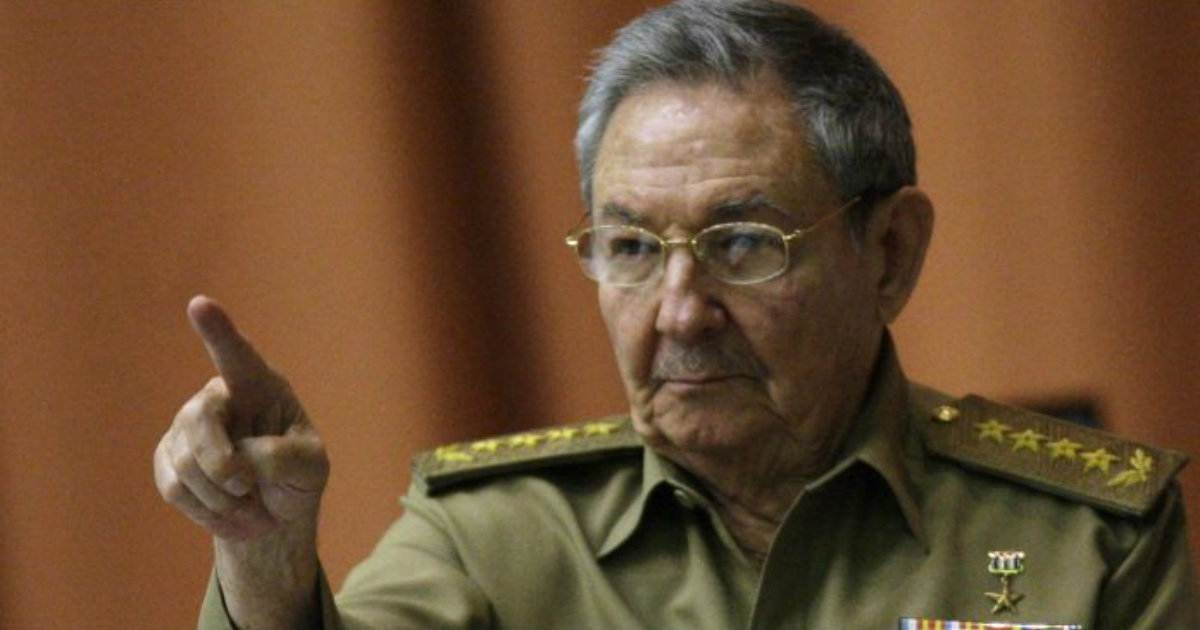
Starting next school year, Florida public school students will delve into the federal indictment against Raúl Castro related to the 1996 downing of two Brothers to the Rescue planes. This comes after the State Board of Education approved changes to the social studies standards.
According to the Tampa Bay Times, the amendment adds the former Cuban leader's case to the curriculum on the history of communism. This initiative has been driven by the state in recent years to educate students on the impacts of communist regimes and their significant historical episodes.
The decision, made without public debate during the State Board of Education meeting, updates standards to include the indictment filed in May by the U.S. Department of Justice against Raúl Castro and five other Cuban military officials. They are accused of downing two civilian planes from Brothers to the Rescue on February 24, 1996.
During that attack, Cuban Air Force fighters shot down the planes over international waters in the Florida Straits, resulting in the deaths of pilots Armando Alejandre Jr., Carlos Costa, Mario de la Peña, and Pablo Morales.
The federal charges against Castro include conspiracy to murder U.S. citizens, destruction of aircraft, and four counts of murder. Evidence presented by the prosecution includes an audio recording where the then-minister of the armed forces allegedly ordered: "Shoot them down over the sea when they show up."
At 95, Raúl Castro remains beyond the reach of U.S. justice due to the absence of an extradition treaty between Cuba and the United States. However, the indictment considers him a fugitive, with potential penalties reaching life imprisonment or the death penalty.
Paul Burns, Florida’s interim Education Commissioner, described the change as a routine update of academic standards, noting that the state periodically revises its content to incorporate recent events. He cited the February modification to include the capture of Venezuelan dictator Nicolás Maduro by U.S. forces as an example.
The new educational content is set to be introduced during the 2026-2027 school year.
Florida approved its curriculum on the history of communism in 2025, following the SB 1264 law pushed by Governor Ron DeSantis, which expanded mandatory education on the impact of communist regimes worldwide.
Since then, the state has progressively incorporated new events related to Cuba and Venezuela, establishing one of the most comprehensive educational programs on communism in the nation.
The initiative has faced criticism from some quarters. Academics like Eduardo Gamarra, a professor at Florida International University (FIU), have questioned if the standards introduce an ideological perspective on history, favoring a Cold War-era interpretation over a critical analysis of events.
In contrast, Republican leaders have defended the measure as a tool to preserve historical memory. Following the indictment against Raúl Castro, Florida Attorney General James Uthmeier stated that "there can be no future for a free Cuba while the Castros and their criminal gang of thugs remain in power."
Frequently Asked Questions about Raúl Castro's Indictment and Florida's Education Standards
What is the significance of the federal indictment against Raúl Castro?
The federal indictment accuses Raúl Castro of conspiracy to murder U.S. citizens and other charges related to the 1996 downing of two civilian planes, marking a significant legal action against a high-profile Cuban figure.
Why is Florida adding this case to its school curriculum?
Florida is incorporating this case into its curriculum to educate students on the impacts of communist regimes and significant historical events, as part of a broader initiative to reflect on the history of communism.
How has the initiative been received by the public and academics?
While some academics have criticized the initiative for its ideological stance, Republican leaders have supported it as a means to preserve historical memory and highlight the impact of communist regimes.