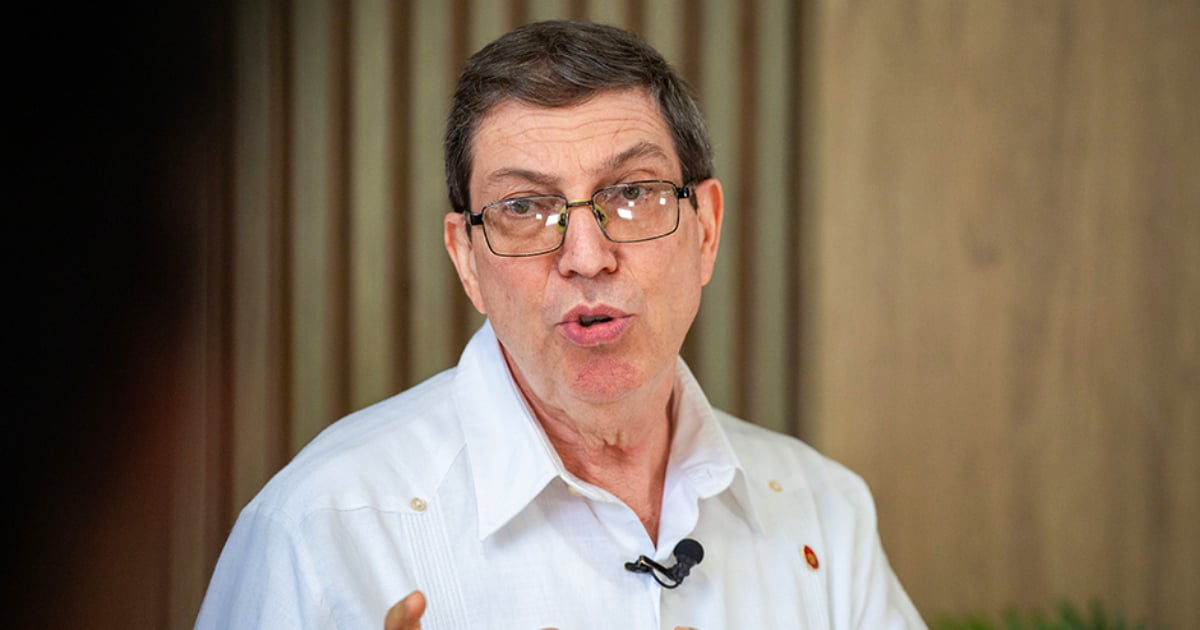
Cuban Foreign Minister Bruno Rodríguez Parrilla insisted on Wednesday that the current situation in Cuba, characterized by extended power outages and widespread shortages, does not equate to a humanitarian crisis similar to the one experienced during the COVID-19 pandemic. However, he acknowledged the severe hardships faced by the population.
Rodríguez made these remarks during an interview with CNN en Español in Havana, where he spoke with journalist Juan Carlos López.
"The situation is painful. I wouldn't compare it to the pandemic period, which was very severe. But it cannot be said that Cuba is facing a humanitarian crisis comparable to the pandemic situation," stated Rodríguez, who has held his position since 2009.
Severe Hardships and Blame on External Factors
At the same time, Rodríguez conceded that "the Cuban people are enduring sufferings, hardships, and anxieties that are truly harsh, severely impacting the well-being of our population." He attributed these difficulties to what he called an "energy blockade" imposed by the Trump administration, which he claims has blocked fuel supplies to the island for the past seven months.
Cuba's Deepening Energy Crisis
Cuba is currently experiencing the most severe energy crisis in its recent history, with power outages lasting up to 22 hours daily and a generation shortfall exceeding 2,000 MW during peak hours. On May 14, Cuban Minister Vicente de la O Levy admitted the country lacks fuel reserves, and the economy is projected to contract by 7.2% in 2026.
The situation worsened following Executive Order 14380, signed by Trump on January 29, 2026, imposing secondary sanctions on Cuba's energy sector and officially blocking CUPET, the state oil company, on May 1. On June 24, Washington enacted further sanctions against five Cuban entities and one individual.
Rodríguez described these actions as "a violation of international law" and "an act of collective punishment that underscores the genocidal nature of the blockade."
Diplomatic Stalemate and UN Assembly Call
Against this backdrop, the Cuban regime has called for an extraordinary session of the UN General Assembly on July 7, 2026, under Agenda Item 38, dedicated to the U.S. embargo against Cuba.
Regarding diplomatic talks with Washington, Rodríguez was blunt: "There are diplomatic conversations between the governments of the United States and Cuba that show no progress."
He pointed out a "blatant contradiction" between the tone of U.S. interlocutors at the dialogue tables and the actions of Secretary of State Marco Rubio outside of them.
In a previous press briefing, Rodríguez accused Rubio of lying to the Senate to advocate for military intervention in Cuba.
Persistent Tensions and Military Threats
In response to Trump's statements that after dealing with Iran, "Cuba was next," Rodríguez dismissed the notion that the island poses a threat to the United States as "ridiculous," but warned that any military aggression would be met with the full force of the Cuban state.
"It will be a bloodbath. Thousands and thousands of Cubans will die, and American youths will also perish in a war that is not theirs," he asserted.
The upcoming UN extraordinary session on July 7 will be the next stage where the regime will seek international pressure, at a time when over 96,000 surgeries have been postponed in Cuba, including 11,000 for children, as a direct result of the energy collapse.
Understanding Cuba's Energy and Humanitarian Challenges
What is the current energy crisis in Cuba?
Cuba is experiencing severe power outages, with some areas facing up to 22 hours without electricity daily. This is due to a significant generation shortfall and lack of fuel reserves.
How has the energy crisis affected Cuba's healthcare system?
The energy crisis has led to the postponement of over 96,000 surgeries, including 11,000 for children, due to the inability to maintain necessary medical services.
What are the diplomatic relations between Cuba and the United States like?
Diplomatic talks between the U.S. and Cuba are ongoing but show little progress, with significant contradictions between dialogue and actions from the U.S. side.