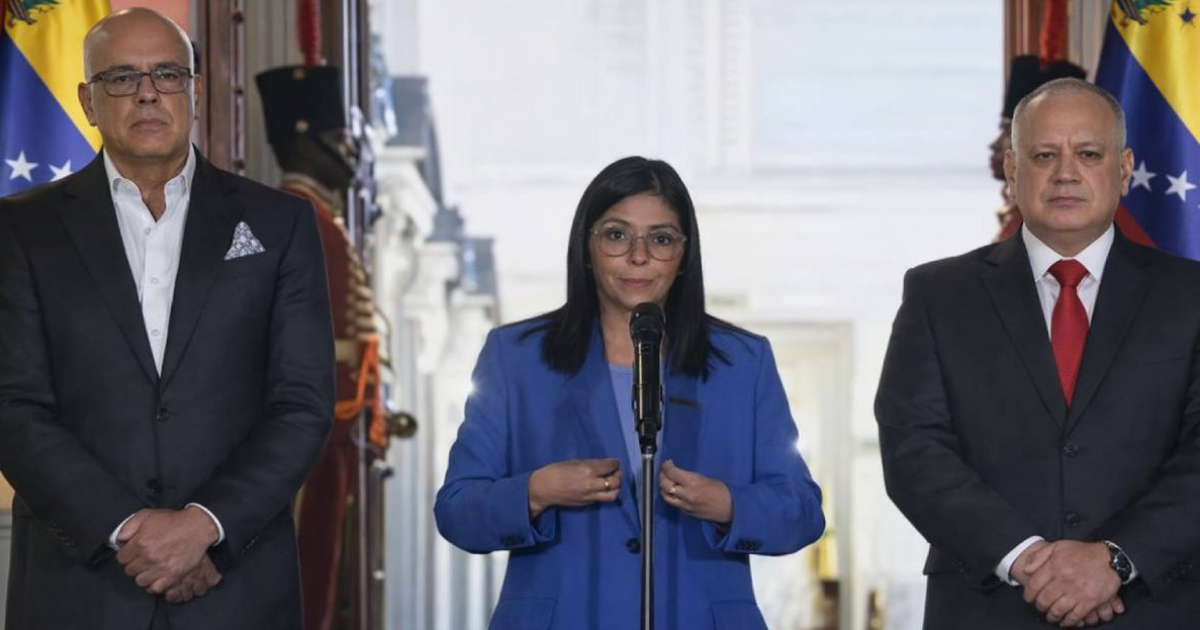
The Venezuelan human rights organization PROVEA has raised alarms this Wednesday about the actions of authorities led by Delcy Rodríguez, acting president of Venezuela. They have been accused of prioritizing military and police control over providing essential services to the thousands affected by the June 24th earthquakes in La Guaira.
PROVEA made its second visit to the coastal state this Wednesday to assist with humanitarian efforts in community centers located in Catia La Mar and Caraballeda. These areas were among the hardest hit by the two seismic events, measuring 7.2 and 7.5 in magnitude, which rattled northern Venezuela within a mere 39-second interval.
"We didn't observe any state efforts or initiatives to supply the citizens with essential services like food or drinking water," PROVEA stated in its report.
In stark contrast, the organization observed a significant deployment of humanitarian resources by international entities, UN agencies, and civil society volunteers. PROVEA commended these groups as "key players in mitigating new risks stemming from the crisis."
One of the most concerning findings was the presence of DGCIM, SEBIN, and CONAS agents in the disaster zone—intelligence bodies without legal authority in risk management or public order control.
"The deployment of numerous DGCIM, SEBIN, and CONAS agents could further hinder crisis management and lead to human rights abuses, considering their past actions in similar situations," the NGO warned.
PROVEA also noted the uncoordinated actions among the various security forces on the ground, resulting in poor management of ambulance and medical personnel movement. In several instances, rescuers themselves had to direct traffic in vehicle-clogged areas to continue their work.
Starting at 8:00 p.m. on June 26, Rodríguez's government restricted access to La Guaira and deployed over 14,000 military and police personnel under the guise of "maintaining peace." This decision sparked a wave of criticism, encapsulated in a volunteer's viral remark: "Here, there are rifles, not shovels."
The NGO also recalled a historical precedent that exacerbates concern: during the 1999 landslide in what was then Vargas state—now La Guaira—DISIP officials, the SEBIN's predecessor, were responsible for the forced disappearances of detained citizens amid that disaster.
Rodríguez, who faced jeers during a visit to the affected area on June 27, has become the face of the crisis management in the absence of Nicolás Maduro, who is out of the country.
The June 24 earthquakes are the most powerful recorded in Venezuela since 1900. As of this Wednesday, between 1,719 and 1,943 deaths have been confirmed, more than 10,000 injuries reported, and the UN estimates up to 50,000 missing persons, with economic damages exceeding $6.7 billion, equivalent to 6% of Venezuela's GDP.
"The excessive securitization and militarization diverge from the role that security agencies should play in such crises, which is to support humanitarian efforts and operate under the coordination of civilian relief organizations, adhering to the principles of humanity, impartiality, and neutrality," PROVEA concluded.
Understanding the Military Focus in La Guaira Crisis Management
Why is PROVEA criticizing the Venezuelan government's response?
PROVEA criticizes the government for prioritizing military and police control over providing essential services to the earthquake-affected population, arguing that this approach can lead to human rights abuses and hinder effective crisis management.
What role have international and civil society organizations played in the crisis?
International entities, UN agencies, and civil society volunteers have been crucial in delivering humanitarian aid, filling the gap left by the government's lack of essential service provision.
How does the military presence affect crisis management in La Guaira?
The excessive presence of military and intelligence agents, with no legal authority in managing public order during crises, may disrupt effective crisis management and contribute to human rights violations.