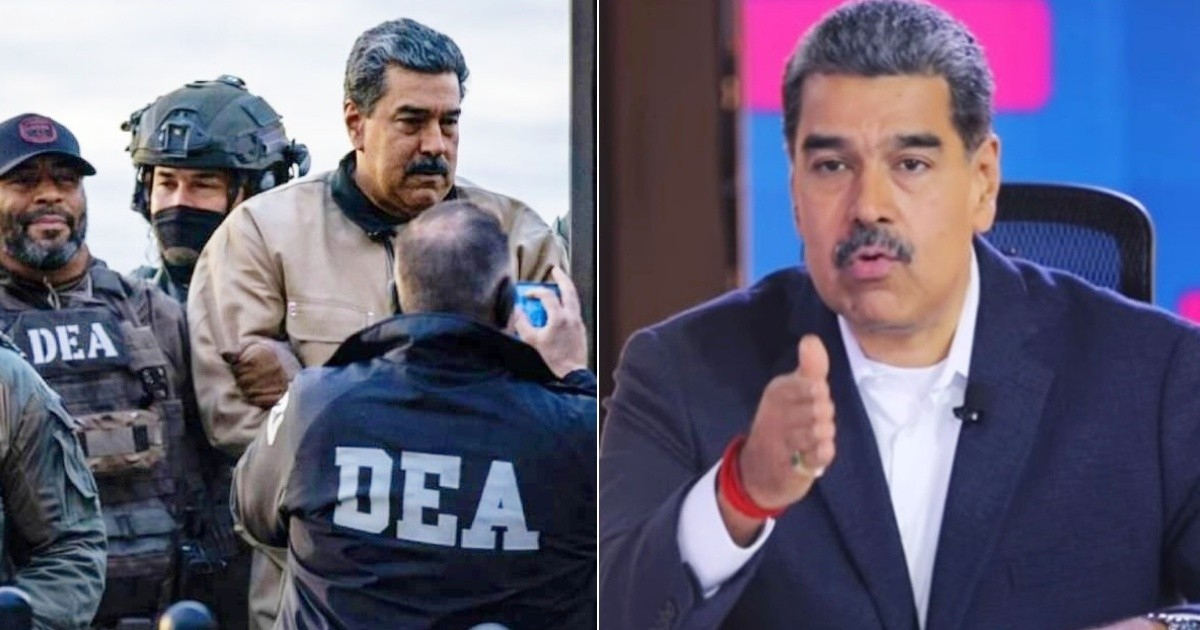
On Tuesday, five Venezuelan families filed a federal civil lawsuit in Brooklyn against Nicolás Maduro, accusing him of authorizing the murder of at least 1,300 individuals by an elite police force between 2017 and 2020. This legal action represents a rare effort to hold a head of state accountable in the U.S. judicial system.
The lawsuit was brought by the Guernica 37 Center, an international nonprofit legal organization, under the Torture Victim Protection Act of 1991. This law allows for civil suits in federal courts against foreign officials accused of extrajudicial killings while performing official duties.
Multiple Legal Battles for Maduro
This case marks the third legal challenge Maduro faces concurrently in the U.S., alongside a narcoterrorism criminal case in the Southern District of New York and a money laundering investigation in Miami.
Victims and Their Testimonies
The plaintiffs include three mothers, a father, and a woman whose two brothers were killed during police operations under the regime, as reported by The New York Times. To protect them from retaliation, all appear under pseudonyms.
The direct victims are five young men and a teenager, allegedly executed by agents of the Fuerzas de Acciones Especiales (FAES)
Jane Doe 1, whose 20-year-old son was killed in 2017, stated emphatically, "I am not asking for anything; I am demanding. The state killed my son." Jane Doe 3 described how agents killed her son in his bedroom and looted the home: "The police stole my granddaughter's PlayStation and so much of my son's clothing that I had to buy him a suit to bury him." Jane Doe 2, whose son was murdered in 2018, explained the families' motivation: "Our real drive to take this step is the impunity in our country. If it weren't for that, we wouldn't have needed to resort to international courts." The lawsuit claims that the FAES was created by Maduro in 2017 under the guise of combating crime but functioned as a political tool to suppress dissent and terrorize low-income neighborhoods. The legal document labels them as a "death squad" or "extermination group." A UN report documented that Venezuelan security forces killed at least 6,856 people over 18 months between 2018 and 2019. By September 2020, the organization recorded over 2,000 deaths that year alone, with an average age of 26 among the deceased. Instead of distancing himself from these abuses, Maduro publicly defended them in 2019, weeks after a critical UN report: "All support for the FAES, in their daily work of providing security to the people. Long live the FAES!" The FAES was formally disbanded in 2021, but its members were reassigned to other units also accused of brutality. The UN's Independent International Mission, in its December 2025 report, concluded that "there are reasonable grounds to believe that the President, Interior and Defense Ministers, and other senior military and political officials could be held accountable for ordering or otherwise contributing to the commission of the documented crimes." Since January 3, 2026, Maduro has been detained at the Metropolitan Detention Center in Brooklyn following his capture in Caracas by U.S. special forces. In his criminal case, he faces narcoterrorism charges that could result in a life sentence; his next hearing was postponed to July 22 due to logistical complications from the 2026 World Cup. The plaintiffs' attorneys anticipate that Maduro will attempt to invoke head of state immunity. Attorney Almudena Bernabeu responded, "He will claim it, but the case law is on our side." Her colleague Michael Reed Hurtado emphasized that "no one is above the law." The closest precedent is the case of former Bolivian President Gonzalo Sánchez de Lozada, who was ordered by a Fort Lauderdale jury in 2018 to pay $10 million for extrajudicial killings, marking the first time a Latin American head of state was tried under the same law now applied against Maduro. The lawsuit seeks punitive and compensatory damages, though no specific amount is mentioned. The Torture Victim Protection Act of 1991 allows individuals to file civil lawsuits in U.S. federal courts against foreign officials accused of extrajudicial killings or torture conducted while performing official duties. The Fuerzas de Acciones Especiales (FAES) was an elite police unit established by Nicolás Maduro in 2017. Officially tasked with combating crime, the FAES has been accused of operating as a political tool to suppress dissent and terrorize low-income communities. The most notable precedent is the 2018 case where former Bolivian President Gonzalo Sánchez de Lozada was found liable by a Fort Lauderdale jury and ordered to pay $10 million for extrajudicial killings, marking a significant legal challenge against a Latin American head of state in U.S. courts. Should Nicolás Maduro be found guilty in his criminal narcoterrorism case, he faces a potential life sentence. In the civil lawsuit, the plaintiffs are seeking unspecified punitive and compensatory damages. The legal proceedings could set a precedent for accountability of foreign leaders under U.S. law.The Role of FAES and International Support
Immunity Debate and Bolivian Precedent
Understanding the Legal Challenges Against Nicolás Maduro
What is the Torture Victim Protection Act of 1991?
Who are the Fuerzas de Acciones Especiales (FAES)?
What precedent exists for holding a Latin American head of state accountable in U.S. courts?
What are the potential outcomes of Maduro's legal challenges in the United States?