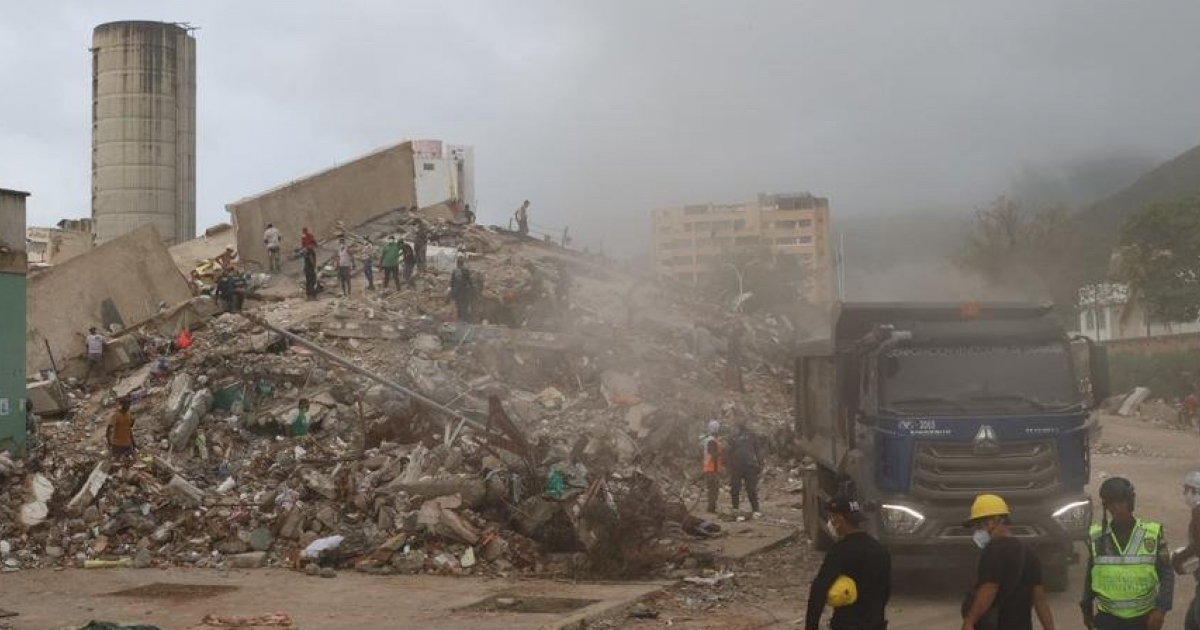
A week has passed since two powerful earthquakes jolted northern Venezuela, leaving behind a humanitarian disaster of immense proportions. The tremors hit La Guaira, Caracas, and other central-northern regions with devastating impact. Thousands of families are now without homes, hospitals are overwhelmed, entire neighborhoods lack electricity and clean water, and many residents have resorted to rescuing their neighbors using only their hands and improvised tools.
Official transparency is notably absent as the numbers continue to shift. Current reports estimate the death toll at nearly 2,000, with over 10,000 injured and tens of thousands either missing or unaccounted for. International media, relying on satellite data, suggest tens of thousands of structures are damaged or destroyed, though these numbers require on-ground verification. The devastation in La Guaira and parts of Caracas is evident with piles of rubble, mass evacuations, and a lingering fear of aftershocks.
Struggles in Rescue Efforts and Humanitarian Needs
The race to find survivors goes on, but every passing hour diminishes hope. While there have been miraculous rescues even after more than a hundred hours beneath debris, the focus is gradually shifting to body recovery, treating the injured, and providing aid to those affected. Thousands need access to clean water, food, medical supplies, temporary shelter, psychological support, and essential services. Hospitals, already burdened before the disaster, now face an overwhelming demand.
In this dire situation, the United States has played a crucial role, deploying search and rescue teams, medical support, logistical capabilities, and substantial humanitarian aid reportedly exceeding $300 million. Alongside U.S. specialists, rescuers and supplies from numerous countries have arrived.
Global Solidarity and Its Challenges
El Salvador has sent hundreds of rescuers, paramedics, and substantial equipment, medicine, and basic supplies. Brazil offered a field hospital, firefighters, and experts; other nations like Colombia, Mexico, Ecuador, Panama, the Dominican Republic, and several European countries have contributed personnel, rescue dogs, technical teams, and medical aid. Despite political tensions with Delcy Rodríguez's regime, Argentina is among those providing humanitarian assistance and rescue support.
Nonetheless, international solidarity is hindered by Venezuela's most severe issue: the official response marred by incompetence, lack of transparency, and political interference. Survivors and volunteers have reported delays, machinery shortages, coordination issues, and a military presence that often complicates rather than aids relief efforts.
Political Tensions Amidst Disaster
Several news outlets have documented citizen complaints about aid obstructions, allegations of looting by security personnel, and civilians stepping in to perform rescues due to insufficient state response. Some officials and agents have faced arrest following looting accusations.
Particularly disturbing was a video showing a heated exchange between Diosdado Cabello and an American rescuer at a disaster site. Despite conflicting accounts of the incident, the footage and news reports highlight an alarming reality: while lives remain trapped under the rubble, regime officials seem more concerned with controlling the scene, asserting authority, and politically managing the tragedy rather than allowing rescue teams to operate swiftly and freely.
Despite support gestures from China, Russia, and Cuba, allies of the Chávez-era regime, the most visible and effective rescue, logistical, and resource assistance has come from the United States and democratic nations across the Americas and Europe.
The Long Road to Recovery
Rebuilding homes, hospitals, schools, power networks, water systems, roads, and demolished structures will be a lengthy process. Yet, this tragedy underscores a harsh reality for millions of Venezuelans: a nation devoid of independent institutions, transparency, press freedom, and the rule of law is defenseless in such emergencies.
Amid the chaos, opposition leader María Corina Machado has declared her intention to return to Venezuela to support her fellow citizens, assist affected families, and contribute to recovery efforts. "I need to be there," she stated, emphasizing the priority of saving lives and aiding those who have lost everything.
However, she reported that Delcy Rodríguez's regime has blocked her return through restrictions and closures. This refusal highlights the regime's fear of independent leadership, even in a time of national sorrow.
A disaster of this scale could delay democratization if the regime exploits the crisis to militarize, censor, and distribute aid politically. Yet, it could also hasten change if Venezuelans channel their outrage into civic demands: non-partisan aid, truthful information, accountability, respect for humanitarian organizations, and a democratic transition that rebuilds not only destroyed buildings but the entire nation.
Understanding the Earthquake's Impact on Venezuela
What regions in Venezuela were most affected by the earthquakes?
The earthquakes had a significant impact on La Guaira, Caracas, and other areas in the central-northern part of Venezuela.
How has the international community responded to the crisis in Venezuela?
Numerous countries, including the United States, El Salvador, Brazil, and several European nations, have sent rescuers, medical aid, and supplies to assist with the crisis.
What challenges has Venezuela faced in responding to the earthquakes?
Venezuela's response has been criticized for lack of transparency, coordination issues, and political interference, complicating rescue and aid efforts.