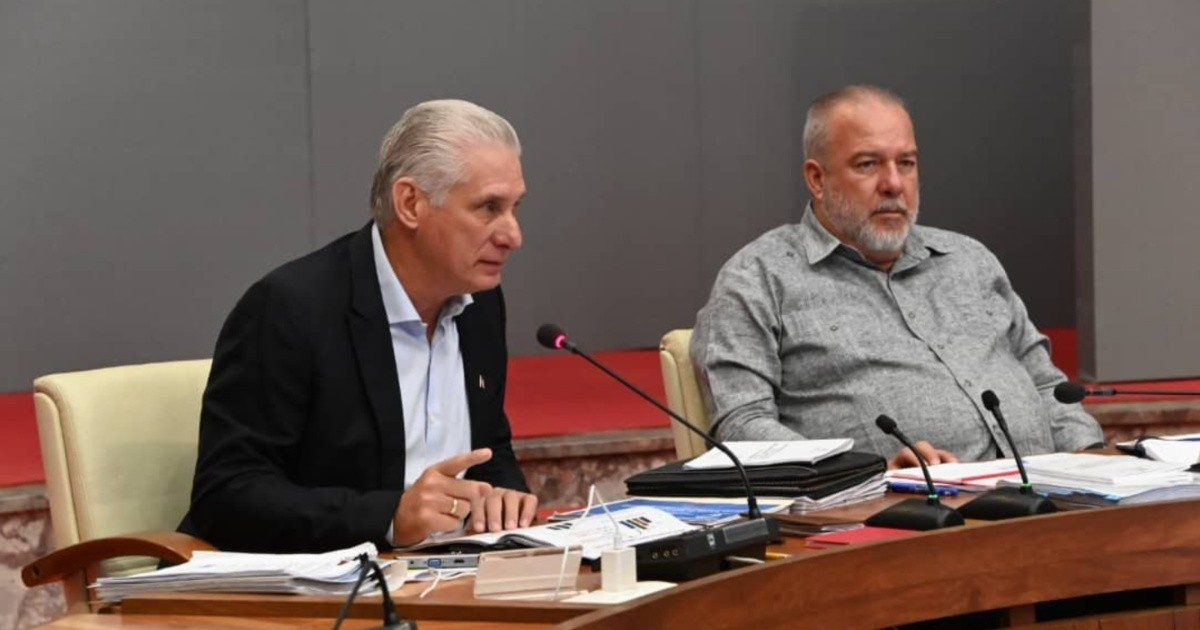
The Cuban government initiated its propaganda efforts on Tuesday in anticipation of a special session at the United Nations General Assembly set for July 7. During this session, Havana intends to bring the issue of the U.S. embargo to the international stage.
Both President Miguel Díaz-Canel and Prime Minister Manuel Marrero Cruz took to their X accounts to amplify the announcement shortly after Foreign Minister Bruno Rodríguez Parrilla previewed it in a press conference.
Díaz-Canel emphasized that Cuba will highlight "the increasing threats and the consequences of the economic suffocation imposed by the U.S. government on the Cuban people."
In a stronger statement, Marrero Cruz labeled Washington's actions as "an act of genocide," adding the slogan: "Cuba is not a threat. The blockade is."
Rodríguez has called for the session under Agenda Item 38 of the UN: "The need to end the economic, commercial, and financial blockade imposed by the United States of America against Cuba."
Unusual Diplomatic Maneuver at the UN
The upcoming session on July 7 is extraordinary and deviates from the usual annual cycle, with the next scheduled vote set for October 27, 2026, marking it as an unusual diplomatic move.
The Foreign Minister also accused the U.S. mission at the UN and its embassies worldwide of exerting "unprecedented pressures," involving coercion and threats, to prevent the General Assembly from addressing the issue.
Stalled U.S.-Cuba Relations
Since March 13, 2026, exploratory bilateral talks between Cuba and the U.S. have been underway. However, Rodríguez acknowledged on Tuesday that these discussions "show no progress."
In January 2025, the U.S. reinstated Cuba to the list of state sponsors of terrorism, banned American tourism, and on May 1, 2026, issued a new executive order expanding restrictions on energy, defense, and mining sectors, accumulating over 240 sanctions in total.
The Cuban regime estimates the accumulated damage from the embargo at over $170 billion, a figure lacking independent verification.
International Sentiment Shifts
The annual resolution against the embargo has been approved 33 consecutive times since 1992. However, in the 2025 vote, it received 165 votes in favor, down from 187 in 2024, with 12 abstentions from European Union and Latin American countries that previously voted in favor—highlighting growing international skepticism towards the Cuban regime, which undermines Havana's narrative of diplomatic isolation projected in New York.
Key Questions About the U.S.-Cuba Embargo
What is the main purpose of Cuba's campaign at the UN?
Cuba's campaign at the UN aims to denounce the U.S. embargo and highlight its adverse effects on the Cuban population, seeking international support to end these sanctions.
How has the international community responded to the embargo issue in recent years?
The international community has shown increasing skepticism towards the Cuban regime, with a decrease in support for the annual resolution against the embargo and more countries abstaining from the vote.
What are the current U.S. restrictions on Cuba?
The U.S. has reinstated Cuba on the list of state sponsors of terrorism, banned American tourism, and expanded restrictions on sectors like energy, defense, and mining through an executive order, totaling over 240 sanctions.