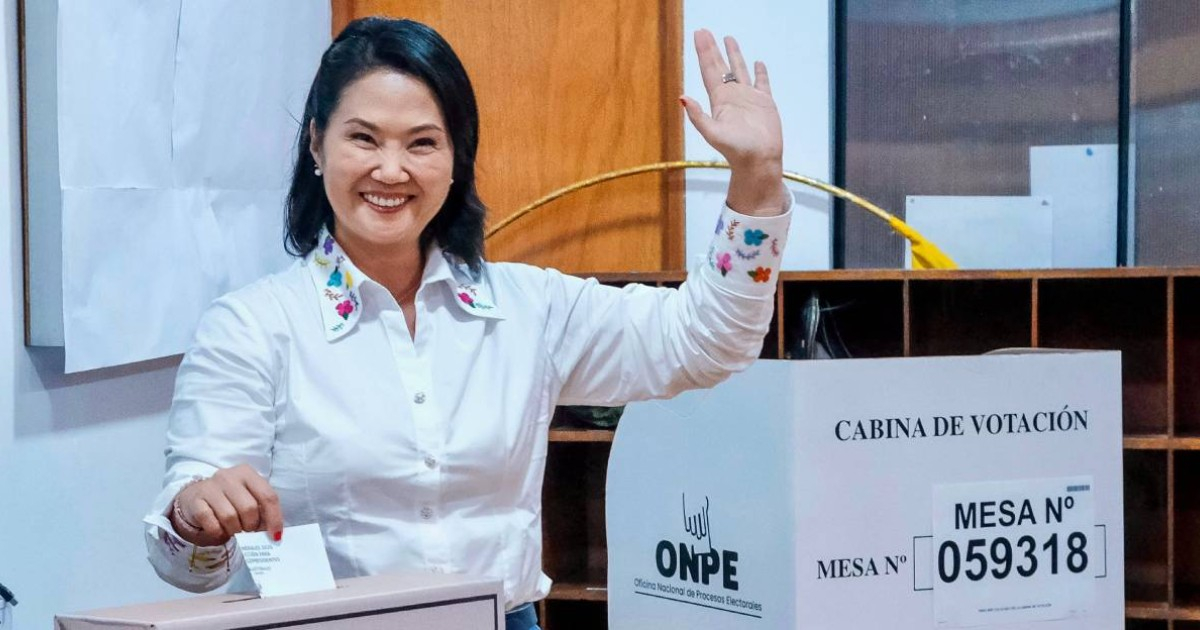
On Tuesday, U.S. Secretary of State Marco Rubio issued an official statement from the State Department, extending congratulations to Keiko Fujimori on her presidential election victory in Peru.
"The United States congratulates President-elect Keiko Fujimori of Peru on her significant electoral win," Rubio expressed in his statement, adding that the Trump administration looks forward to "enhancing collaboration with the incoming government to advance security cooperation and strengthen bilateral ties in trade and investment within our region."
This congratulatory message follows the complete tally of votes by Peru's National Office of Electoral Processes (ONPE), finalized on Monday, 22 days after the runoff election held on June 7.
Fujimori, aged 51 and leading the right-wing Popular Force party, secured 50.135% of the valid votes, totaling 9,223,396 ballots, narrowly defeating her leftist opponent Roberto Sánchez Palomino of Juntos por el Perú, who garnered 9,173,755 votes.
The election concluded with a slim margin of just 49,641 votes, marking it as one of the most closely contested in Peru's recent history.
A decisive factor was the votes from Peruvians abroad, where Fujimori clinched 63.2% and gained an 81,655-vote advantage outside the country, enough to overturn the 32,014-vote lead Sánchez held domestically.
Sánchez has alleged "ongoing fraud," citing that consular act documents from 119 foreign offices were not immediately digitized post-voting, and he stated he would not acknowledge any potential Fujimori administration.
Amid this post-electoral contention, Rubio's congratulatory note underscores international recognition of Fujimori's victory and sets the tone for the bilateral relationship Washington aims to cultivate with Lima.
Keiko Fujimori's triumph represents the culmination of four consecutive presidential bids. She was defeated in the runoff by Ollanta Humala in 2011, Pedro Pablo Kuczynski in 2016, and narrowly by Pedro Castillo in 2021 by less than 44,000 votes.
With this victory, Fujimori becomes the first woman elected as president of Peru by popular vote, a title not applicable to Dina Boluarte, who assumed office in 2022 through constitutional succession.
The fujimorismo victory comes less than two years after the passing of Alberto Fujimori on September 11, 2024, who led Peru from 1990 to 2000 in a period noted for both economic stabilization and severe human rights violations.
Under the Trump administration, the relationship between Washington and Lima is shaped by concerns over Chinese influence in the region, particularly the Chancay port, constructed by the Chinese company Cosco Shipping Ports, as well as security and anti-drug trafficking agendas.
According to Peru's ambassador to the U.S., Alfredo Ferrero, Rubio is scheduled to visit Peru before the year's end, potentially marking one of the first concrete steps in this new bilateral phase.
Fujimori will be inaugurated as president on July 28, 2026, for the 2026-2031 term, following the formal presentation of credentials by the National Jury of Elections, slated for July 2.
Key Questions About U.S.-Peru Relations Following Fujimori's Election
What are the main areas of cooperation between the United States and Peru under Fujimori's presidency?
The United States aims to enhance collaboration with Peru in security, trade, and investment, focusing on strengthening bilateral ties in these areas.
How did Keiko Fujimori secure her victory in the Peruvian presidential election?
Keiko Fujimori's victory was largely secured by a strong performance among Peruvians abroad, where she gained a significant vote advantage, enabling her to overcome her opponent Roberto Sánchez's domestic lead.
What challenges does Fujimori face following her election win?
Fujimori's presidency begins amid allegations of electoral fraud and a divided electorate, posing challenges to her administration's legitimacy and its ability to govern effectively.