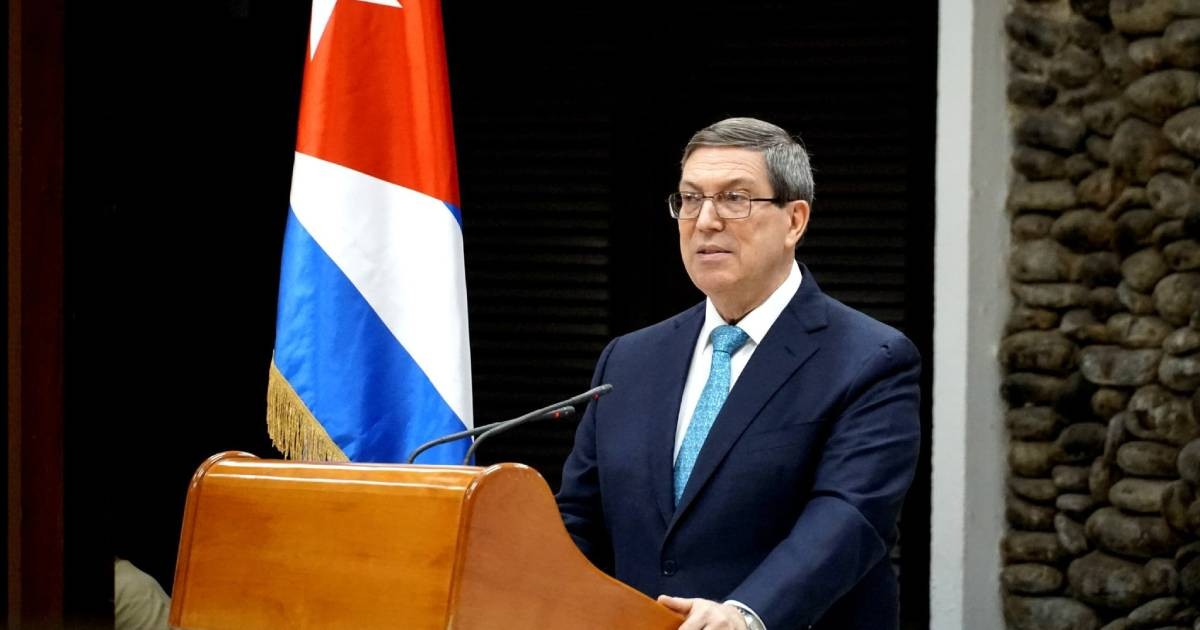
Cuban Foreign Minister Bruno Rodríguez Parrilla announced on Tuesday that Havana has formally requested an emergency session of the United Nations General Assembly for July 7. The purpose of this request is to spotlight the intensifying sanctions imposed by the United States on the island.
In a statement shared on his X account, the Foreign Minister indicated that the meeting will occur under Agenda Item 38, entitled "Necessity of ending the economic, commercial, and financial blockade imposed by the United States of America against Cuba." This session aims to address what Rodríguez describes as the aggressive actions of the U.S. government, including threats and the real possibility of military aggression, energy blockades, and other severe measures related to the embargo.
Accusations of Human Rights Violations
The Cuban government argues that U.S. sanctions amount to "an act of genocide, of collective punishment" and represent a "flagrant and systematic violation of the human rights of Cubans and of International Humanitarian Law."
Shortly after announcing the session, Rodríguez accused Washington of attempting to prevent the meeting. "We denounce the unprecedented pressures and deceitful arguments used by the U.S. government to obstruct this session, attempting to intimidate Member States, censor their right to express themselves, and threatening procedural maneuvers to block the session scheduled for July 7," he stated on X.
U.S. Diplomatic Efforts
Rodríguez also alleged that the U.S. State Department is engaging in diplomatic efforts to block the meeting and justify, in his view, "flagrant violations of the United Nations Charter and International Law."
Background of Increasing Sanctions
The call for this extraordinary session comes amidst heightened economic pressure on the Cuban regime. Since January 2026, the Trump administration has progressively tightened sanctions against Cuba. It began with Executive Order 14380, which labeled Cuba as an "unusual and extraordinary threat" and allowed for tariffs on countries supplying oil to the nation. Later in May, the scope of secondary sanctions was expanded through a new executive order.
Additional measures included sanctions imposed on May 7 against GAESA, the military conglomerate controlling significant sectors of the Cuban economy, and those announced on June 11 against the state-owned company CUPET. As a result, fuel imports to the island have plummeted by 80% to 90%, exacerbating an energy crisis that has led to power outages lasting up to 25 hours in many areas.
Diplomatic Shifts and International Support
The upcoming July 7 meeting differs from the traditional annual vote on the embargo, which the General Assembly holds each October. Instead, it is an extraordinary session requested by Cuba through an uncommon mechanism to draw international attention to the worsening economic and energy situation.
Diplomatic dynamics have shifted in recent years. In the October 2025 annual vote, Cuba's resolution received 165 votes in favor, seven against, and 12 abstentions—the lowest support in over three decades. The previous year saw backing from 187 countries, but by 2025, several Latin American governments, including Argentina and Paraguay, voted against the resolution for the first time.
Rodríguez concluded by reiterating a popular slogan in Cuba's international campaign against U.S. sanctions: "Cuba is not a threat. The blockade is."
Frequently Asked Questions about Cuba and U.S. Sanctions
What is the purpose of the UN emergency session requested by Cuba?
The emergency session is intended to address and denounce the intensification of U.S. sanctions against Cuba, which the Cuban government views as aggressive and harmful to its citizens.
How have U.S. sanctions impacted Cuba's economy?
The U.S. sanctions have significantly reduced fuel imports to Cuba by 80% to 90%, worsening an energy crisis and leading to prolonged power outages across the island.
What changes have occurred in international support for Cuba's UN resolution?
Support for Cuba's resolution in the UN has decreased, with the October 2025 vote showing the lowest backing in over 30 years, as some Latin American countries shifted their positions.