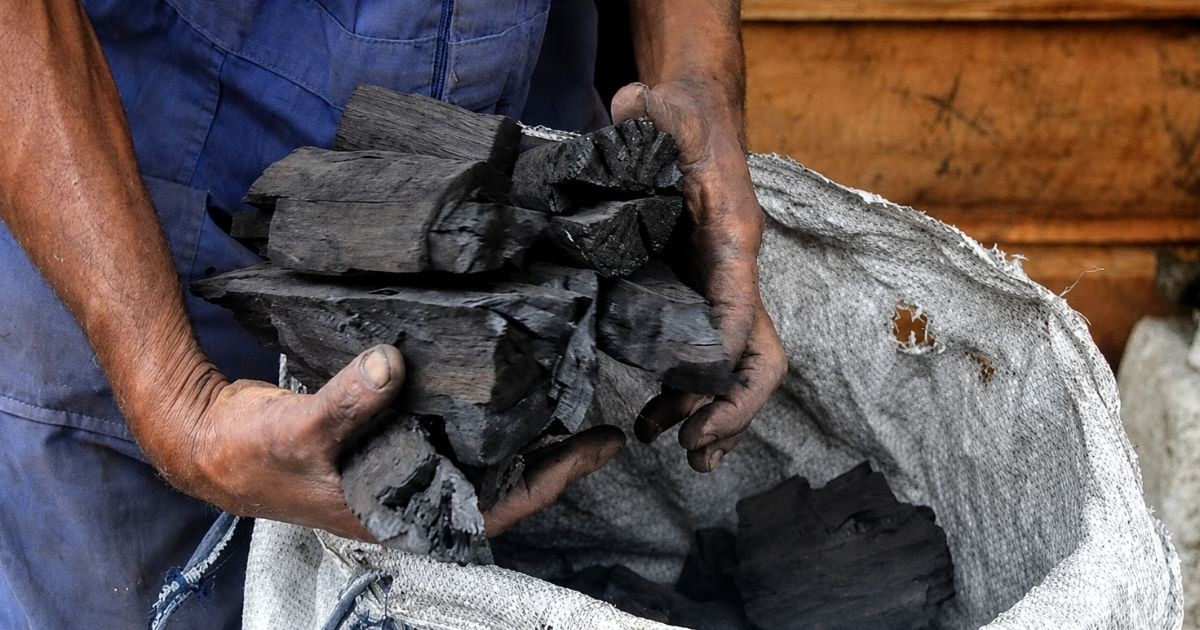
In Sancti Spíritus, the cost of a sack of charcoal has surged to over 4,000 Cuban pesos. This staggering price, which was unimaginable a few months ago, now exceeds half of the official average monthly salary of 6,930 pesos, as reported by the state-run media outlet Radio Sancti Spíritus on Monday.
Extended power outages combined with a severe shortage of liquefied gas have forced countless families in the region to rely on charcoal as their only viable cooking fuel. This dependency has driven up the cost due to high demand, relentless rains, and the introduction of new regulations.
The prevalent type of charcoal in the province is derived from the invasive marabú plant, native to Africa, which spans millions of hectares across Cuba. Its charcoal is favored for its pleasant aroma and slow-burning properties.
Local Export vs. Local Need
Ironically, Sancti Spíritus has a rich history of exporting this very product. Companies such as Forestal Integral, Flora y Fauna, and Agroindustrial de Granos Sur del Jíbaro have historically supplied European markets, including Germany, the United Kingdom, Spain, and Portugal. Yet, locals find themselves unable to afford it.
Nationwide, the price of a sack of charcoal has more than doubled over six months, rising from 900-1,400 pesos in December 2024 to 3,200-5,000 pesos by June 2026, according to provincial data.
Government's Struggle for Solutions
The provincial government has acknowledged the challenges in reversing this trend. José Martínez Hernández, the coordinator of Programs and Objectives for the Provincial Government of Popular Power, admitted the production faces numerous shortages: "The production of charcoal relies on a group of resources that are currently lacking: human resources, chainsaws, oil, gasoline. We must change the method, reconnect with these producers, and establish a payment system that encourages production."
The regime's goal is for each municipality to become self-sustaining by involving all state entities in production through a foreign currency funding scheme, not just the traditional exporting companies.
Martínez also addressed rumors circulating on social media about an alleged ban on selling charcoal in the province. "We will need to organize legal commercialization in markets, small shops, and sales points, ensuring people do not speculate on prices," he said.
Meanwhile, the government in Camagüey attempted to set an official price of 1,400 pesos for a 20-kilo sack from June 21, compared to the 3,500-4,000 pesos seen in the province's informal market.
Energy Crisis and Health Concerns
The energy crisis forcing Cubans to turn to charcoal is the worst in the country's history. May 2026 saw a record electrical deficit of 2,174 MW, with 70% of the territory affected simultaneously.
On Sunday, the deficit reached 2,140 MW. Cuba has not received Venezuelan oil since November 2025, and Mexico halted its shipments in February 2026, while the thermal infrastructure continues to suffer frequent breakdowns.
Liquefied gas, the other alternative, costs between 10,000 and 50,000 pesos on the informal market, or up to $29 for a 10-kilo canister on digital platforms, making it equally unattainable for most people.
Health officials warn that while practical, charcoal poses significant risks: its combustion emits carbon monoxide, a colorless, odorless gas that can cause headaches, nausea, dizziness, confusion, and weakness in enclosed spaces. The most vulnerable groups are children, the elderly, and individuals with respiratory or cardiovascular conditions.
In 2023, Cuba exported $61.8 million worth of charcoal, ranking as the ninth-largest exporter worldwide, yet its citizens face prohibitive prices for the same product in their home country.
Frequently Asked Questions about Charcoal Usage in Cuba
Why has the price of charcoal increased so dramatically in Sancti Spíritus?
The dramatic increase in charcoal prices is due to a combination of prolonged power outages, a severe shortage of liquefied gas, high demand, adverse weather conditions, and new regulations.
What type of charcoal is commonly used in Sancti Spíritus?
The commonly used type of charcoal in Sancti Spíritus is made from the marabú plant, an invasive species from Africa known for its pleasant aroma and slow burn.
What health risks are associated with using charcoal for cooking?
Using charcoal for cooking can generate carbon monoxide, a colorless and odorless gas that poses health risks such as headaches, nausea, dizziness, and confusion, particularly in enclosed spaces.