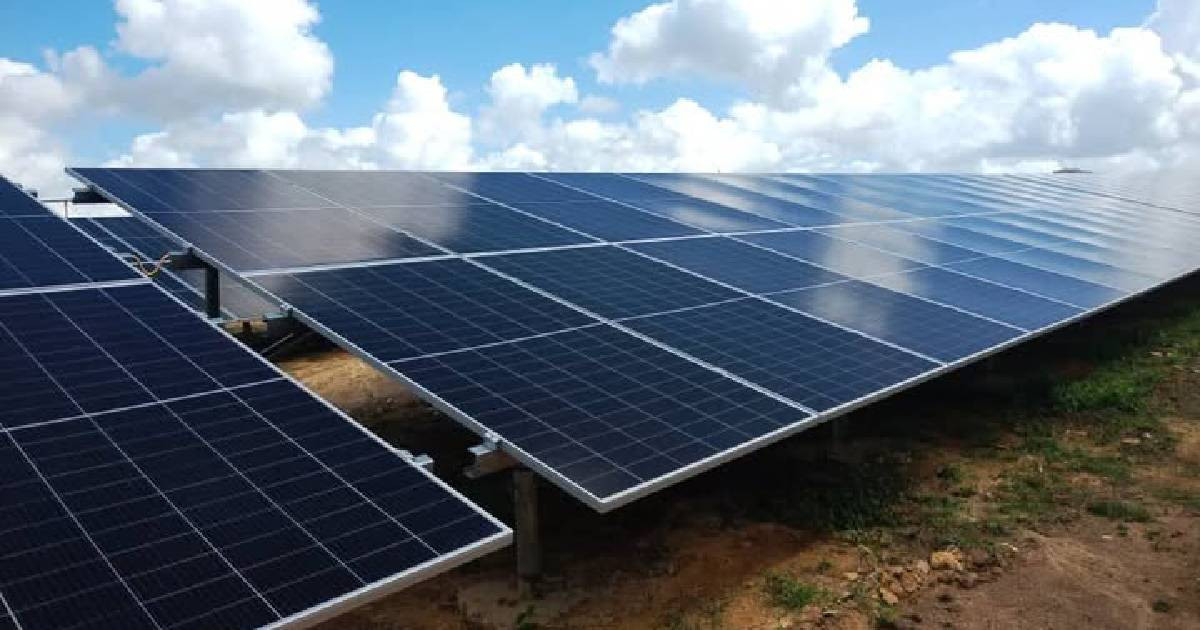
Amidst one of the most challenging phases of the energy crisis in Ciego de Ávila, the provincial Electric Company launched a new approach this Saturday. The strategy involves powering the region solely with electricity generated by local solar farms between 10:00 AM and 4:00 PM, thereby avoiding reliance on the National Electric System during this period.
This initiative highlights the system's limitations despite the growth in photovoltaic infrastructure. Ciego de Ávila boasts nine solar parks with a combined capacity of up to 108 megawatts (MW). However, this remains inadequate against a daily demand of approximately 130 MW, according to Carlos Luis Fernández Arencibia, the technical director of the Electric Company, as reported by the official newspaper Invasor.
The installed capacity does not assure the expected power output. On Saturday, the parks generated only 54.5 MW due to cloud cover, with the largest facilities producing just 16 MW.
Challenges of Solar Dependency
Four out of the nine parks have a capacity of 21.8 MW each, located in Grego (the main city), Carolina (Venezuela municipality), the agricultural hub La Cuba, and Nereida in Morón.
Despite the claim that all facilities are operating at full capacity, earlier admissions revealed that operations were limited to prevent a total collapse of the National Electric System (SEN). For instance, the Cruce de la Trocha park in Grego contributed merely 10 MW in April.
While the new plan aims to partially alleviate the situation during peak solar production hours, the scenario drastically changes by evening. During the night, the province remains under the "maximum outage" condition, persisting for over a month now.
Widespread Power Outages
Consequently, residents of Ciego de Ávila endure power cuts exceeding 20 hours daily, with electricity supply lasting a mere one and a half hours each day. This stark reality underscores that deploying solar parks alone has not reversed the deterioration of the electrical system nor significantly mitigated the crisis impacting the populace.
This contradiction between installed solar infrastructure and extended blackouts is not unique to Ciego de Ávila. Granma province, for instance, has four solar parks and experienced circuits with nearly 49 consecutive hours without power.
Holguín receives less than 30% of the electricity it requires, while Sancti Spíritus faces outages lasting up to 50 continuous hours and around 60 damaged transformers since 2026 began.
Structural Energy Issues
The core issue lies in solar energy's ability to meet only daytime demand, with park inverters requiring a stable grid signal to start up. When the SEN collapses or its frequency drops below minimum thresholds, the solar farms automatically disconnect. Additionally, Cuba lacks operational large-scale battery storage systems to save solar excess for nighttime use.
Ciego de Ávila already experienced public unrest in March when residents of Vista Alegre protested after enduring 29 hours without electricity or water. The introduction of solar park measures comes months later, yet without significant improvement in the underlying issues.
Understanding Ciego de Ávila's Energy Dilemma
Why is the solar capacity in Ciego de Ávila insufficient?
Despite having nine solar parks with a total capacity of 108 MW, the demand in Ciego de Ávila is around 130 MW daily. This gap, along with the inconsistency in power generation due to weather conditions, makes the current solar capacity insufficient.
What are the main challenges of relying solely on solar energy?
Solar energy can only cover daytime demand, and without stable grid signals, the solar parks' inverters cannot start. Additionally, the lack of battery storage systems to store excess solar energy for nighttime use is a major challenge.
How does the energy crisis impact residents in Ciego de Ávila?
Residents face power outages exceeding 20 hours daily, with a mere 1.5 hours of power supply each day. This severe lack of electricity affects daily life and demonstrates the failure of solar parks to alleviate the crisis meaningfully.