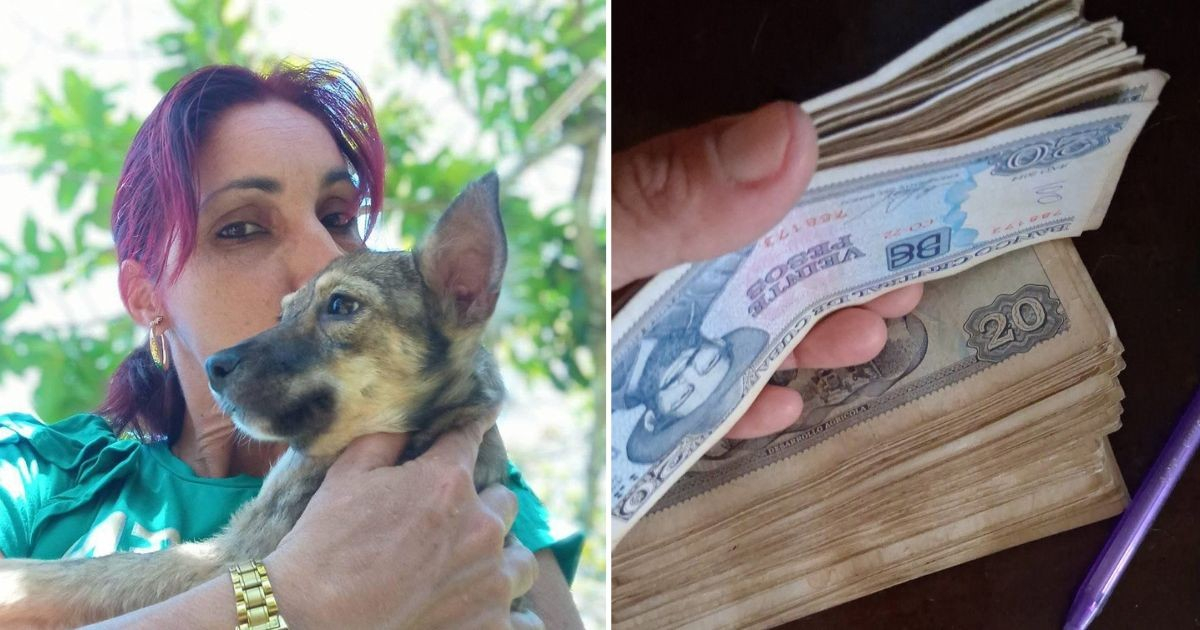
In a revealing episode of Cuba's ongoing economic challenges, a Cuban activist who runs an animal shelter in Mayabeque took to Facebook to highlight a frustrating experience. Attempting to purchase liver with cash, since the shop she visited did not accept electronic transfers, she found herself in a bind when the local business also refused her 20-peso bills.
Mileydis Suárez, the manager of "El Jardín de las Mascotas," voiced her frustration with a poignant question: "What am I supposed to do with this money?"
She recounted, "Today, I went out to buy food with cash in hand because they wouldn't accept transfers... I found a business that had liver, asked for six... and when I put my 20-peso bills on the table, they said they wouldn't take them. This is how Cubans are treating each other... we're not helping ourselves," she lamented in her post.
The Daily Struggle for Payment Acceptance
Suárez emphasized the impracticality of spending hours searching for places that accept different forms of payment: "In a shelter, there's no time to spend hours walking around asking where they accept transfers."
This incident underscores a paradox increasingly common in Cuba: while banks issue primarily low-denomination bills — in five, 10, and 20 pesos — many private businesses decline them due to inconvenience. Simultaneously, a significant number of these businesses also refuse bank transfers.
Legal Obligations and Reality
Refusing electronic payments is illegal under Cuba's Resolution 111/2023, which mandates that all businesses must accept electronic payments without imposing surcharges, with penalties ranging from 20 to 60 units — up to 60,000 pesos — for non-compliance.
Despite this, the practice of rejecting transfers or imposing fees for using them has spread. In June, there were reports of a 10% surcharge for paying by transfer at a Havana restaurant.
Broader Economic Context
The situation is exacerbated by a severe liquidity crisis. By June 2026, the government in Granma acknowledged an inability to pay pensions to over 111,000 retirees, while ATMs in Havana, Santiago de Cuba, and Camagüey have run dry, with withdrawal limits capped at just 500 pesos monthly.
For Mileydis Suárez, the impact is immediate: without food, the animals she cares for go hungry. Faced with this dilemma, she made an unprecedented appeal on social media, asking for cash donations: "Today, I ask for something I've never mentioned on social media, but if you can help by sending cash, it would mean saving over 60 animals every day."
Challenges of Animal Protection in Cuba
Animal protection efforts in Cuba operate in a legal void, with no official framework to support private shelters, leaving activists reliant solely on individual donations.
Similar cases, such as Odalis Hernández Marín, who cares for 60 dogs and two cats in Havana, or the elderly Hilda, who looks after over 50 cats in Alamar and fell ill and without food for her animals in 2024, highlight that Suárez's struggles are far from unique.
"I know people are kind enough to send transfers to help, but it's becoming increasingly difficult for protectors every day. May God watch over us," Suárez concluded in her heartfelt post.
FAQs about Economic Challenges in Cuba
Why are 20-peso bills being rejected in Cuba?
Many businesses find low-denomination bills inconvenient for transactions, leading to their rejection despite being legal tender.
What does Resolution 111/2023 entail for businesses?
Resolution 111/2023 requires all businesses in Cuba to accept electronic payments without surcharges, with fines for those who do not comply.
How is the liquidity crisis affecting Cubans?
The liquidity crisis has led to a shortage of cash, limiting pension payments and ATM withdrawals, causing significant financial strain on the population.