In a recent opinion piece titled "The Cuban Revolutionaries," columnist José Andrés Rojo of El País dissects the Cuban regime's rhetoric following the announcement of a sweeping package of 176 economic measures. The package, ostensibly a defense of socialism, paradoxically introduces private banking, allows individual shareholders, and eliminates universal subsidies.
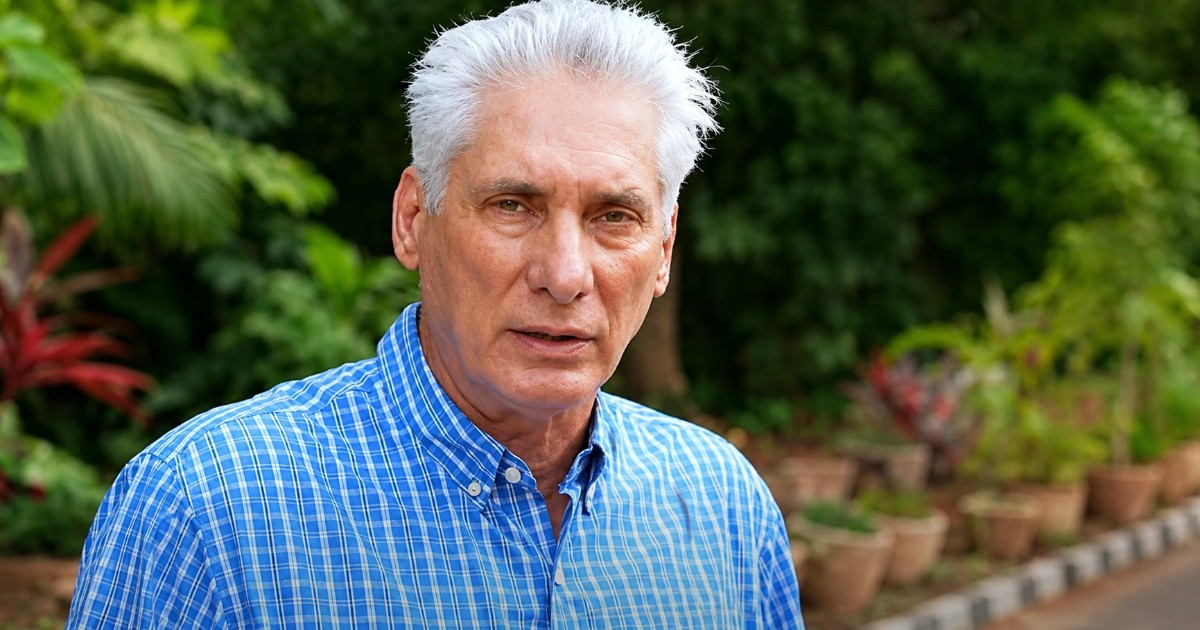
Rojo opens his article with overt sarcasm: "No need to panic, the plan remains on track," and describes Miguel Díaz-Canel's remarks as "filled with truth and optimism." He then quotes the Cuban leader: "We have reached a moment of maturity, of reflection, following years of debate, telling us we must continue defending socialism, but with some transformations."
The irony highlighted by Rojo is stark. While Díaz-Canel insists that the reforms don't signify "a renunciation of the revolution," El País journalist Carlos S. Maldonado labeled the 176 measures, ratified by the National Assembly on June 19, as "drastic." These include the creation of private banks, converting state enterprises into joint-stock companies, opening up to foreign investors, and devaluing the currency.
The Cuban government described the package as an effort to "do what is necessary to preserve what is essential," a phrase Rojo presents to readers with an implicit question: what exactly does the regime consider "essential"? He notes, "For a long time, nobody really knows what socialism the authorities, heirs of the Revolution, are referring to."
To illustrate the regime's longstanding tradition of demanding unwavering enthusiasm while suppressing dissent, Rojo references two historical episodes of cultural repression. The first involves Guillermo Cabrera Infante, who was targeted by Fidel Castro for his "inclinations toward festivity, joy, irony, and even wordplay." The second is the infamous Padilla case: in 1971, poet Heberto Padilla was coerced into a public self-criticism session by the Writers' Union for expressing pessimism, disenchantment, and criticism of the government. Rojo quotes verses that State Security officials used against Padilla: "He won't play along / He lacks enthusiasm / He doesn't clarify his message / He overlooks even miracles."
Rojo's irony underscores a historical continuity: the same regime that punished any lack of enthusiasm for decades now asks that nobody interpret its market reforms as an ideological surrender.
The Cuban public's response to the economic overhaul was predominantly skeptical. On social media, Cubans reacted with comments like "same dog, different collar" and "does anyone believe them?" amid a crisis marked by a GDP contraction exceeding 26% since 2020, power outages lasting 20 to 40 hours consecutively, informal inflation near 70%, and an average monthly salary of just $15.
Economist Pedro Monreal offered a technical yet equally scathing critique: he described the 176 measures as "a monster (or perhaps more aptly, a deformed hybrid)" and pointed out that the verb "permit" appears 29 times in the document, reflecting a logic of revocable concession—"I let you have"—rather than guaranteed rights. Monreal further noted that the text fails to substantively acknowledge the right to private property.
The United States remained unconvinced. The State Department labeled the reforms "superficial smoke signals," and the Trump administration announced new sanctions on June 24 against five entities linked to the military conglomerate GAESA, including the International Financial Bank and Universal Warehouses S.A. Since January 2026, Washington has imposed over 240 sanctions on Cuba under Executive Order 14404.
Rojo concludes his column with a question encapsulating his irony: it remains to be seen what Donald Trump deems "necessary" to do on the island to "preserve" what the U.S. president considers "essential." "We will soon find out," he concludes, leaving an open question that the Cuban regime, caught between its socialist rhetoric and market reforms, seems unable to answer.
Understanding Cuba's Economic Reforms
What are the key components of Cuba's 176 economic measures?
The measures include the establishment of private banks, conversion of state enterprises into joint-stock companies, opening to foreign investors, and currency devaluation.
How did the Cuban public react to the economic package?
The public reaction was largely skeptical, with many expressing disbelief and frustration on social media, amid ongoing economic challenges.
Why did the United States dismiss Cuba's economic reforms?
The U.S. viewed the reforms as superficial and imposed additional sanctions, citing them as insufficient to signify genuine ideological change.