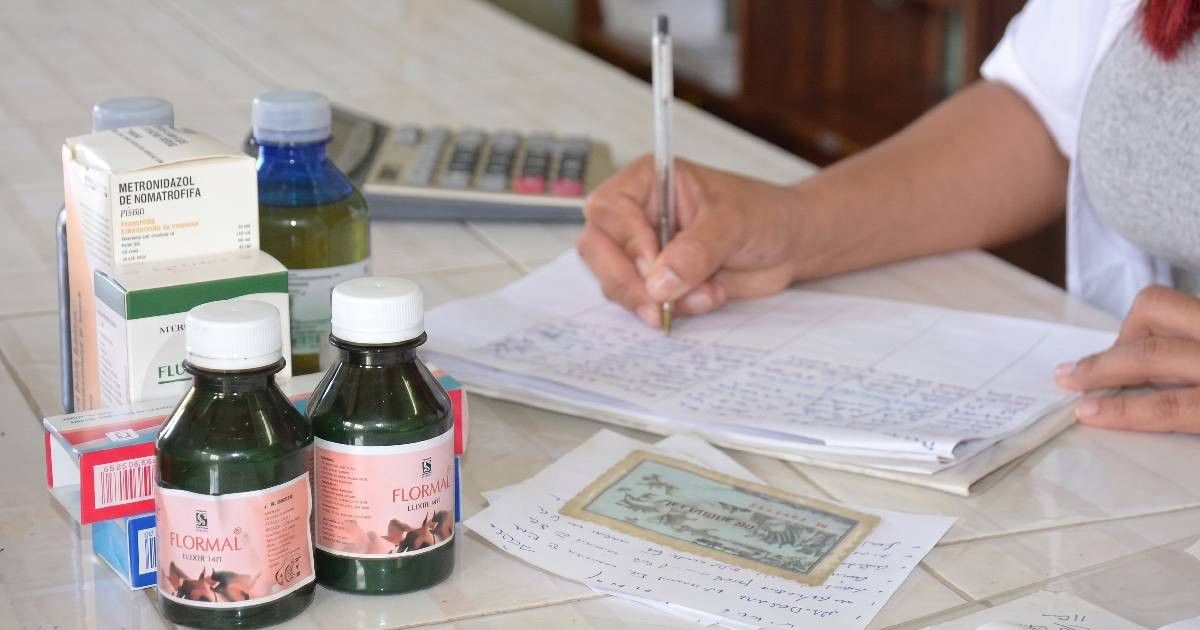
Sancti Spíritus is grappling with a shortage of over 300 essential drugs, as confirmed by Elier Melendres de Armas, head of the Wholesale Pharmaceutical Unit in the province. Despite this alarming deficit, local health authorities claim they are maintaining a "stable" supply for critical programs such as hemodialysis, maternal and child care, and urgent care for severely ill patients, according to Radio Sancti Spíritus.
"We are currently facing a shortage of more than 300 medications," Melendres acknowledged, "yet there are programs prioritized by the country, like hemodialysis, which have been consistently supplied despite the tense situation. While our coverage might not be extensive, we ensure the necessary products for this program are available."
Adding to the support, Melendres described a system of emergency logistics: "If any medication needed to save a patient's life is available elsewhere in the country, we facilitate its rapid transfer to the necessary hospital."
Contradictions Amidst a National Crisis
The assurances of "stability" in Sancti Spíritus starkly contrast with a national pharmaceutical crisis of alarming magnitude. Midway through this month, Mayda Mauri Pérez, president of the state-run Biocubafarma, publicly admitted the inability to secure nearly 300 of the 395 medications promised to the national health system. She attributed the predicament to the U.S. embargo and a funding gap exceeding $250 million for raw materials.
However, many Cubans dismiss these explanations. "We've faced medication shortages for years," one citizen commented on social media. Another criticized, "Now everything is blamed on the embargo. When will they ever self-criticize? They planned nothing; it's pure inefficiency."
Hemodialysis: A Nationwide Struggle
Although Sancti Spíritus claims to have secured the hemodialysis program, the rest of the country is not as fortunate. In June, patients at the Provincial Hospital of Camagüey went nearly a week without treatment due to a lack of essential supplies like acidic concentrate and bicarbonate.
Approximately 3,000 patients with chronic renal failure depend on 56 units throughout the island, yet medical transport to treatment centers has been halted in areas like Las Tunas, Granma, Pinar del Río, Ciego de Ávila, and Villa Clara due to fuel shortages.
A Persistent and Escalating Problem
The drug crisis in Sancti Spíritus is not a recent development. In 2022, the province already reported a shortage of 120 medications, including 39 critical for seriously ill patients. In just four years, that deficit has more than doubled.
In July 2025, Health Minister José Ángel Portal Miranda acknowledged before the National Assembly that just 30% of the essential drug list was available in Cuba. Earlier this year, he declared the Cuban health system was "on the brink of collapse." Infant mortality rates have nearly tripled from 3.9 to 9.9 per 1,000 live births between 2018 and 2025, and over 96,000 patients remain on surgical waiting lists.
A survey conducted between February and March with over 1,700 participants revealed that 54.2% of Cubans face severe hurdles in accessing medications, while only 4.8% obtained them without difficulty.
Understanding the Drug Shortage in Cuba
What is the current drug shortage situation in Sancti Spíritus?
Sancti Spíritus is currently experiencing a deficit of over 300 essential medications, affecting various healthcare programs.
How are health authorities managing the crisis?
Local health authorities claim to maintain stable coverage for critical programs and have implemented an emergency system for urgent cases.
What national factors contribute to the pharmaceutical crisis?
The crisis is partly attributed to the U.S. embargo and a significant funding gap for raw materials needed for drug production.
How are patients affected by the shortages?
Patients face severe challenges in accessing necessary medications, with many awaiting critical treatments and surgeries.