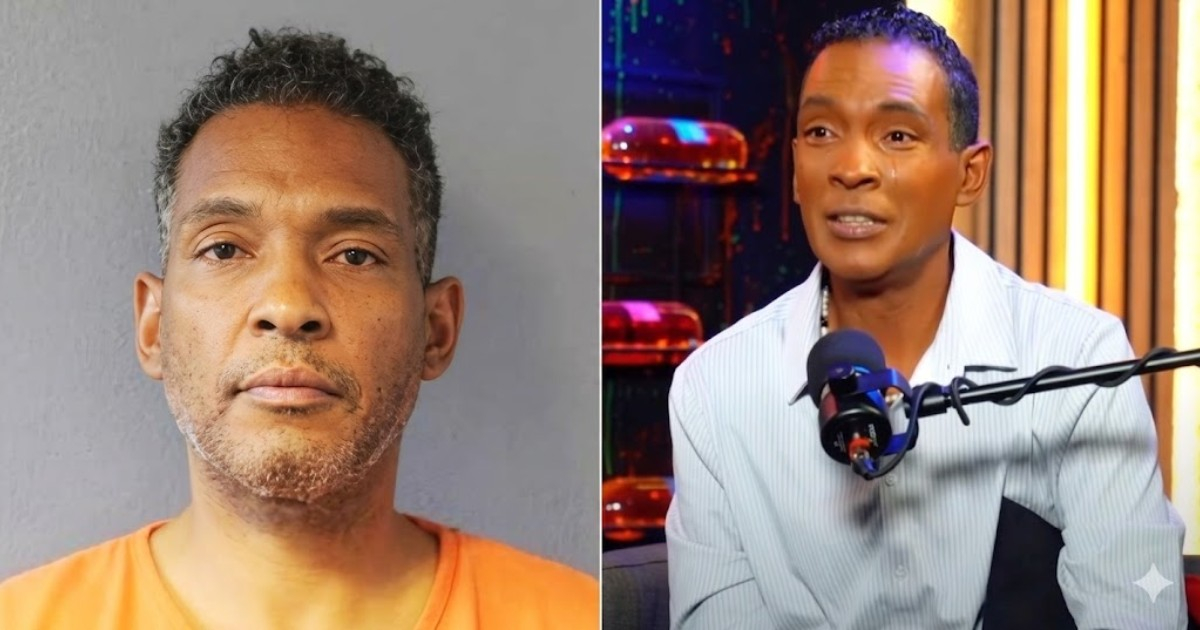
Cuban broadcaster and presenter Frank Abel Gómez Bernal has reached out from the Bluebonnet Detention Center in Anson, Texas, where he is currently held by the U.S. Immigration and Customs Enforcement (ICE), facing potential deportation back to Cuba.
In a message directly addressed to Secretary of State Marco Rubio, Frank Abel spoke on behalf of himself and four other Cubans he mentioned by name.
The broadcaster pleaded for leniency for Cubans in deportation proceedings, especially those holding the I-220A document, and criticized the sanitary and food conditions at the center where he is detained.
An Appeal Rooted in Cuban Heritage
From the very start of his video message, Frank Abel appealed to the Cuban heritage of Secretary of State Marco Rubio.
"Do you not remember your parents' roots? Do you remember why you hold your current government position?" he questioned after introducing himself and naming those who support his plea.
"When your parents came from Cuba and embraced this great nation, didn't they have the opportunity to legalize their status in the United States? Why are we being sent back to Cuba? We risk imprisonment and mistreatment by state security," he added.
Detention Center Conditions
Frank Abel devoted part of the video to highlighting the substandard conditions at the facility where he is held.
"Here we are at Bluebonnet Detention Center, a place where we don't receive necessary medical attention, and we've seen people with chronic illnesses being mistreated. We also endure an unbalanced diet and poor food service, which could soon land us not just in health institutions, but with diseases," he lamented.
Another central point of his message is the failure of immigration judges to apply laws protecting Cubans in his situation:
"Without any mercy, immigration judges and the prosecution disregard our Cuban Adjustment Act, and even less so consider the dictatorship that has ruled Cuba for over 60 years, which you aim to overthrow."
A Desperate Plea for Help
The video concluded with an urgent plea summarizing the broadcaster's distress:
"Please, this call is for you, Marco Rubio. Help us, don't let Cubans who came here to work, with no criminal record, continue to be deported," he implored.
"From Anson, Texas, this is Frank Abel, along with all Cubans, saying we are in a land of freedom. Help," he concluded.
The I-220A is a supervised release order, not equivalent to parole, does not grant permanent residency, and does not allow eligibility for the Cuban Adjustment Act.
It is estimated that between 400,000 and 500,000 Cubans are in this legal limbo in the United States.
A Protracted Battle with Uncertainty
Frank Abel arrived in the United States in January 2022 after leaving an artistic tour, crossing through the southern border with Mexico. He was a known figure in Cuban state radio and television with programs like "El Exitazo" on Radio Taíno.
In June 2025, he received a deportation notice after his political asylum request in Tampa was unsuccessful.
His arrest in Oklahoma County in December 2025, following a traffic violation that led to four charges, including resisting arrest, further activated the immigration process against him.
On December 20, he was handed over to ICE by Oklahoma police.
The Eleventh Circuit Court of Appeals is reviewing the legal status of the I-220A, which could alter the situation for hundreds of thousands of people.
Understanding the Cuban Adjustment Act and Deportation Challenges
What is the I-220A and how does it affect Cuban immigrants?
The I-220A is a supervised release order for immigrants, which does not grant permanent residency or parole. It leaves many Cubans in a legal limbo, as they cannot apply for the Cuban Adjustment Act benefits.
Why is Frank Abel Gómez Bernal facing deportation?
Frank Abel is facing deportation after his political asylum request was denied and subsequent legal issues in Oklahoma triggered immigration proceedings against him.
What are the conditions like at Bluebonnet Detention Center?
Frank Abel has criticized the center for inadequate medical care, poor diet, and overall substandard living conditions, which he claims could lead to health issues for detainees.