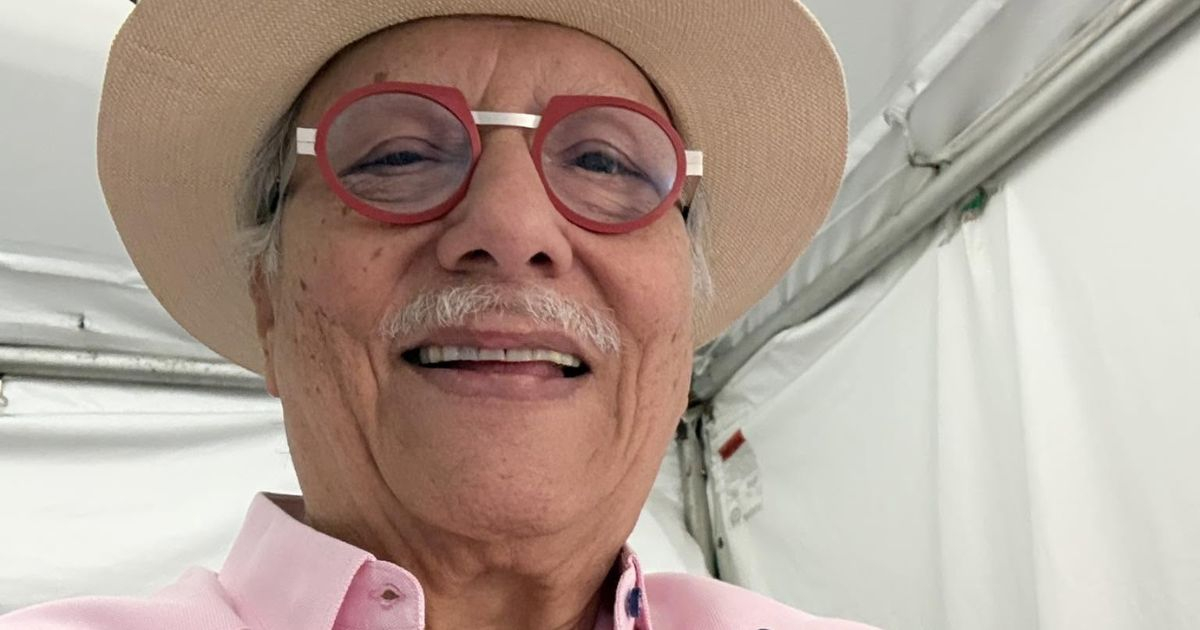
The renowned Cuban trumpeter, Arturo Sandoval, shared a heartfelt message on Facebook this past Friday, expressing that at 77 years of age, he has completely given up hope of ever returning to his homeland, not even for a brief visit. With what he describes as "painful certainty," Sandoval acknowledged that his return to Cuba is now an impossibility.
"I was born in Cuba and lived there until I managed to escape at the age of 40. Today, at 77, I carry the painful certainty that there is no hope left for me to return, not even as a visitor. This is a wound that never heals," wrote the Grammy-award-winning musician.
The tone of Sandoval's recent statement marks a sharp contrast to his previous sentiments. In 2021, he had openly shared that his greatest dream was to visit Cuba once more, lamenting that "not a day goes by without feeling the pain" of the island's plight. However, five years later, that hope has turned into a painful acknowledgment of an impossible return.
In his post, Sandoval criticized those who, from abroad, still support the regime. "The most heartbreaking aspect is not just the impossibility of returning, but witnessing how some people, from the comfort of distance or ignorance, dare to defend and justify a criminal tyranny that has destroyed the Cuban nation for over 67 years," he stated, highlighting the tragedy that continues to unfold in his homeland.
The legendary jazz icon also offered his own interpretation of freedom, a concept he claims Cuba has never truly experienced. "Freedom means being able to speak without fear, think without censorship, dissent without punishment, travel without needing permission, dream without the state controlling everything," he asserted, adding that "the regime has even stolen the ability to dream from entire generations of Cubans."
Sandoval posed poignant questions to the world: "How can an entire people continue to endure such oppression? How can one survive without a shred of freedom? What are the limits of human resilience?" He concluded with a powerful statement: "No human being should live on their knees, enslaved in their own land. It deeply pains me to see the unacceptable become normalized."
This message is not Sandoval's first of its kind. In September 2025, he had already pleaded for Cuba to awaken with a similar tone, and in February 2024, he condemned the accumulation of garbage in Havana as a symbol of the country's decay, referring to the island as "sunk in misery and despair." Additionally, in December of that same year, while receiving the Kennedy Center Honor, he lamented that Cubans on the island could not celebrate that recognition.
Sandoval's journey into exile began in 1990 when he sought asylum at a U.S. embassy during a European tour. The Cuban regime labeled him a "traitor," banned his music and image on the island, and his family faced immediate reprisals, including public shaming, vandalism, and job dismissals for his sister and brother-in-law. His parents eventually made their escape from Cuba, enduring a perilous raft journey in their seventies.
This poignant message arrives amid a severe humanitarian crisis in Cuba. The Cuban Observatory for Human Rights documented 3,179 repressive actions in 2025, the European Parliament is demanding the release of 1,260 political prisoners, and by June 2026, the UN raised alarms about the severely deteriorating living conditions on the island, noting a doubling of child mortality rates and essential medications being available only at 30% of their usual levels.
"My greatest wish, my plea, is that one day Cuba awakens. That freedom, that forbidden and feared word on the island, finally becomes reality. Because living without freedom is not living; it's merely surviving in chains," Sandoval concluded in his heartfelt post.
Arturo Sandoval's Reflection on Cuba's Crisis
Why does Arturo Sandoval believe he will never return to Cuba?
Arturo Sandoval feels certain he will never return to Cuba due to the oppressive nature of the regime and his past experiences of fleeing the country, combined with the lack of change in the political landscape.
What are Sandoval's views on freedom?
Sandoval believes that true freedom means speaking without fear, thinking without censorship, dissenting without punishment, traveling without needing permission, and dreaming without state control.
What actions has Sandoval criticized in his Facebook post?
Sandoval criticized those abroad who continue to support the Cuban regime, calling out their defense and justification of a tyranny that has devastated the nation for decades.