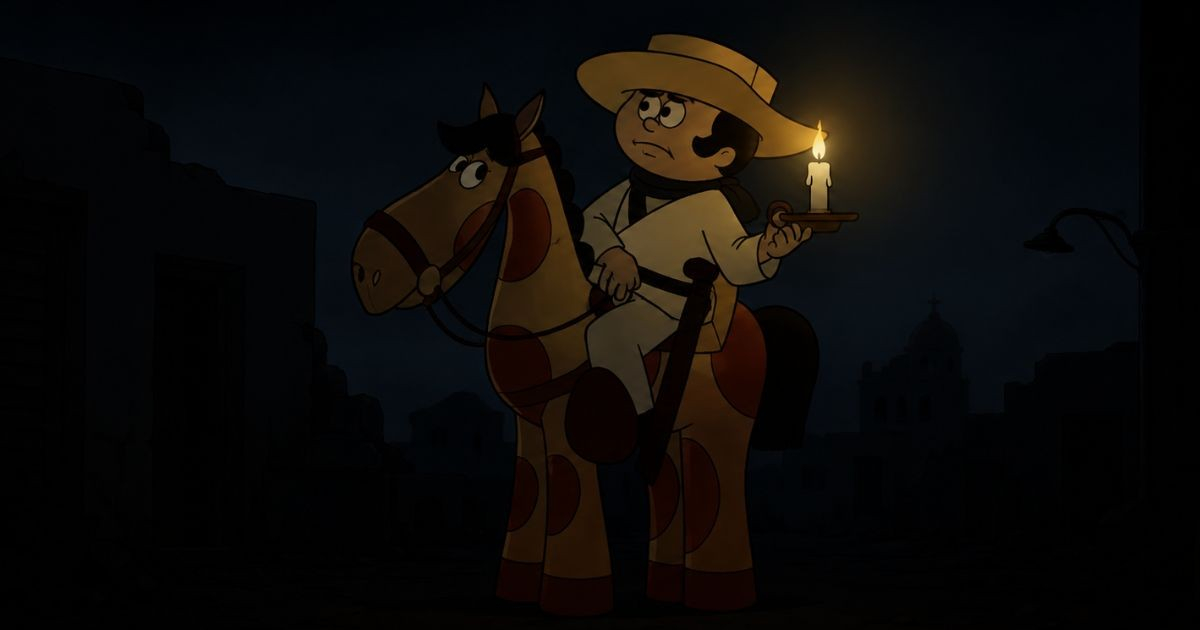
A woman from Havana, born in 1985, leveraged artificial intelligence to estimate the total hours she has spent without electricity throughout her life. The result was a staggering figure that encapsulates decades of energy crises: 44,300 hours, equating to more than five full years in darkness.
Yulieta Hernández Díaz shared her findings on Facebook, detailing how she enlisted ChatGPT to estimate this number using her birth date—September 11, 1985—and the historical progression of power outages in Cuba.
"The result was shocking: out of the approximately 357,500 hours I've lived, around 44,300 hours have been spent without power," she wrote.
The calculation considered four major phases of Cuba's energy crisis: the Special Period of the 1990s, when outages averaged up to 12 hours daily following the collapse of the Soviet oil subsidy; years of relative electrical stability; the "solidarity blackout" starting in 2019; and the sustained worsening from 2022 to the present day.
Hernández was transparent about the calculation's limitations: "It's an estimate, not an exact figure, but it's based on historical data and the known evolution of blackouts in Cuba."
Nevertheless, the symbolic impact of the number transcends mathematical precision.
"Beyond the exact figure, it compels us to reflect on how much time in our lives has been lost waiting for the power to return," she emphasized.
Her post comes during one of the most severe moments of Cuba's energy crisis. In May 2026, the nation shattered its record for electrical deficit with 2,174 MW, leaving 70% of the island without power simultaneously.
In March 2026, Cuba experienced its longest nationwide blackout: 29 hours and 29 minutes of total disconnection from the national power grid. This Thursday, there were 7,373 reported outages across the country, with 1,676 in Havana alone.
Currently, the Cuban capital endures between 20 and 24 hours daily without electricity, while areas in Matanzas have faced up to 85 consecutive hours without power so far in June.
The situation worsened when Venezuela halted its oil shipments to the island in January 2026.
The system's collapse is rooted in structural issues that no government has managed to address over the past three decades.
Experts estimate that revamping Cuba's electrical infrastructure would require between $8 billion and $10 billion and three to five years of continuous work.
Hernández Díaz's post is more than a mathematical exercise; it is a biographical testimony of what it means to have been born and raised in Cuba since 1985, with darkness as a constant companion.
Understanding Cuba's Energy Crisis
How many hours has Yulieta Hernández Díaz lived without electricity?
Yulieta Hernández Díaz has estimated that she has lived approximately 44,300 hours without electricity.
What historical periods were considered in the calculation of Cuba's energy crisis?
The calculation included the Special Period of the 1990s, years of relative stability, the "solidarity blackout" starting in 2019, and the ongoing crisis from 2022 onwards.
What structural challenges does Cuba face in restoring its electrical infrastructure?
Cuba's electrical infrastructure requires a significant investment of $8 billion to $10 billion and three to five years of sustained work to address long-standing structural issues.