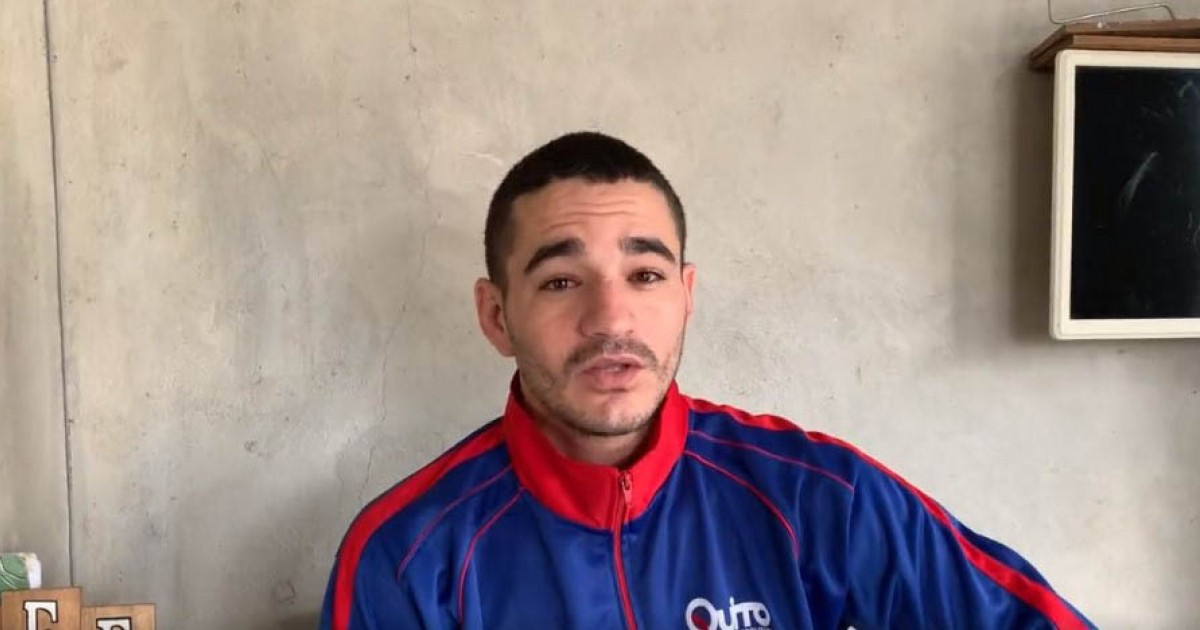
On Thursday, Cuban State Security warned former political prisoner Andy García Lorenzo that he could face a prison sentence ranging from 10 to 30 years, life imprisonment, or even the death penalty. This threat stems from the potential publication of images of military installations in Cuba or sharing information about them with the United States, as reported by García Lorenzo himself in statements collected by CubaNet.
García Lorenzo was summoned to an official appointment issued by the Unit for Crimes Against State Security in Villa Clara, signed by First Lieutenant Amanda Rodríguez García. During the meeting, he was interrogated by Lieutenant Colonel Abelardo Rodríguez and two other plainclothes agents.
The young activist stated that he initially believed the questioning would be about his frequent social media posts concerning the crisis in Santa Clara, power outages, and public protests.
"I thought it would be about my social media posts, but it wasn't," he explained.
Warnings and Legal Threats
The agents informed García Lorenzo that these were "minor issues" and that the real reason for the summons was to warn him about the consequences of disclosing images of military facilities.
"The purpose was to warn me that if I published images of military units or similar sites, or provided blueprints to the United States of such facilities, I could be sentenced to 10 to 30 years in prison or face the death penalty," he stated.
This warning is based on Article 116 of the Cuban Penal Code, effective since September 2022, which penalizes espionage with sentences ranging from 10 years of imprisonment to life imprisonment or capital punishment.
Examples and Previous Cases
As an example, the officers cited the case of comedian Eddy Ceballos, creator of the Despingovery Channel, who was arrested in early June after posting a video at a former military installation housing Soviet missiles from the 1960s. His family claims he could face up to 30 years in prison for alleged espionage and military property trespassing.
Although García Lorenzo asserted he has never shared such content, the agents tried to compel him to sign a document agreeing not to do so. He refused.
"They then told me to sign a statement saying I refused to sign. I responded that three military officers were enough witnesses to my refusal and that I had nothing to do with such content," he recounted.
Increased Surveillance and Continued Activism
During the interrogation, the officers also revealed that surveillance on him increased following a visit he received earlier this year from diplomats at the U.S. Embassy in Havana.
"They told me that after that visit, I am under a different kind of monitoring," García Lorenzo explained.
Andy García Lorenzo regained his freedom in July 2025 after serving a full four-year sentence for participating in the July 11, 2021, protests in Santa Clara. During his incarceration at the Guamajal prison, he reported physical and psychological torture, spent a month in isolation, and engaged in several hunger strikes.
Since his release, he has maintained an active presence on social media, denouncing the island's crisis. In November 2025, he publicly identified the officer who, according to his testimony, assaulted him during a hunger strike while in prison.
The organization Justicia 11J condemned the threats and stated that such summonses against former political prisoners are acts of harassment and a violation of fundamental rights, including freedom of expression and personal security.
The NGO also warned that since the 2025 releases, at least seven former political prisoners have returned to jail for posting critical content on social media. According to their records, around 760 political prisoners remain incarcerated in Cuba.
Despite the warnings, García Lorenzo affirmed that he does not intend to abandon his activism.
"I have the duty to continue working for Cuba's freedom," he declared.
Understanding the Risks and Resistance in Cuba
What are the legal repercussions in Cuba for sharing military information?
According to Article 116 of the Cuban Penal Code, sharing military information can result in a prison sentence of 10 to 30 years, life imprisonment, or even the death penalty for espionage.
How has Andy García Lorenzo continued his activism post-incarceration?
Since his release, García Lorenzo has actively used social media to highlight and oppose the ongoing crisis in Cuba, despite facing threats and increased surveillance from state authorities.
What actions has Justicia 11J taken regarding threats to former political prisoners?
Justicia 11J condemns the harassment of former political prisoners and advocates for their rights, highlighting violations of freedom of expression and personal security under the Cuban regime.