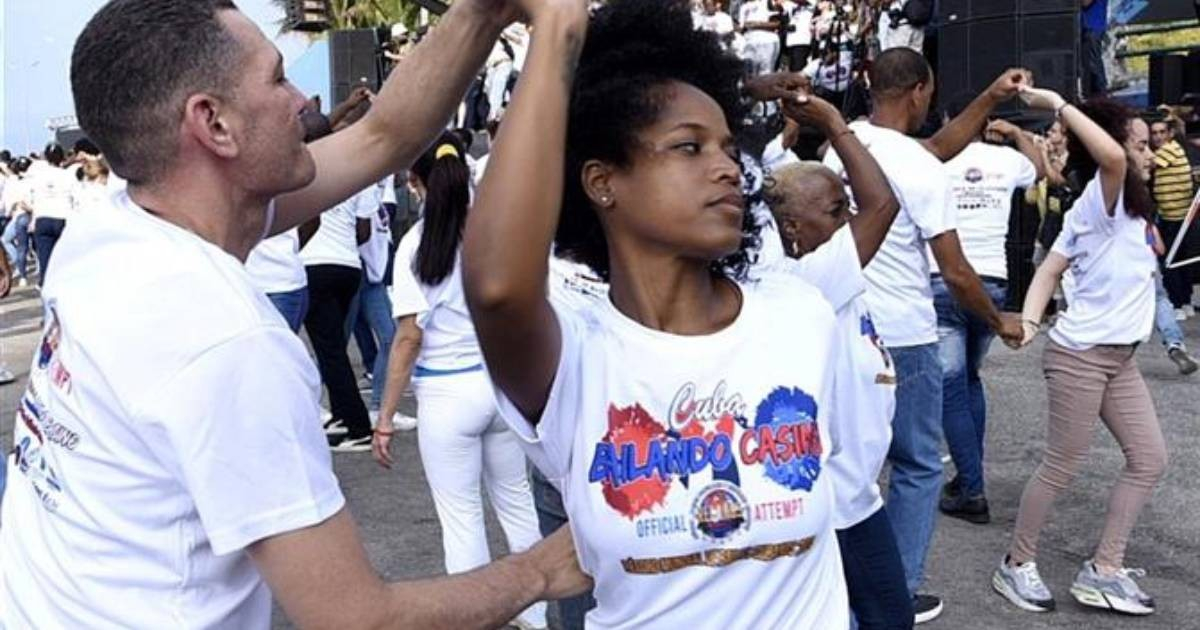
The nonprofit organization Treinta Y Tres Delaware Rueda, focused on promoting the Cuban Casino Rueda dance style in the United States, has been awarded a $50,000 grant from the national initiative "Walking Together: Investing in Folklife in Communities of Color." This funding will boost efforts to enhance the teaching and promotion of this cultural tradition among both the Cuban community and the broader American public.
The announcement was made on Thursday by the United States Regional Arts Organizations (USRAO), which allocated $3.34 million in total to 96 organizations and individual artists nationwide. This initiative is part of a pilot program managed by Mid Atlantic Arts.
Treinta Y Tres Delaware Rueda plans to use the grant to expand its educational programs, maintain free or affordable community events, and continue promoting Cuban culture through classes, performances, dinners, and dances throughout Delaware.
"This opportunity allows us to continue spreading the joy of dancing Casino Rueda," a representative from the organization remarked. "It supports us in keeping our community events accessible while we share Cuba's rich cultural traditions through ongoing performances, dinners, dances, and classes, enhancing cultural awareness across Delaware."
The grants from this program are awarded without requiring financial matching or imposing restrictions on resource use, offering recipients increased flexibility to pursue cultural preservation projects.
Only two beneficiaries were selected from Delaware. Alongside the Cuban organization, Wilmington-based artist Terry Sammons, known for his beadwork representing the Lenape Indigenous nation, received a $15,000 grant.
Jessica Ball, director of the Delaware Division of the Arts, emphasized the significance of both projects. "The arts have a unique power to bring people together, preserve heritage, and strengthen the fabric of our communities throughout Delaware," she stated.
Originating in Havana during the 1950s, Casino Rueda is a form of group dance where multiple couples form a circle and execute synchronized moves following a leader's calls, frequently switching partners.
Over the years, Cuban emigration has spread this cultural expression to numerous countries, where associations and community groups strive to keep the tradition alive. In Cuba, efforts have even been made to set a Guinness World Record with a giant rueda and to push for its recognition by UNESCO as Intangible Cultural Heritage, though such a designation has yet to be approved.
This year's call for applications saw over 2,000 submissions from organizations and artists across the United States and its territories. Out of these, 96 beneficiaries were selected following a review process conducted by experts in folklore, cultural heritage, and traditional arts.
Among the grants awarded, 56 organizations received $50,000 each, while 40 individual artists were granted $15,000.
Juan Souki, executive director of Mid Atlantic Arts, highlighted that preserving cultural traditions "is essential for bolstering the vitality of historically marginalized communities" across the nation.
Recipients come from all 50 states, the District of Columbia, Puerto Rico, Guam, American Samoa, the U.S. Virgin Islands, and the Northern Mariana Islands, with at least one project selected from each jurisdiction.
Preserving the Casino Rueda Dance Tradition
What is the Casino Rueda dance?
Casino Rueda is a Cuban dance style that originated in Havana in the 1950s, characterized by multiple couples dancing in a circle, executing synchronized moves and frequently changing partners based on the calls of a leader.
How will the grant support Treinta Y Tres Delaware Rueda?
The $50,000 grant will enable Treinta Y Tres Delaware Rueda to expand its educational programs, keep community events free or affordable, and continue promoting Cuban culture throughout Delaware through various activities such as classes, performances, and dances.
Why is cultural preservation important according to Mid Atlantic Arts?
According to Mid Atlantic Arts, preserving cultural traditions is crucial for strengthening the vitality of historically marginalized communities across the country.