Since Cuba's expulsion from the Organization of American States (OAS), over 800,000 vessels have traversed the Panama Canal. This significant event took place in Punta del Este, Uruguay. Already in 1960, Cuban dictator Fidel Castro boldly declared, "with or without the OAS, we will win the fight."
Before my time, Carlos Puebla released his song "The OAS is a Laughing Matter." His lyrics mocked the OAS, stating, "How can I not laugh at the OAS, when it's such an ugly thing..." This reflected the regime's propaganda stance.
Raúl Castro and Díaz-Canel have perpetuated the same critical rhetoric towards the OAS, echoed by their allies in Nicaragua and Venezuela. For regimes like those in Cuba, Venezuela, and Nicaragua, any organization promoting freedom, democracy, and human rights poses a significant threat.
Cuba's Declining Influence
Since Cuba's departure from the OAS, the landscape has shifted considerably. Back then, Fidel Castro's regime was gaining momentum with Soviet backing. Today, under Raúl Castro’s family, the dictatorship is rapidly deteriorating, losing allies along the way.
Key Discussions at the Assembly
The recently concluded 56th OAS General Assembly in Panama spotlighted the lack of freedom, democracy, and severe human rights violations in Cuba, Venezuela, and Nicaragua. Albert Ramdin, the OAS Secretary General, emphasized the need to expand democratic spaces, specifically naming Cuba, Nicaragua, and Venezuela. He later called for the restoration of full democratic systems in these countries and expressed concern for political prisoners, demanding their immediate release.
International Condemnation
During the assembly's opening, Panamanian President José Raúl Mulino condemned the deterioration of human rights in Nicaragua, expressed hope for full democracy in Cuba, and urged rapid transition in Venezuela through free and fair elections. The European Union, during discussions, demanded the unconditional release of all political prisoners in Caracas, highlighted the worsening situation in Nicaragua, including the death of Brooklyn Rivera, and urged Cuba to respect its citizens' rights.
Call for Concrete Actions
U.S. Deputy Secretary of State Christopher Landau called for tangible results from the OAS, labeling Cuba as a failed and authoritarian state. Costa Rican Foreign Minister Manuel Tovar denounced Nicaragua's repression and demanded clarity on Rivera's death. The call for the release of political prisoners in Cuba, Nicaragua, and Venezuela was reiterated throughout the assembly.
Media and Human Rights Advocacy
Panamanian and international media coverage highlighted the importance of these discussions and the gap between diplomatic language and actual events. While local outlets detailed interventions by Mulino, Landau, and the EU, other reports stressed that documents avoided outright delegitimization of the regimes, illustrating that the issue lies in a lack of concrete action.
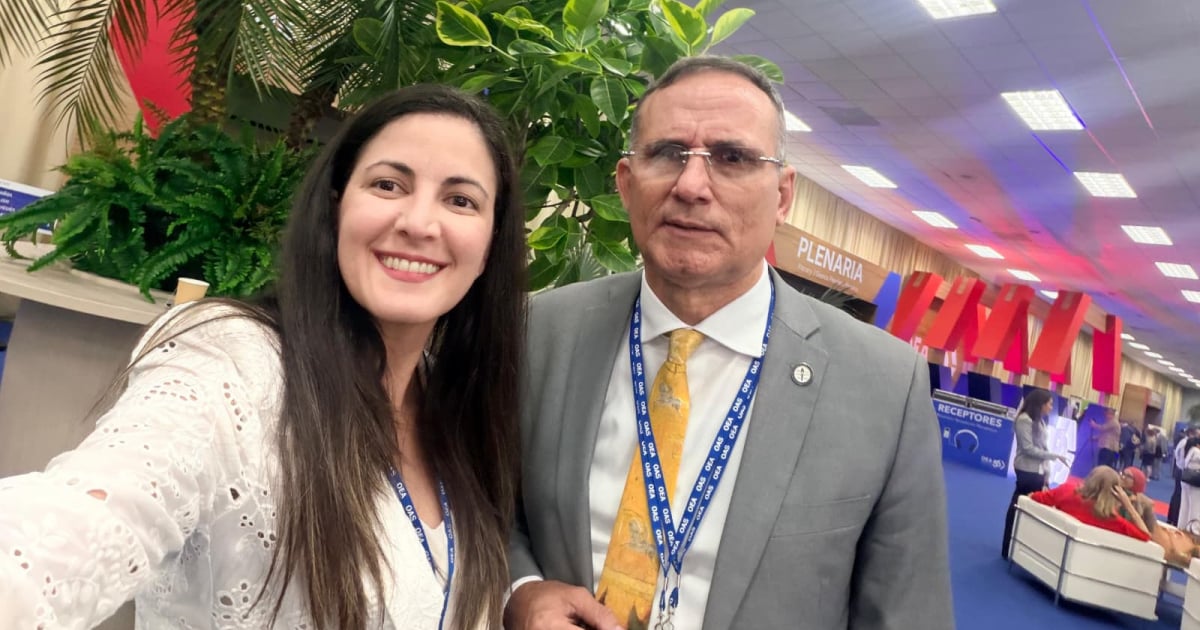
Human rights defenders from the three dictatorial regimes attended advocacy activities at the assembly. Our participation sparked a discrediting campaign by regime-affiliated groups, with Cuban state media labeling us as "mercenaries" and alleging an anti-Cuban maneuver.
Urgent Need for a Unified Response
The continental response must extend beyond statements. Democratic states should unequivocally condemn repression, demand political freedoms and authentic elections, and impose coordinated, verifiable sanctions against those responsible for imprisoning and torturing peaceful opponents and dissidents.
The Cuban communist regime's long-standing regional influence, initially through armed insurgencies and later through anti-democratic alliances, must be addressed to safeguard freedom, democracy, market economies, and continental security.
The OAS and all democratically committed governments must convey to the Cuban, Venezuelan, and Nicaraguan regimes that "with or without the OAS, they will lose the fight" very soon. It's time for our peoples to triumph!
Key Insights on OAS and Regional Politics
What was the main focus of the 56th OAS General Assembly?
The assembly focused on the absence of freedom and democracy in Cuba, Venezuela, and Nicaragua, highlighting human rights violations in these countries.
What actions did the OAS propose for Cuba, Nicaragua, and Venezuela?
The OAS called for the restoration of full democratic systems, expressed concern for political prisoners, and demanded their urgent and unconditional release.
How did international media cover the OAS assembly?
Media coverage emphasized the importance of the discussions and the gap between diplomatic language and reality, noting that documents avoided outright delegitimization of regimes.