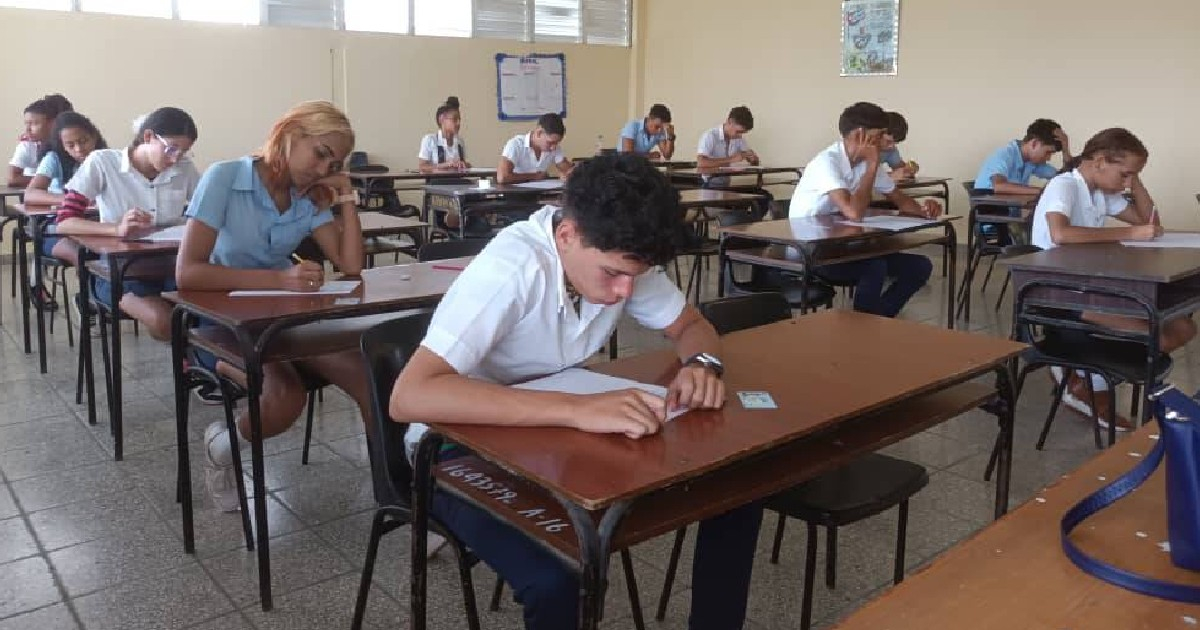
"I don't see a future. I'm doing this to satisfy my parents. I chose this career because I like it, but there's no future here." With these words, a young Cuban captures the sentiment of an entire generation.
This past Wednesday, DDC, the channel of Diario de Cuba, released a video featuring the voices of students who paint a picture of an educational system in collapse and a youth facing a bleak outlook.
The students interviewed describe enduring power outages lasting up to 22 hours daily, which prevent them from studying and sleeping. A nearly non-existent school transportation system and a chronic shortage of teachers further exacerbate their plight.
The Impact of Power Outages on Education
"The blackouts make it nearly impossible to study, let alone sleep well. You end up going into exams or control work tired and sleep-deprived," says one of the students.
Another student explains how classes are delivered via mobile phone, yet without electricity to charge the devices, even this becomes unfeasible: "Sometimes classes are sent to our phones, but we can't study, and the next day we have to be evaluated."
Food and Transportation Challenges
Nutrition is another critical issue. "Some students go without food, suffer from hunger, or have to travel home to eat, which is tough for those living far away. The meal provided in the cafeteria doesn't satisfy us," shares a voice from the video.
The transportation situation compounds these challenges. Many students rely on parents or grandparents for rides, and those in rural areas have even fewer options.
A technical student in electricity mentions receiving a stipend of 200 Cuban pesos—less than half a dollar on the informal market—insufficient for daily travel expenses.
The Grim Outlook on Education and Employment
The disillusionment extends beyond material conditions to the promise of a university degree. "Many who aimed to achieve great things, like becoming doctors, end up working in small businesses. Everyone says the same: why study if I'll just end up in a small business?" remarks another student.
This scenario reflects a harsh reality. The regime has canceled university entrance exams for the 2026-2027 academic year and moved up the school year's end to June 15-30 due to the energy crisis and fuel shortages.
The 2025-2026 school year started with a national shortage of roughly 24,000 teachers, about 12.5% of needed positions, with salaries ranging from eight to twenty dollars monthly on the informal exchange rate.
Mass Exodus and a Diminishing Hope
The exodus of professionals is relentless. Cuba lost over 30,000 doctors between 2021 and 2024, raising urgent questions about who will rebuild the nation.
In 2025 alone, approximately 545,000 Cubans emigrated, primarily aged 20 to 40, with 93% of those remaining expressing a desire to leave if they could.
The students themselves acknowledge this reality: "Those who have the means to leave the country surely have far greater opportunities to grow and pursue the careers they want."
The video concludes with a call for change that encapsulates the frustration of an entire generation: "A complete overhaul of everything—economic, political, everything. A total change."
Understanding the Challenges Facing Cuban Students
What are the main challenges Cuban students face today?
Cuban students struggle with extensive power outages, inadequate school transportation, a shortage of teachers, and insufficient food and stipends, all of which hinder their education and future prospects.
Why did the Cuban government suspend university entrance exams?
The Cuban government canceled the university entrance exams for the 2026-2027 academic year due to the ongoing energy crisis and fuel scarcity, which have disrupted the educational calendar.
How has the teacher shortage affected Cuban education?
The shortage of approximately 24,000 teachers across the nation has led to larger class sizes and reduced educational quality, further diminishing the prospects for students' academic success.