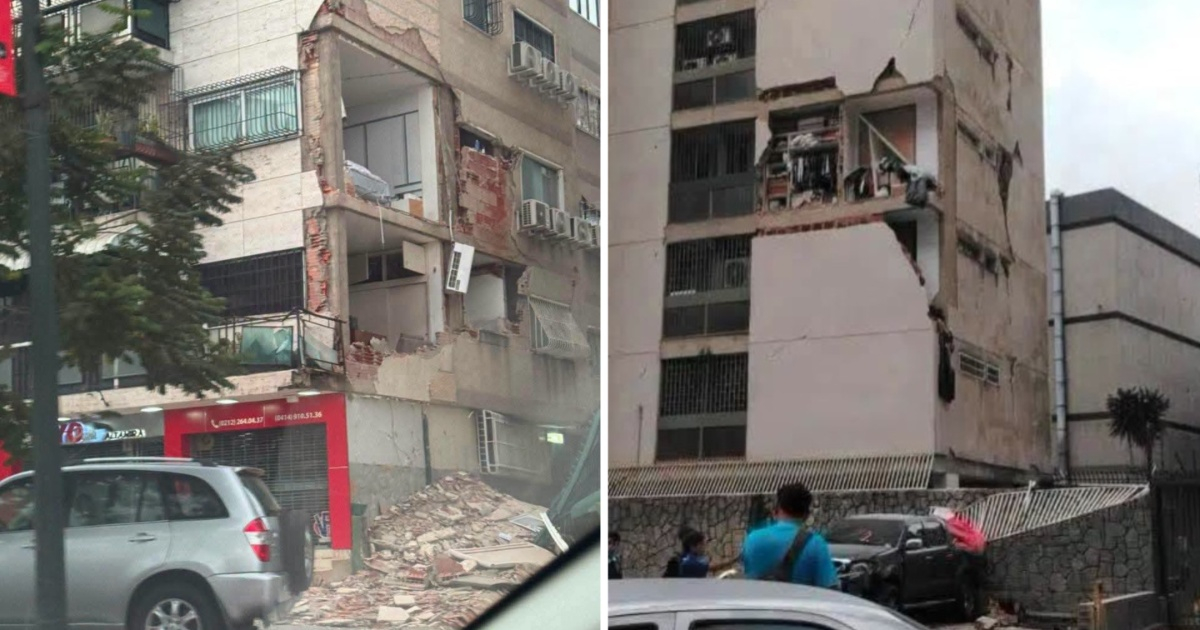
Delcy Rodríguez, the acting president of Venezuela, declared a constitutional state of emergency on Wednesday after two powerful earthquakes, measuring 7.1 and 7.5, struck the northern region of the country within a span of just 40 seconds. These seismic events have caused the collapse of essential services and brought public transportation in the capital to a standstill.
Rodríguez addressed the nation on VTV at around 9:45 PM, revealing that the hardest-hit areas include Caracas and the states of Miranda, Aragua, and Carabobo. The epicenters of these tremors were located near Morón in the Carabobo state and Yumare in Yaracuy, approximately 170 kilometers west of the capital, with depths ranging from 10 to 13 kilometers.
Urgent Measures and Infrastructure Impact
Among the immediate actions, the official announced the complete closure of the Maiquetía International Airport in La Guaira due to "significant structural damage."
The Caracas Metro and the Tuy Valleys Railway have also ceased operations. Meanwhile, electricity and water supply have been "severely affected" in various regions, as reported by Rodríguez herself.
To oversee the crisis response, Rodríguez appointed Major Sulbarán as the sole authority of the Venezuelan state during this emergency.
Educational and Medical Response
Rodríguez suspended school classes starting Thursday and urged medical staff to continue their work "amid this national emergency."
She also mentioned that multilateral organizations had reached out to the interim government, offering assistance if necessary.
Damage and Casualties
In Caracas, collapsed buildings were concentrated in areas like Los Palos Grandes, San Bernardino, and Altamira. Images depicted fallen walls, furniture exposed to the streets, and clouds of dust over densely populated neighborhoods.
Various sources report death tolls ranging from 100 to over 236, with more than 2,000 injured. However, Venezuelan authorities had not yet confirmed official numbers at the time of the initial reports.
Tsunami Warnings and Historical Context
The earthquakes, both exceeding magnitude 7.0, triggered tsunami warnings for Venezuela, Aruba, Bonaire, Curaçao, Puerto Rico, and the British Virgin Islands, according to the United States Geological Survey (USGS).
This devastating seismic series reportedly began on June 14, 2026, as per the Venezuelan Foundation for Seismological Research, and the tremors were felt even in Colombian cities like Barranquilla.
Venezuela was already grappling with a water emergency in Sucre state due to a previous earthquake in February 2026 that collapsed a reservoir. The United Nations allocated two million dollars in May to address this crisis, further straining the country's ability to respond to the current disaster.
Key Questions About the Venezuela Earthquakes
What were the magnitudes of the earthquakes that hit Venezuela?
The earthquakes had magnitudes of 7.1 and 7.5.
Which areas were most affected by the earthquakes?
The most affected areas include Caracas and the states of Miranda, Aragua, and Carabobo.
What immediate measures were taken in response to the earthquakes?
The Maiquetía International Airport was closed, public transportation services were halted, and school classes were suspended.
Were there any tsunami warnings issued following the earthquakes?
Yes, tsunami warnings were issued for Venezuela, Aruba, Bonaire, Curaçao, Puerto Rico, and the British Virgin Islands.