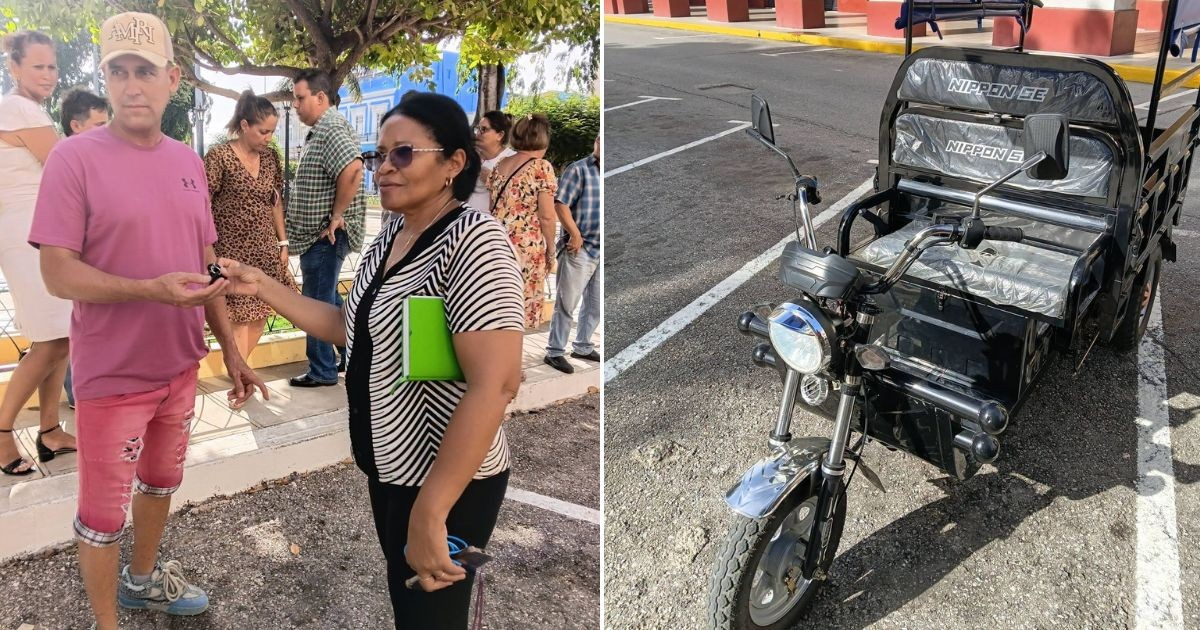
This past Wednesday, a self-employed individual from Matanzas donated an electric tricycle to the provincial government to assist in the transportation of hemodialysis patients, as reported by the state-run media outlet TV Yumurí.
Rudy Benítez Expósito, the donor, offered the vehicle to enhance social impact efforts in the area, underscoring the regime's inability to provide even the most basic necessities.
Besides serving hemodialysis patients, the tricycle will also be used to transport medical personnel and support other community and social service activities, according to the official report.
This donation comes amid a severe crisis in medical transport that endangers thousands of Cubans with end-stage chronic kidney disease, who rely on hemodialysis sessions several times a week to survive.
The fuel shortage has halted patient transportation across multiple provinces in 2026.
In Camagüey, patients had been without hemodialysis for nearly a week by June 20 due to a lack of chemical supplies at the Manuel Ascunce Domenech Provincial Hospital.
In Las Tunas, authorities threatened to suspend priority taxis for these patients in Puerto Padre because of fuel shortages, while local officials continued to have unrestricted access.
In response, the regime deployed 200 Dongfeng Box 01 electric vehicles in May to transport hemodialysis patients, representing the first half of a promised fleet of 400 by Miguel Díaz-Canel in March.
However, this measure proved insufficient: by mid-June in Villa Clara, only 10 of those 200 vehicles were operational, with many patients still paying up to 500 pesos per journey.
In light of the fuel crisis, Villa Clara had already turned to electric tricycles as an emergency solution, making the donation in Matanzas a reflection of measures other regions had adopted out of necessity before any official support arrived.
Projections for 2026 estimate over 3,000 renal patients are at risk across the island due to service interruptions, highlighting a worsening structural crisis that the Cuban healthcare system has failed to address with its resources.
TV Yumurí framed Benítez Expósito's initiative as "an example of how the private sector can engage, through social responsibility, in projects that directly benefit the community and support essential services," aligning with the official narrative promoting collaboration between the non-state sector and the Cuban government.
Although the donation of a single tricycle is modest compared to the scale of the problem, it starkly illustrates how the collapse of medical transport in Cuba has forced individuals to seek personal solutions to fulfill needs that should be state-guaranteed.
Addressing the Transportation Crisis for Hemodialysis Patients in Cuba
Why was an electric tricycle donated in Matanzas?
An electric tricycle was donated in Matanzas to support the transportation of hemodialysis patients amid a severe healthcare transport crisis, underscoring the government's failure to provide essential services.
What challenges are faced by hemodialysis patients in Cuba?
Hemodialysis patients in Cuba face life-threatening challenges due to a lack of reliable transportation, exacerbated by a national fuel shortage and insufficient government resources.
How is the private sector contributing to solutions in Cuba?
The private sector in Cuba is stepping in to provide solutions, such as donating vehicles for patient transport, to fill gaps left by the government's inability to meet healthcare needs.