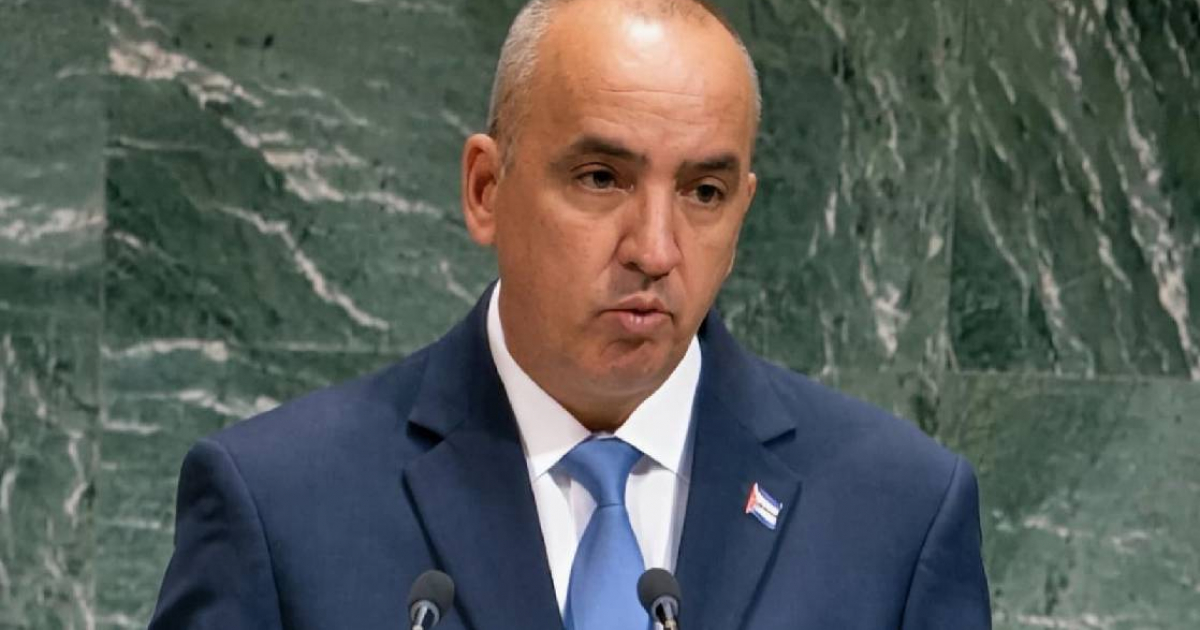
During a High-Level Meeting on HIV/AIDS at the United Nations, Cuban Ambassador Ernesto Soberón Guzmán painted a rosy picture of Cuba's health system, a stark contrast to the current healthcare crisis unfolding on the island.
Speaking from the UN podium in New York, Soberón highlighted what he labeled as "achievements" of Cuba's national health system, such as the continuous elimination of mother-to-child transmission of HIV and congenital syphilis, alongside progress in diagnosis, treatment, and viral suppression.
Soberón further attributed the difficulties in acquiring antiretrovirals, diagnostic tests, and essential supplies to the U.S. embargo, which he described as an "energy blockade" exacerbating the system's challenges.
What the diplomat conveniently omitted from his address is the reality acknowledged even by Cuban authorities. Back in July 2025, Health Minister José Ángel Portal Miranda confessed to the National Assembly about an "unprecedented structural crisis" in healthcare, with just 30% coverage of essential medications.
The statistics paint a grim picture: infant mortality nearly tripled from 2018 to 2025, rising from 3.9 to 9.9 per 1,000 live births, the highest rate in over 20 years.
In Havana, this figure reached 14 per 1,000. The survival rate for children with cancer plummeted from 85% to 65% due to a lack of essential drugs, while the surgical waiting list has ballooned to over 96,000 patients.
Dire Conditions in Cuban Hospitals
Cuban hospitals endure power outages lasting between 12 and 20 hours daily. Infrastructure is crumbling, with collapsed ceilings and a shortage of basic supplies like syringes and gauze. Thousands of doctors have emigrated, leaving services in disarray, with salaries lingering around $30 a month.
Regarding HIV specifically, the situation contradicts the official optimism. Cuba has over 35,373 people living with the virus, with approximately 1,708 new diagnoses each year. The chronic shortage of antiretrovirals has been reported since at least 2019.
Symbolic Cases Highlighting System Failures
In April 2026, the plight of "Julito," a young man with HIV reliant on social media solidarity to obtain medication, became emblematic of the state's neglect in addressing the healthcare crisis.
Soberón’s speech followed a familiar pattern of the regime: leveraging international platforms to project a false image of medical prowess.
In December 2025, officials in Matanzas bragged about "health achievements" amid a health crisis, and Miguel Díaz-Canel showcased "cutting-edge" hospitals while the overall system crumbled.
The achievement of eliminating mother-to-child HIV transmission, which Soberón mentioned at the UN, was recognized by the organization in June 2012, 14 years ago. The regime continues to tout it as proof of a functional health system, even as a Cuban official admitted in February 2026 that this very system is "on the brink of collapse."
Frequently Asked Questions About Cuba's Health Crisis
What claims did the Cuban ambassador make at the UN?
The ambassador claimed that Cuba's health system had achieved the sustained elimination of mother-to-child transmission of HIV and congenital syphilis, along with advancements in diagnosis, treatment, and viral suppression.
What is the current state of Cuba's healthcare system?
Cuba's healthcare system is experiencing an unprecedented crisis, with only 30% coverage of essential medications, a tripling of infant mortality rates, and significant shortages of medical supplies and personnel.
How has the U.S. embargo affected Cuba's healthcare system?
The Cuban ambassador blamed the U.S. embargo for hindering the acquisition of antiretrovirals and other essential medical supplies, exacerbating the healthcare system's existing challenges.