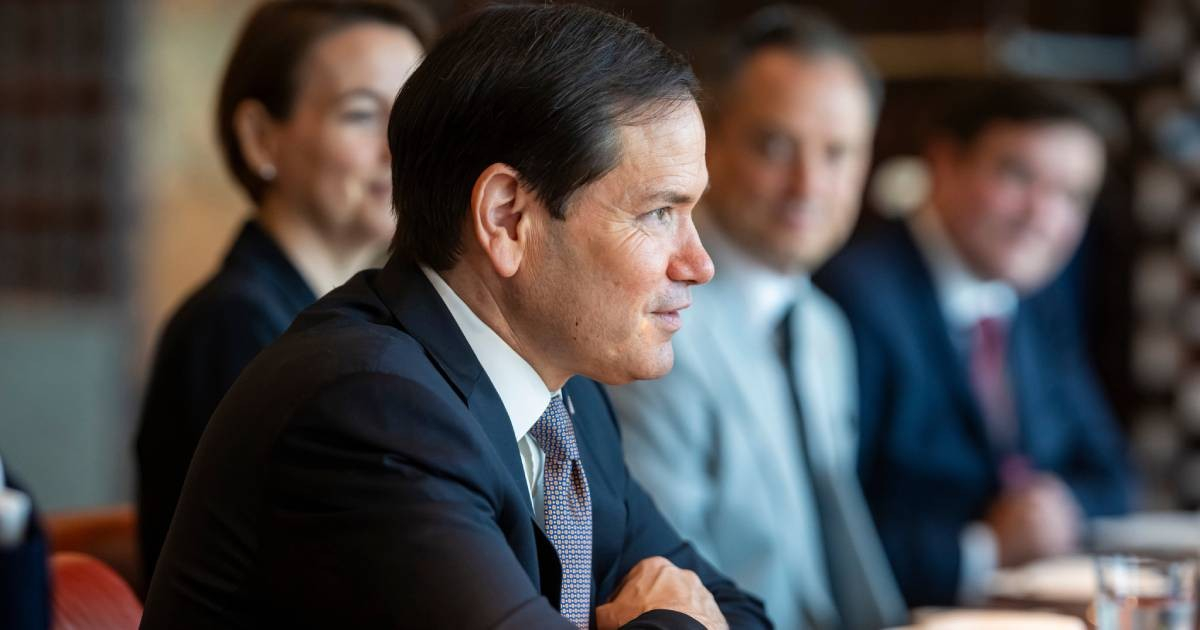
On Tuesday, Democratic Senator Rubén Gallego sounded the alarm about the potential presidential candidacy of Marco Rubio in 2028, highlighting it as a significant challenge for Democrats due to the increasing influence of the Latino vote in the United States.
Speaking at the Latino Vote Summit in Washington, D.C., the Arizona lawmaker acknowledged that the current Secretary of State's profile might have a unique appeal among many Hispanic voters, regardless of ideological differences, as reported by CBS News.
"If Marco Rubio is the presidential candidate, we're in trouble," Gallego stated to a gathering of strategists, pollsters, and political operators focused on analyzing Latino voting behavior.
The senator, who secured his Arizona seat in 2024 with a 22-point lead among Hispanic voters in a state that supported Donald Trump, emphasized that his concern was not about Rubio's political proposals but rather the symbolic impact of his candidacy.
"It's not because his policies will be excellent, but there will undoubtedly be voters excited to see the first Latino candidate running a major presidential campaign," he explained.
The Republican Advantage with Latino Voters
Gallego's assessment found agreement from Mike Madrid, a Republican strategist specializing in the Hispanic vote and a prominent voice in analyzing Latino electoral trends.
"The Republican Party is much stronger among Latinos than people think. Having someone like Marco Rubio is a significant advantage for Republicans," Madrid told CBS News.
According to the consultant, a campaign led by Rubio could significantly bolster Republican prospects as both parties gear up for the 2028 presidential race.
Changing Dynamics in the Latino Electorate
These remarks come amid ongoing analyses of the shift observed among Hispanic voters in the 2024 elections when Trump garnered nearly half of the Latino vote and secured the majority backing of Hispanic men, a result that challenged several traditional assumptions about this electorate.
Despite the usual focus on immigration issues, experts at the summit agreed that the primary concern for Latinos remains the economy. Carlos Odio, co-founder of Equis Research, succinctly summed up this reality: "The economy, and the economy, and the economy."
Odio noted that Trump's approval ratings on economic matters are currently below the levels recorded at this point in his first term. He also mentioned that some polls indicate signs of recovery for Democrats among Hispanic voters, though it's still unclear to what extent.
Democratic Strategy and Latino Engagement
Gallego also used the forum to critique his own party's strategy toward the Latino community.
"The Democratic Party still doesn't understand that there is no national Democratic Party without the Latino vote being part of that coalition," he asserted. He also criticized progressive sectors for assuming that all Hispanics share leftist ideological positions.
Meanwhile, speculation about the Republican presidential succession continues to grow. An Emerson College poll conducted in May showed a technical tie between Vice President J.D. Vance and Rubio among Republican voters, with 36% and 35% support, respectively.
The evolution of these numbers has caught analysts' attention. In February, Vance was leading the preferences with 52%, while Rubio had just 20%.
Donald Trump further fueled the speculation on June 3 by suggesting that a Vance-Rubio ticket would be "very hard to beat," though he refrained from explicitly endorsing either candidate.
The significance of this internal dispute could be pivotal for the country's political future. According to UnidosUS data, about 36.2 million Latinos will be eligible to vote in the November 2026 elections, the highest number recorded so far, with 76% indicating they are likely to turn out at the polls.
Impact of Latino Voters on Future Elections
Why could Marco Rubio's candidacy be challenging for Democrats?
Marco Rubio's candidacy could be challenging for Democrats due to his potential appeal among Latino voters, which could disrupt traditional voting patterns.
What are the main concerns of Latino voters?
Despite the focus on immigration, the primary concern for Latino voters is the economy, as highlighted by experts at the Latino Vote Summit.