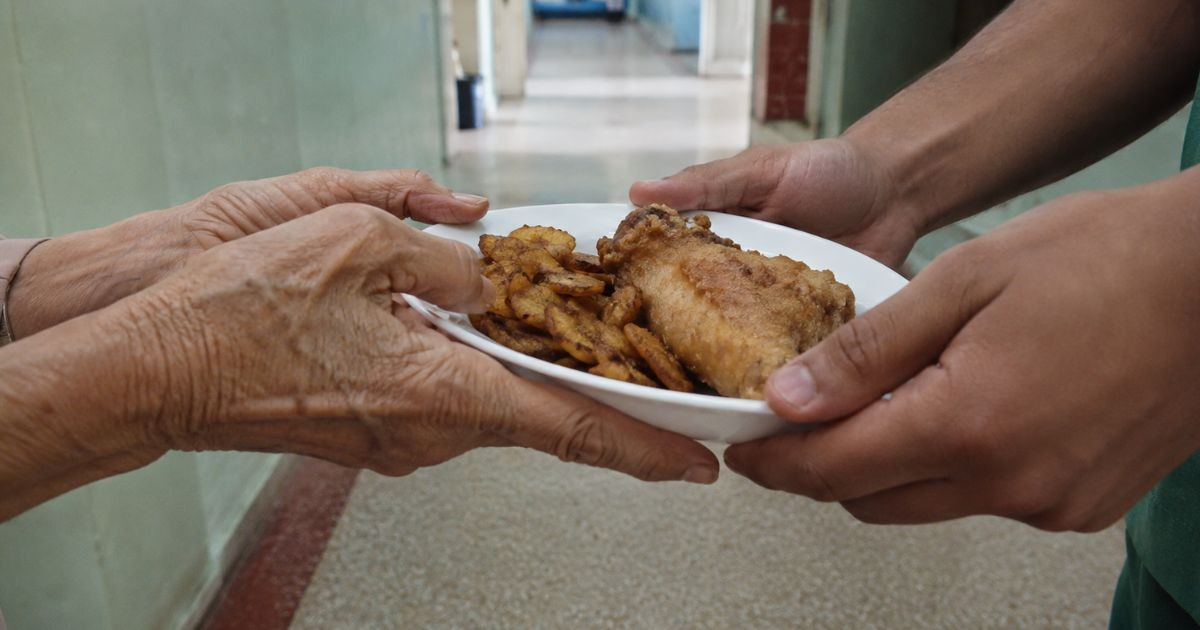
Irina Diéguez Toledo, a Cuban resident, shared a heart-wrenching account on Facebook about the appalling conditions she faced while accompanying her uncle at Havana's National Institute of Oncology and Radiobiology (INOR). Her experience was overshadowed by severe shortages of food, electricity, water, and the oppressive heat.
Diéguez Toledo's uncle was admitted to Cuba's premier cancer treatment center for preoperative assessment and surgery on two scalp lesions, described as "incredibly painful and dangerous."
However, respiratory issues in the patient delayed the surgery, although the young head doctor of the Peripheral Tumor Service personally ensured the necessary antibiotics were obtained.
The Dedication Amidst Adversity
Despite the challenging circumstances, Diéguez Toledo praised the medical staff's dedication: "The care was outstanding, even as they spoke of sleepless nights due to power outages and the hardships we Cubans endure. They work with people and still give their best."
The most poignant moment of her account occurred as Diéguez Toledo walked down a hallway while on a phone call.
She mentioned that she had only eaten a piece of bread with butter all day.
A young man from Bejucal, who had been at the hospital caring for his father for weeks, overheard her conversation and offered her a plate of breaded chicken, fried plantains, and two rolls.
"I initially refused. He insisted. And I cried from shame, exhaustion, helplessness, and sadness," she recounted.
Reflections on a Widespread Crisis
This incident led her to a sobering reflection on Cuba's food crisis: "I've never felt such hunger and realized that hunger truly hurts. I have friends who would gladly share what they have, but most of us are struggling."
The scarcity of food was compounded by the hospital's dire conditions: two days without water due to a pump malfunction with no immediate fix, stifling heat in the rooms, windows that wouldn't close, swarms of mosquitoes, and faulty electrical outlets.
"I felt anger because no one could sleep despite the fans," she noted.
Diéguez Toledo's testimony is far from isolated.
As of May 2026, over 96,000 patients in Cuba were awaiting surgeries, including 11,000 children. Meanwhile, 461 out of 651 essential medications were completely unavailable, reflecting the country's documented healthcare crisis.
In July 2025, Health Minister José Ángel Portal Miranda acknowledged an "unprecedented structural crisis" before the National Assembly.
The food crisis exacerbates the situation: 33.9% of Cuban households had at least one member who went to bed hungry in the past month, up from 24.6% in 2024, according to May 2025 data.
Cuban hospitals experienced power outages lasting between 20 and 48 consecutive hours, severely impacting their operations.
Diéguez Toledo concluded her post with a direct challenge to the regime: "Why must we continue to endure, to bear such government indifference that announced 'saving' measures yet lets people die?"
Cuba's Healthcare and Food Crisis: Key Questions
What are the conditions like at the National Institute of Oncology and Radiobiology in Havana?
Conditions at the institute are dire, with patients and their families facing extreme shortages of food, electricity, and water, alongside unbearable heat.
How is the Cuban healthcare system affected by the current crisis?
Cuba's healthcare system is severely impacted, with over 96,000 patients awaiting surgeries and a significant shortage of essential medications, highlighting a deep structural crisis.
What is the government's response to the healthcare and food crisis?
Despite promises of measures to alleviate the situation, the Cuban government has been criticized for its indifference and lack of effective action to address the shortages and hardships faced by the population.