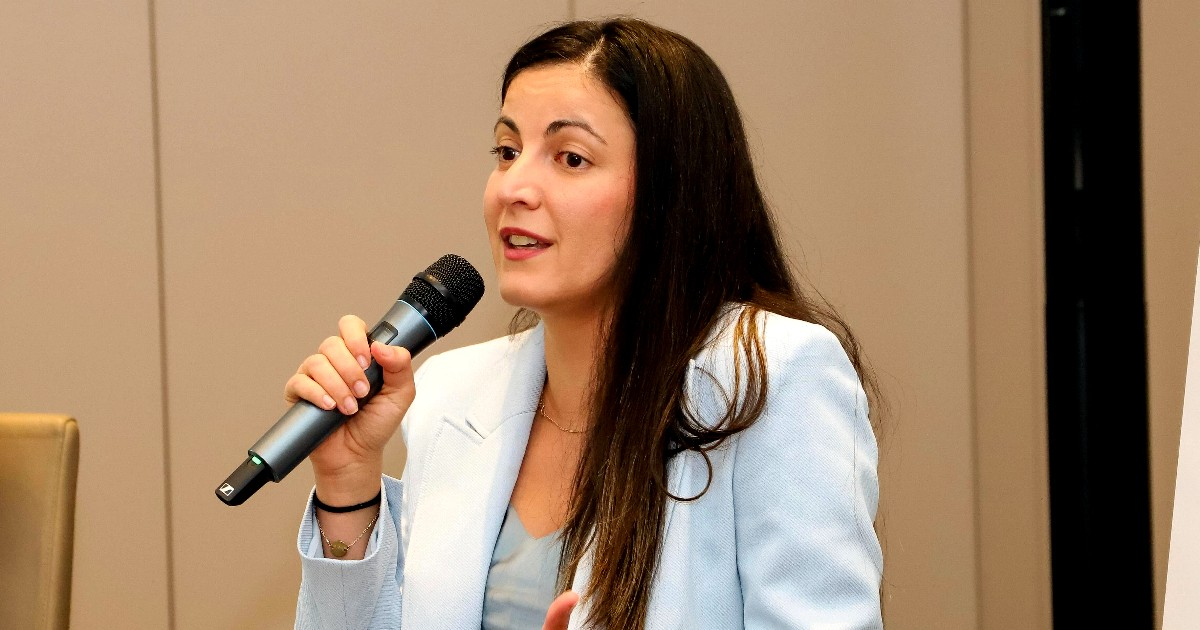
Cuban activist Rosa María Payá voiced her support on Tuesday for the newly imposed U.S. sanctions on the military conglomerate GAESA, delivering a powerful message through her social media channels.
"GAESA serves as the dictatorship's safe. The military uses this money to oppress and enrich themselves while Cubans endure hunger and power outages," Payá, a commissioner for the Inter-American Commission on Human Rights, stated on her X account.
Her statement came shortly after Secretary of State Marco Rubio revealed a second wave of sanctions targeting five Cuban entities linked to GAESA: Almacenes Universales S.A. (AUSA), RAFIN S.A., the Banco Financiero Internacional (BFI), GeoMinera S.A., and the Empresa Siderúrgica José Martí (Antillana de Acero).
Support for Sanctions
Payá, who founded Cuba Decide and Pasos de Cambio, directly thanked Rubio for these actions: "People want freedom and are demanding it in the streets. These sanctions strike at the heart of the dictators' interests."
Rubio characterized the conglomerate as "the primary mechanism through which the regime's elites seize the island's scarce resources," cautioning that its funds are used to finance repression and espionage instead of being allocated to schools, power plants, or basic necessities.
Impact of New Measures
The new measures, enacted under Executive Order 14404 signed by Donald Trump on May 1, 2026, also for the first time included a family member from the Castro circle: Annalie Lilliam Rueda Cardero, identified by the State Department as an adult relative of Alejandro Castro Espín, son of Raúl Castro and former head of intelligence services.
The BFI, one of the sanctioned entities, reportedly manages the vast majority of transactions involving foreign entities operating in and out of Cuba, making its designation a direct blow to the regime's external finances.
Rubio further issued a warning to foreign banks and companies with ties to the sanctioned entities: "They must immediately freeze these activities," or face secondary sanctions.
Resource Allocation Discrepancies
Payá's criticism highlights a stark contradiction that data makes hard to ignore: while Cubans suffer from blackouts lasting up to 72 hours and only 18.3% of the population receives daily potable water, the regime allocated nearly 40% of its 2024 investments to tourism, compared to a mere 2.7% for health and social assistance.
Founded by Raúl Castro in the 1990s as the economic arm of the Armed Forces, GAESA operates without a website, public audits, or national budget inclusion, yet it controls between 40% and 70% of the formal Cuban economy, with assets estimated at around $18 billion.
Tuesday's sanctions add to more than 240 measures imposed by Washington against Cuba since January 2025, in a sustained pressure campaign that has already prompted international hotel chains to exit the market: Iberostar ceased operations in 12 of its 18 hotels on the island as of June 1, and Meliá confirmed its complete withdrawal.
Cuban tourism, the regime's main source of foreign currency, plummeted by 55.8% between January and April 2026 compared to the same period the previous year, with only 328,608 international visitors.
Key Insights into GAESA and Sanctions
What is GAESA's role in the Cuban economy?
GAESA, founded by Raúl Castro, controls a significant portion of Cuba's formal economy, estimated between 40% and 70%, with assets around $18 billion. It operates without a public presence or audits, making it a powerful economic arm of the regime.
Why are the U.S. sanctions targeting GAESA?
The U.S. sanctions GAESA for being the primary vehicle through which the regime's elites gain control over Cuba's limited resources, which are used to finance repression and espionage rather than addressing the population's basic needs.
How do these sanctions affect foreign entities in Cuba?
Foreign banks and businesses with connections to the sanctioned Cuban entities are urged to halt activities immediately to avoid secondary sanctions, significantly impacting their operations and financial dealings with Cuba.