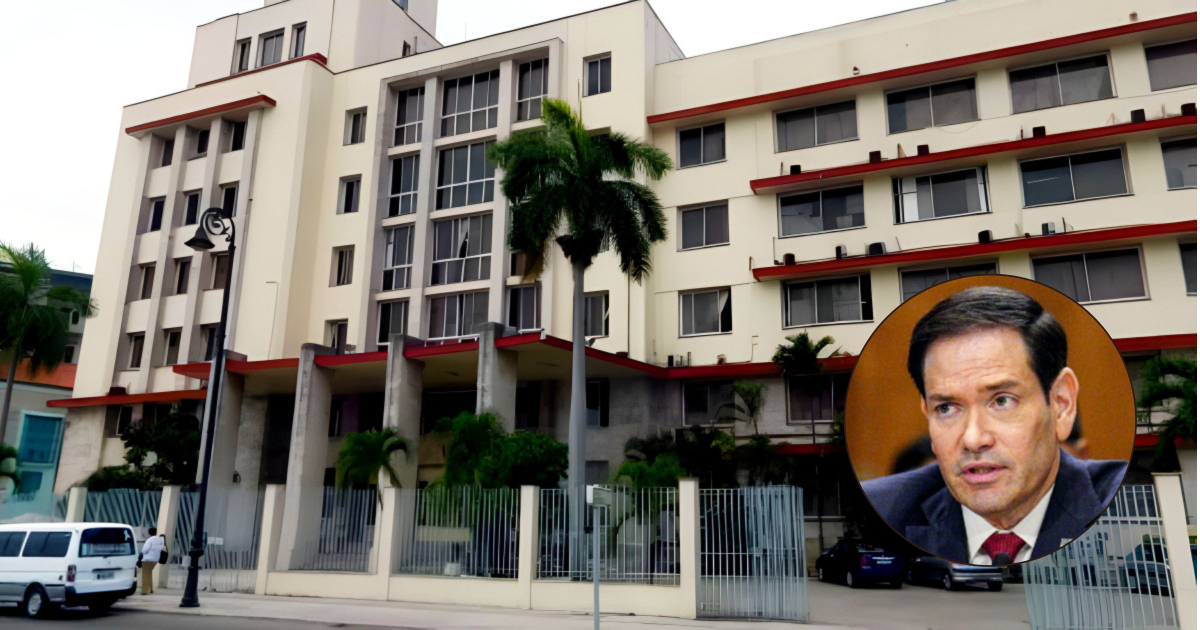
On Tuesday, U.S. Secretary of State Marco Rubio issued a stern warning to banks, businesses, and investors worldwide: engaging in commercial activities with entities linked to the Cuban military conglomerate GAESA could lead to significant repercussions.
This warning coincided with the Trump administration's announcement of a new set of sanctions targeting five Cuban entities and a member of the Castro family, as part of Washington's economic pressure strategy against the Havana regime.
"Foreign banks and other companies providing services to these entities must immediately suspend those activities," Rubio declared while unveiling the new measures.
Global Implications of U.S. Sanctions
Although specific companies were named in the sanctions, the message was intended for a global audience, extending far beyond Cuba's borders.
The U.S. State Department clarified that any individual or foreign entity conducting business with companies sanctioned under Executive Order 14404 could face similar punitive actions.
The warning particularly targets sectors identified by Washington as major financial sources for the Cuban regime, such as financial services, mining, metals, energy, defense, and security.
According to the official statement, foreign banks and financial institutions must exercise extreme caution in any transaction involving designated entities.
International Businesses Reassess Cuban Ties
U.S. authorities also cautioned about potential risks for those attempting to transfer assets or facilitate operations that might benefit sanctioned individuals or companies.
Among the entities included in the newly announced sanctions are Almacenes Universales S.A. (AUSA), RAFIN S.A., and Banco Financiero Internacional (BFI), all part of the business network tied to GAESA, a conglomerate controlled by the Cuban Armed Forces and considered a cornerstone of the regime's economy by Washington.
Beyond the new designations, Rubio's warning comes as several foreign companies have already started withdrawing from Cuba to avoid U.S. sanctions.
In recent weeks, hotel chains such as Meliá and Iberostar announced their withdrawal from hotels managed jointly with entities linked to GAESA.
They were joined by Blue Diamond Resorts and Aston Hotels, which also scaled back or canceled operations on the island in response to the tightening measures from Washington.
Impact Across Various Sectors
The pressure extends beyond the tourism industry. Canadian company Sherritt International, a major foreign partner in Cuba's mining and energy sectors, announced operational changes amid the new sanctions landscape.
In the financial realm, entities like Banco Sabadell and others involved in Cuban business have also begun reassessing their exposure to the Cuban market.
Rubio's message seems explicitly aimed at companies still engaging with Cuban state and military-controlled structures.
"Foreign banks and other companies providing services to these entities must immediately suspend those activities," reiterated the Secretary of State.
The warning gains particular importance as it follows the regime's approval of 176 economic reforms aimed at attracting foreign investment, expanding access to financing, and loosening various economic sectors.
While Havana seeks to present itself as a more attractive destination for international business, Washington is increasing the risk for any company dealing with entities seen as part of the regime's economic network.
Apart from the sanctions against AUSA, RAFIN, and BFI, the Trump administration's signal is that the cost of doing business with GAESA could continue to rise.
For many foreign investors, the recent experiences of hotel chains, banks, and mining companies withdrawing from Cuba serve as a warning as stark as the sanctions themselves.
Understanding the Implications of U.S. Sanctions on Cuba
What is GAESA and why is it significant?
GAESA is a major Cuban conglomerate controlled by the military, playing a crucial role in the country's economy. It is considered a pillar of the regime's financial structure by the U.S.
How could foreign companies be affected by U.S. sanctions?
Foreign companies engaging with sanctioned Cuban entities risk facing similar sanctions from the U.S., impacting their operations and financial dealings globally.
Which sectors are most impacted by these sanctions?
The sanctions primarily affect sectors such as financial services, mining, metals, energy, defense, and security, as these are seen as significant revenue sources for the Cuban regime.
What actions are foreign banks required to take?
Foreign banks must exercise caution in transactions involving sanctioned entities and are urged to suspend activities with these entities to avoid U.S. penalties.