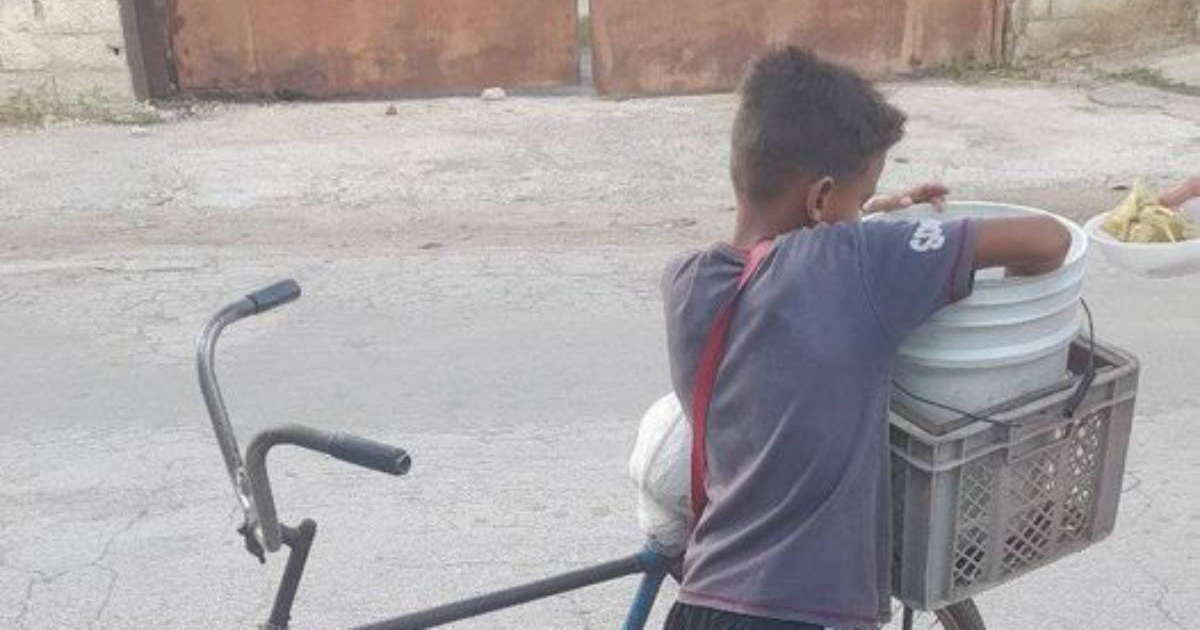
The Food Monitor Program (FMP) raised concerns on Tuesday regarding the escalating food crisis in Cuba, which is forcing children and teenagers into adult-like survival roles, masked socially as mere "family help."
This independent organization, which consistently observes food security conditions on the island, stated that this issue is not isolated. Instead, it is a direct outcome of the collapse of fundamental conditions in Cuban homes and schools.
FMP's statistics paint a dire picture: 90% of the surveyed primary schools lacked consistent access to clean drinking water or safe proteins, and 78% of families must supplement their children's school meals because over half of them find the school lunch inadequate.
Additionally, more than 80% of families adjust their meal schedules based on the availability of electricity, water, or other essential services, turning daily meal planning into an emergency task.
"In this environment, hidden hunger and forms of child labor often justified as 'family help' are advancing, transferring adult responsibilities onto children," FMP highlighted in its statement.
The organization supported its warning with a photograph showing a child carrying a large bag on their head in a street, accompanied by the message: "The crisis has a child's face too."
There are specific and documented instances of this phenomenon: a 14-year-old boy was seen driving a pedicab to assist his mother in May 2026, and a 10-year-old was out selling sweets on the street just this month.
The Cuban Conflict Observatory recorded 71 reports of child labor and begging in 2025. At the end of that same year, the government itself acknowledged that nearly 200,000 children and adolescents were in situations of vulnerability or at risk.
The FMP's warning comes just eleven days after the Union of Young Communists publicly denied the existence of child labor in Cuba, claiming that "thanks to the Revolution, it is not a reality." This statement sparked a surge of criticism and conflicting testimonies on social media.
Disagreements with the authorities are not new. In April 2025, Díaz-Canel admitted the presence of child labor and begging, yet failed to provide structural solutions: "We cannot allow this to proliferate during this economic crisis," he said at the time.
Legal frameworks have also proven ineffective in curbing the issue: the Cuban Constitution, Labor Code, and Law 178/2025 forbid work for those under 17, but the gap between legislation and street realities is increasingly evident.
In November 2025, UNICEF reported that one in ten Cuban children—9%—suffers from severe food poverty, consuming only two of the eight essential food groups recommended for their growth.
Understanding Child Labor and Poverty in Cuba
What is causing the rise of child labor in Cuba?
The increase in child labor is primarily due to the worsening food crisis and the collapse of basic living conditions in Cuban households and schools. Children are taking on survival tasks typically meant for adults, under the guise of helping their families.
How has the Cuban government responded to reports of child labor?
Despite acknowledging the existence of child labor and begging, the Cuban government has offered no structural solutions to address these issues. Official denials continue, with claims that such problems do not exist thanks to the Revolution, contradicting both local and international observations.
What does the legal framework in Cuba say about child labor?
Cuban law, including the Constitution, Labor Code, and Law 178/2025, prohibits work for minors under the age of 17. However, these legal protections are not reflected in reality, as child labor continues to be a significant issue on the ground.