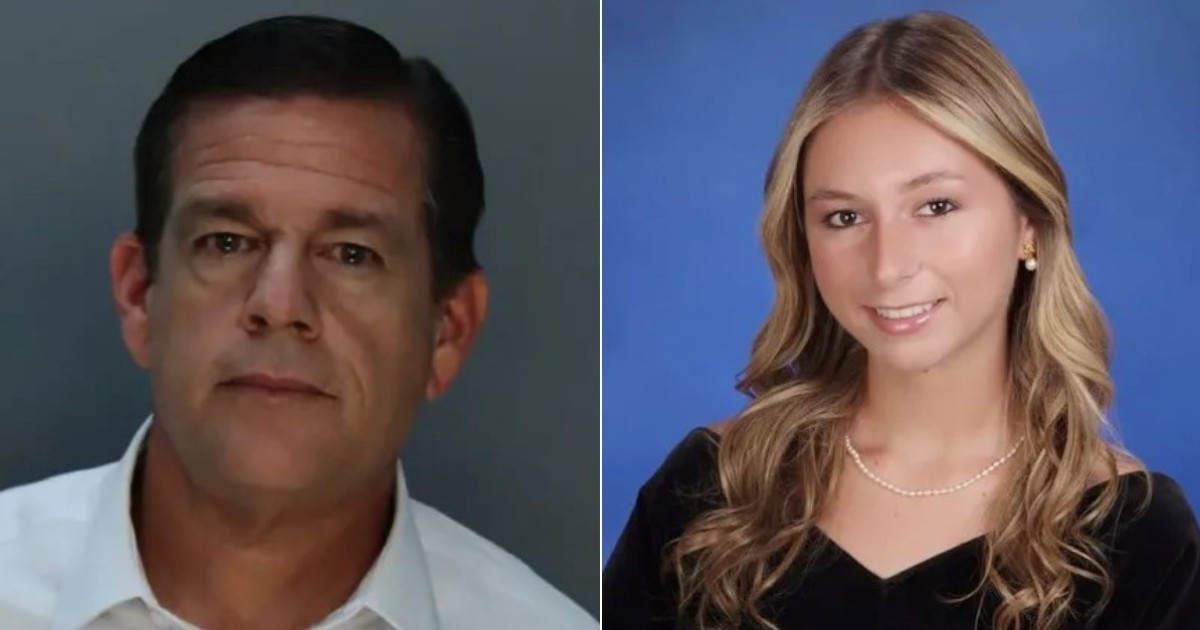
A jury in Miami-Dade County has found real estate developer George Pino not guilty of charges related to involuntary manslaughter and vessel homicide stemming from a boating accident on September 4, 2022, which resulted in the death of a 17-year-old girl.
According to ABC, the panel, which consisted of six jurors—five men and one woman—deliberated briefly on Monday evening, reaching a verdict in under two hours. Upon hearing the decision, 55-year-old Pino was overcome with emotion, shedding tears and embracing his family.
The tragic event transpired during a birthday celebration for Pino's daughter, as he was piloting his 29-foot Robalo boat in Cutter Bank channel on Biscayne Bay, near Boca Chita Key. The vessel collided with a channel marker and capsized, tossing several of the 14 passengers into the water.
Lucy Fernández, a 17-year-old, was trapped beneath the boat and succumbed to her injuries the following day in the hospital. Another young girl, Katerina "Katy" Puig, sustained severe traumatic brain injuries, resulting in lasting physical and neurological disabilities, necessitating round-the-clock medical care and the use of a wheelchair.
Prosecution's Argument of Negligence
Assistant State Attorney Laura Adams argued in her closing statements that Pino committed "error after error" on that fateful day. She claimed he was driving nearly 50 mph, was inattentive for a critical nine seconds, navigated on the wrong side of the channel, and that both he and the minors on board had consumed alcohol prior to the crash.
The prosecution also contended that Pino misled law enforcement by claiming that a wave from another boat caused him to lose control, despite no evidence supporting the presence of such a vessel.
Defense's Counterarguments
Leading the defense, attorney Howard Srebnick acknowledged that his client made a mistake in failing to see the marker, but argued this did not constitute criminal behavior. Srebnick pointed out the absence of speed limits in the channel, that Pino had only consumed two beers, was never charged with DUI, and that his view might have been obstructed by passengers at the bow.
The defense further noted that Pino suffered a concussion in the incident, which impaired his recollection, though he managed to rescue Fernández from under the overturned hull.
Aftermath and Reactions
Pino chose not to testify during the trial, which spanned approximately two weeks and included testimony from over 20 witnesses, among them his wife, Lucy Fernández's father, and several friends present on the boat.
Andrés Fernández, Lucy's father, shared that he was at the sandbar the group visited before the incident and later rushed to the accident scene. "We were just shouting, 'Where is Lucy?'" he recounted to the jury.
Following the verdict, State Attorney Katherine Fernandez Rundle expressed disagreement but acceptance of the outcome. "I am aware that this verdict does not provide solace to the Fernández and Puig families, who must live with the tragedy forever. In a case like this, there are no winners or losers," she stated to Univision 23.
The Puig family had previously reached a substantial civil settlement, reportedly around $16 million, with the Pino family. Despite her permanent injuries, Katerina Puig successfully graduated high school in May 2024.
Understanding the Miami Boat Incident Verdict
What were the charges against George Pino?
George Pino faced charges of involuntary manslaughter and vessel homicide due to a boating accident that resulted in the death of a 17-year-old girl.
How did the jury reach their decision?
The jury, composed of six members, deliberated for less than two hours before finding George Pino not guilty of the charges against him.
What was the defense's main argument?
The defense argued that Pino's failure to see the channel marker was a mistake, not a criminal act, and pointed to factors like the absence of speed limits and potential obstructions to his view.