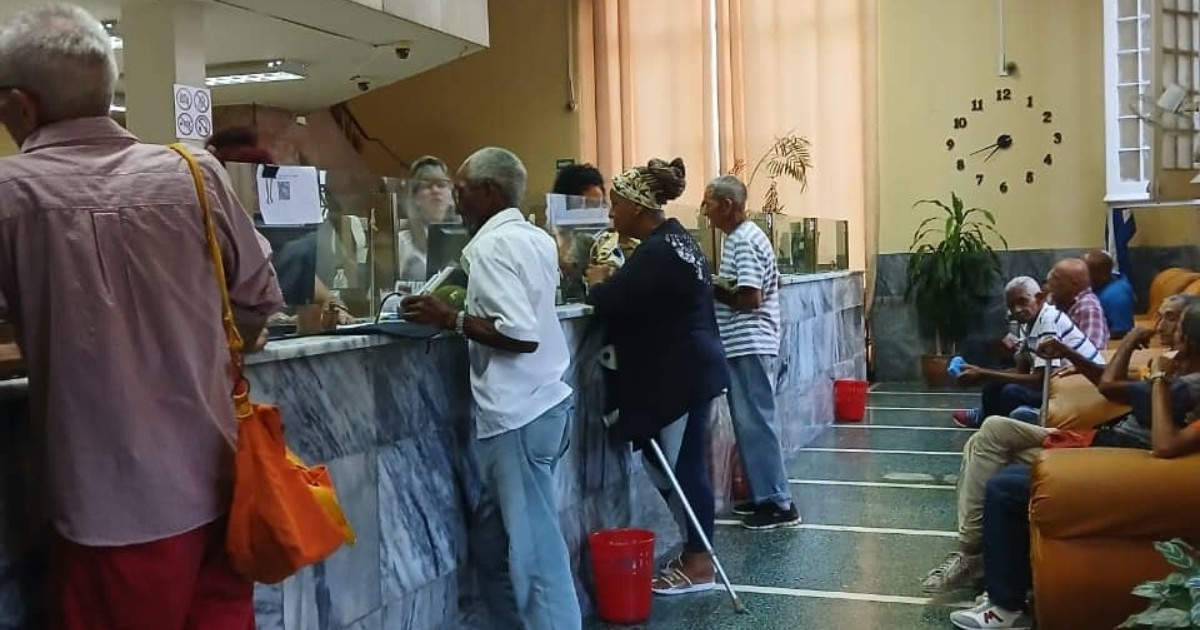
As Bandec shares institutional montages on social media, celebrating the "priority" attention given to retirees and pensioners, Cubans are responding with a revealing question: "Where exactly in the country is that happening, please?"
This week, Bandec branches in Matanzas and Granma have been broadcasting triumphant messages about the June 2026 pension payment period, which began on June 16 and runs until July 1. "For us, ensuring this service with the quality and warmth you deserve is, and will always be, a priority," declared Bandec Matanzas. Meanwhile, Bandec Granma described pension payments at the Bayamo branch 7491 as "more than a banking transaction."
The reality described by citizens in the comments is starkly different.
"In what province is that because Camagüey hasn't paid retirees," wrote one user. Another person reported waiting four days in line at the military hospital ATM, with only eight to ten people served each day. In Limonar, a town in Matanzas, someone emphatically noted: "In Limonar, nothing was given out today." According to another comment, "the retirees' money hasn't been delivered" at the bank in Garzón. In Alamar, zone 6 of Havana, the server broke down, and staff were reassigned. In Bayamo—the same city Bandec Granma was celebrating—"there wasn't enough, and some locations were visited in vain."
A retiree from Santa Clara summed up the widespread sentiment: "Cuba is divided, and things only happen in certain areas. This is coming from a retiree speaking from personal experience."
Another comment depicted a scene all too common on the island: "The night before, those poor souls are lying in the store portals waiting to collect their money."
Alongside the official narrative, Bandec Matanzas has launched an initiative to manage pension payments through local economic actors in the municipalities of Matanzas, Jovellanos, and Colón, aiming to bring payments closer to communities and reduce queues at branches. Yanetsy Chávez Camaraza, Bandec's provincial director in Matanzas, explained that beneficiaries can access their pensions near their homes through an extra cash service or a special banking procedure.
However, Miriam Cordero Alcántara, a 78-year-old retiree, appreciated the initiative but expressed concern that private businesses might stop accepting transfers to hoard the cash intended for retirees, which could negatively affect other customers.
The root of this crisis is systemic. On June 16, the provincial government of Granma admitted it lacks the more than 400 million pesos needed to pay its 111,000 retirees, marking one of the most candid admissions by a Cuban authority regarding its financial incapacity. The Provincial Commission for Social Security in Granma acknowledged that "it hasn't been possible to secure the required cash" in most municipalities.
Cuba has over 1.7 million retirees who rely on a banking system crippled by chronic cash shortages and blackouts. The cash crisis has forced the regime to rely on small and medium-sized enterprises to support pension payments, with uneven and partial results depending on the province. The minimum pension, set at 4,000 Cuban pesos since September 2025, is equivalent to less than $10 in the informal market.
While Bandec proclaims that "your well-being is our greatest motivation," retirees from Lawton, Camagüey, Santa Clara, and dozens of other locations continue to ask when—and where—that well-being will actually arrive.
Understanding Bandec's Pension Payment Challenges
What is Bandec's official stance on pension payments?
Bandec claims that providing quality and warmth in pension payments is a priority. They have launched initiatives to bring payments closer to communities and reduce queues at branches.
How are pension payments being affected in different Cuban provinces?
Despite Bandec's claims, many retirees report not receiving payments in provinces like Camagüey and Matanzas. Cash shortages and operational issues continue to create significant delays.
What systemic issues are contributing to the pension payment crisis?
The crisis is driven by a banking system overwhelmed by cash shortages and blackouts. The regime's reliance on small and medium-sized enterprises for pension payments has yielded partial and uneven results.