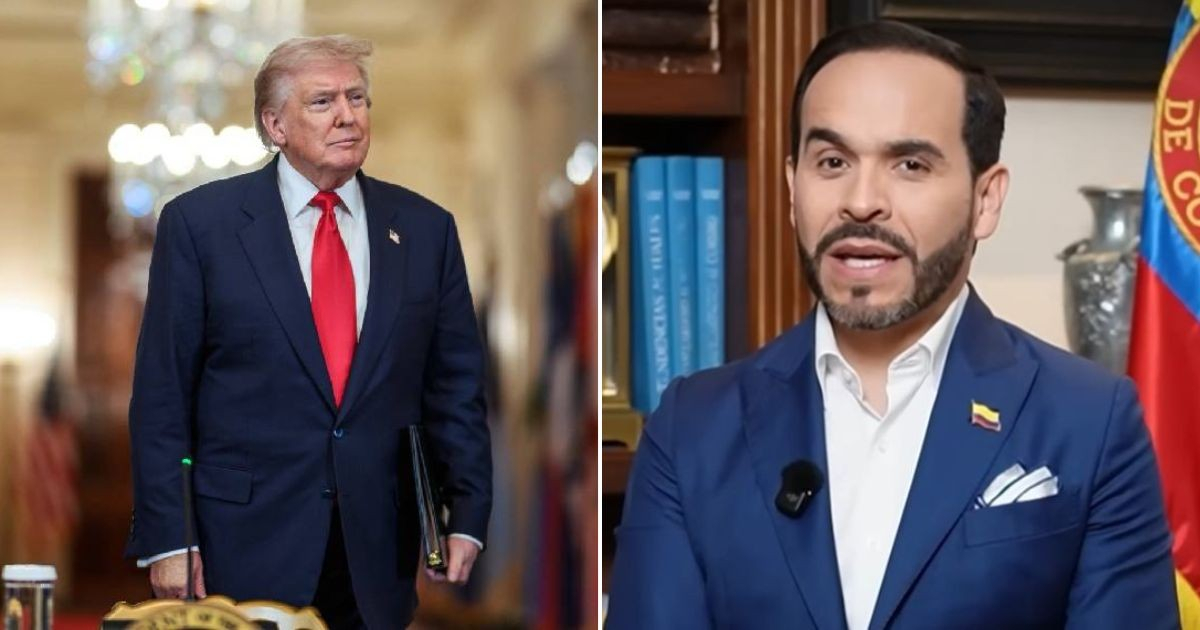
On Monday, Donald Trump expressed his delight over Abelardo de la Espriella's triumph in Colombia's presidential runoff through a message on Truth Social, where he referred to him by his nickname and hailed him as the new leader of the South American nation.
"Congratulations to 'El Tigre' Abelardo de la Espriella, the new president of Colombia! It was a tremendous honor to have supported him, and I look forward to working together to forge a strong relationship between Colombia and the United States that will elevate both nations to new heights," Trump wrote on his platform at 3:21 p.m.
Trump's Strategic Endorsement
The support Trump extended to De la Espriella was anything but spontaneous. On June 3, he praised him as a "smart, strong, and determined" leader in his initial endorsement, and by June 10, he pledged the "full support and strength" of the United States should the candidate secure victory. He simultaneously criticized his opponent, Iván Cepeda, labeling him a "radical leftist Marxist."
International Reactions
In addition to Trump, Secretary of State Marco Rubio also offered his congratulations. Rubio reached out to De la Espriella via phone on Sunday and announced on X that "Colombia's best days lie ahead," promising collaboration in regional security, curtailment of irregular migration to the United States, and the strengthening of economic ties.
Narrow Victory Amidst Allegations
De la Espriella's victory was far narrower than polls had predicted, which had suggested a lead of five to seven points. With 99.58% of votes counted, the Defensores de la Patria candidate garnered 49.66% — approximately 12.9 million votes — compared to Cepeda's 48.69%, a margin of just around 250,000 votes.
Outgoing President Gustavo Petro refused to acknowledge the preliminary count, citing "numerous irregularities" and demanding the official tally be awaited, a stance he had previously taken after the first round on May 31, an unprecedented move in Colombia's democratic history.
The OAS and EU observation missions dismissed the fraud accusations. The OAS noted that the election day proceeded "without public order disturbances," while the EU confirmed "no fraud occurred."
Political and Diplomatic Shifts
Senator-elect Andrés Forero accused Petro of "setting the stage for a coup," and Congressman Juan Carlos Lozada warned that if the outgoing president persists in his position, "the country will ignite."
De la Espriella, a criminal lawyer and businessman from Bogotá with no prior public office experience, will assume the presidency on August 7, 2026, ending four years of Petro's leadership, Colombia's first leftist administration. His agenda includes a tough stance on crime, discontinuation of Petro's "Total Peace" initiative, and a "second Plan Colombia" with U.S. military support employing drones and artificial intelligence.
In foreign policy, De la Espriella advocates for the diplomatic isolation of Cuba and Venezuela, and even suggested that Cuba should become a U.S. Commonwealth, describing the island as "the head of the communist serpent in Latin America."
This victory marks a historic political shift in Latin America, with most regional leaders now aligned with Trump, following similar victories in Chile with José Antonio Kast and Honduras with Nasry Asfura, alongside allies like Javier Milei in Argentina, Nayib Bukele in El Salvador, and Daniel Noboa in Ecuador retaining power.
Colombia, previously excluded from the "Shield of the Americas" summit in March in Miami due to insufficient anti-narcotics cooperation under Petro, now joins this regional framework.
Understanding Colombia's Political Shift
What led to De la Espriella's victory in Colombia?
De la Espriella's victory was supported by endorsements from figures like Donald Trump and Marco Rubio, emphasizing a strong stance on crime and foreign policy changes, appealing to voters seeking a shift from Petro's policies.
How did international bodies respond to the election allegations in Colombia?
Both the OAS and the EU dismissed allegations of fraud, asserting that the election process was conducted without disturbances and confirming that no fraud occurred.
What are De la Espriella's plans for Colombia's foreign policy?
De la Espriella aims to diplomatically isolate Cuba and Venezuela, and has suggested that Cuba could become a U.S. Commonwealth, signaling a significant shift in Colombia's foreign relations.