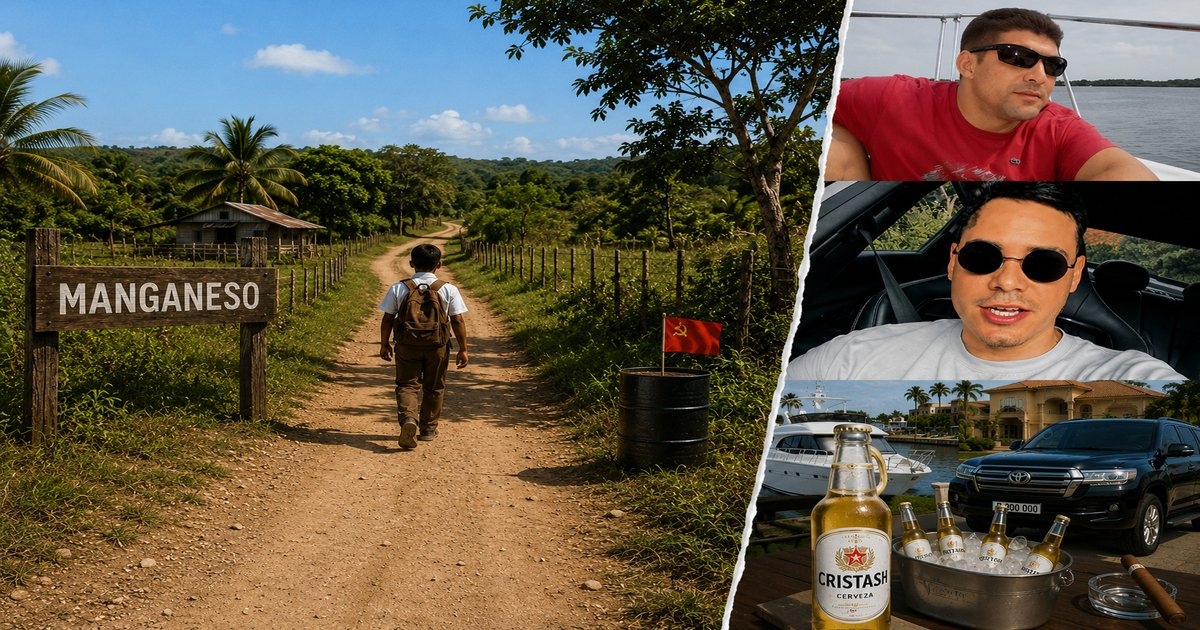
I was born in a rural area called Manganeso, about fourteen kilometers north of Palma Soriano, in Santiago de Cuba province. The Máximo Gómez secondary school in Palmarito de Cauto was four and a half kilometers from my home. During the 1980s, I frequently walked this route back and forth because transportation was unreliable. This was during a time when Cuba benefited from substantial Soviet subsidies, receiving approximately 13 million tons of oil and derivatives annually. So, traveling a mile and a half on horseback to get to school today is not particularly remarkable, unless you compare it to the privileges enjoyed by the children of communist leaders, who face no such "blockades."
In the 1990s, with the onset of the so-called Special Period following the end of those subsidies, walking four, five, or more kilometers became routine for most students in my area, as well as in many other rural parts of the country. This is why I read with concern the recent article in The New York Times titled "U.S. Blockade on Cuba Causes Children to Miss School," which discusses the impact of the current fuel shortage on Cuban schools.
The report accurately depicts children and teachers without transportation, reduced school hours, closed boarding schools, power outages, and halted universities. The U.S. pressure on oil supply exacerbates a genuine calamity. However, portraying this pressure as the fundamental cause of the educational collapse is misguided. It may accelerate the crisis to prompt a cure, but it's not the root cause.
The Real Roots of Educational Decay in Cuba
Since 1961, the communist state has monopolized education. My parents, like all Cuban parents, never had the option to choose the kind of education they wanted for me: there was no variety of schools, no independent teaching, no freedom of curriculum. In classrooms, the goal wasn't just to teach reading, math, or critical thinking: it was to instill political obedience. Marxist-Leninist ideological training, the veneration of power, and the fear of dissent permeated the school environment. When I left for secondary school, my mother remained anxious about the potential trouble I'd face for expressing thoughts not meant for public discourse.
I studied in a hostile environment. A critical opinion could lead to accusations, reprisals, and the fear of ending up in a juvenile corrective institution. Those who openly and persistently dissent find their path to university blocked by files, ideological discrimination, and expulsions. In schools, children of government opponents were, and still are, easily identified and subjected to scrutiny and discipline not equally applied to other students.
Consequences of Political Control in Education
The "schools in the countryside" experiment unveiled another facet of this social engineering: teenagers separated from their families, forced to combine academics with agricultural labor, and subjected to constant political control. In many instances, the distance from parents, lack of oversight, and impunity led to detrimental experiences: abuse, corruption, early pregnancies, and a breakdown of morals. This was not a model educational experience.
Cuba did undertake a literacy campaign and expanded school access; denying this would be foolish. However, literacy does not equate to education in freedom, nor does free university mean a university open to independent thought. The quality of education has been deteriorating for decades due to inadequate salaries, teacher exodus, dogmatism, and material neglect.
Even if fuel were abundant, it might bring some buses back to the roads. It wouldn't restore parents' rights to choose or students' rights to think and speak freely. The true reconstruction of Cuban education requires dismantling the state and political monopoly over the minds of our children.
The New York Times article fails to mention this, which is more damaging to any educational system than a fuel shortage. This report reminds me of those editorials from this significant outlet, very supportive of rapprochement with the Castro-communist regime and quite biased, published between October 12 and December 15, 2014.
Understanding the Challenges of Cuban Education
What are the main challenges facing Cuban education beyond fuel shortages?
The main challenges include the state's monopoly over education, lack of educational freedom, political indoctrination, poor teacher salaries, and material neglect of schools.
How has political control affected Cuban education?
Political control has led to a lack of educational diversity, suppression of independent thought, and indoctrination, placing emphasis on political obedience over critical thinking.
What was the impact of the "schools in the countryside" program?
The program separated teenagers from their families, combined education with agricultural labor, and led to issues such as abuse, corruption, and moral degradation due to lack of supervision and impunity.