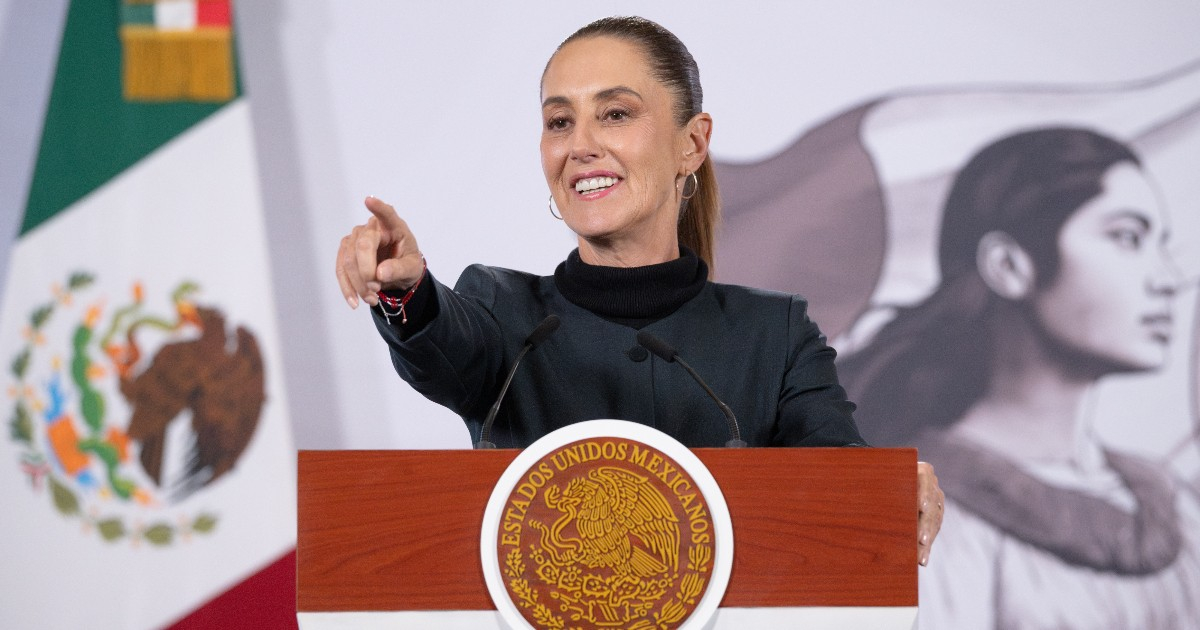
During her morning briefing at the National Palace on Monday, Mexican President Claudia Sheinbaum revealed that Mexico is actively working towards the resumption of oil shipments to Cuba. This effort involves private companies authorized to transport fuel to the island, positioning the operation strictly as a commercial endeavor rather than a humanitarian one.
Sheinbaum emphasized that while the supply has not yet recommenced, efforts have been underway for quite some time. "We're actively pursuing this, primarily through... it hasn't restarted yet, but the mechanism would involve private companies with permits to deliver fuel to Cuba. We hope to resume soon on a commercial basis," she stated.
The last shipment of Mexican oil arrived in Cuba at the end of January, when Pemex canceled the dispatch of the Swift Galaxy vessel without official explanation. This decision followed pressure from the Trump administration, which signed Executive Order 14380, imposing secondary sanctions on countries supplying crude to the island.
Current Energy Supply Challenges
Since then, the only substantial energy relief came from Russia, with 100,000 metric tons of donated crude in March 2026, supplies that were dwindling by June. Russian Foreign Minister Serguéi Lavrov had cautioned in April that this aid would "likely last a couple of months."
Sheinbaum linked the potential resumption to the 176 economic measures approved by the Cuban National Assembly on June 19. These reforms expand the space for private enterprises, remove the worker cap for small and medium-sized businesses, and allow for private banking and increased foreign investment.
"With the new provisions approved by the Cuban Congress and government, there is potential for greater commercial relations with Mexican entrepreneurs in Cuba," Sheinbaum remarked, as reported by Milenio.
Navigating U.S. Sanctions
The shift towards using private companies as the conduit for shipments is also a response to U.S. sanctions imposed in mid-June on CUPET (Cuba-Petroleum Union) under Executive Order 14404. This order froze the Cuban state oil company's assets under U.S. jurisdiction and warned foreign businesses of possible repercussions.
By engaging with private Cuban entities empowered by recent reforms, Mexico aims to circumvent these restrictions.
Sanctions on CUPET have already halted a prior attempt: Vanguard Energy suspended a shipment of 250,000 barrels of fuel to Cuba, citing "operational limitations," and Miami-Dade revoked its commercial license.
Sheinbaum stressed that Mexico's humanitarian support to the island continues alongside commercial negotiations. Since February, Mexico has sent over 4,800 tons of aid to Cuba, including food, medicine, and solar panels.
Severe Energy Crisis in Cuba
In June, Cuba faced its most severe energy crisis in years, with power shortages reaching up to 2,174 MW, and availability ranging from only 960-1,160 MW against a demand of 2,500-3,150 MW. Some areas experienced blackouts lasting up to 48 consecutive hours. Santiago de Cuba's Electric Company admitted on June 18 that it could not even ensure two hours of electricity per day in some circuits.
In 2025, Mexico provided nearly 17% of Cuba's fuel consumption, with hydrocarbon exports valued at $560 million annually and an average of 17,200 barrels per day, marking the highest level in 25 years. These operations were managed by Gasolinas del Bienestar, a Pemex subsidiary eliminated in May 2026.
FAQs about Mexico-Cuba Oil Relations
Why is Mexico resuming oil shipments to Cuba?
Mexico is looking to resume oil shipments to Cuba through private companies for commercial purposes, not humanitarian ones, aiming to strengthen economic ties amid Cuba's ongoing energy crisis.
How did U.S. sanctions affect Mexico's oil supply to Cuba?
U.S. sanctions on CUPET have complicated direct state-to-state oil supplies, prompting Mexico to consider private companies for transferring oil to Cuba to bypass these restrictions.
What are the economic measures approved by Cuba that impact this decision?
The Cuban National Assembly approved measures allowing greater private enterprise, lifting worker caps on small businesses, and permitting private banking and foreign investment, facilitating increased commercial exchanges with Mexico.