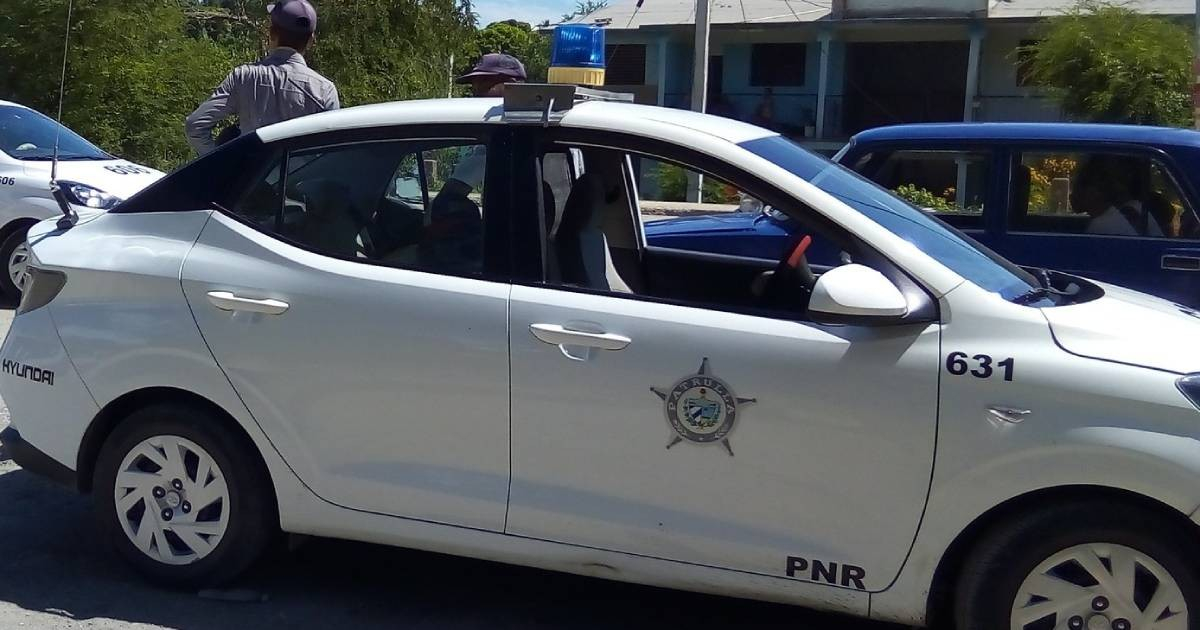
In recent days, law enforcement in Guantánamo has apprehended 11 individuals associated with three gangs responsible for a string of violent assaults in the city's central areas, according to official reports.
Many of the suspects were caught red-handed by police during the early morning hours, while others were captured thanks to the cooperation or direct involvement of the community, as reported by the Facebook page "Guantánamo and its Truth," managed by the Ministry of the Interior (Minint).
The gangs systematically operated at night, targeting specific urban locations: Camilo Cienfuegos Avenue, the vicinity of the train station, and Paseo Street from 1 Oeste to Pedro Pérez. They have been linked to at least nine criminal incidents.
Their method was straightforward: masked and armed with knives, the assailants randomly chose vulnerable individuals — those alone, distracted, or holding a phone — and swiftly robbed them of cell phones, bicycles, mopeds, backpacks, and other personal belongings.
According to the source, some of the stolen goods have been recovered by the police, and efforts are underway to track down items that may have been sold to receivers. Investigations remain active, and further arrests have not been ruled out.
The report highlighted a significant detail about the suspects: most were young, unemployed individuals from areas within the main municipality, such as the south, north, and Los Cocos.
The citizen's role in several arrests was also noted as a "game-changing factor." In some instances, suspects suffered injuries after resisting arrest by neighbors, a pattern becoming common in Cuba amid perceived police ineffectiveness.
"People are no longer willing to be passive victims, which increases the risk for those who choose to commit crimes," the publication emphasized, though it did not acknowledge the dangers faced by civilians confronting armed criminals.
The security situation in Guantánamo has progressively worsened in recent years. As of October 2023, residents already expressed fear of venturing out at night, and this trend has visibly intensified by 2026.
In late February, a young man named Vilmeidis was violently killed during a party in the Maisí municipality; authorities later identified the suspected perpetrator and were investigating two others. That same month, Osniel Puentes Cueto, 19, was murdered in Paraguay, with police confirming the arrest of the alleged culprit.
Elsewhere, eight young people were detained in Guantánamo for systematically stealing solar lamps from streetlights, with at least 10 incidents reported in May and over twenty devices recovered. Shortly after, a diesel theft network from a 110 kV generator was dismantled, resulting in seven arrests and the recovery of approximately 300 liters of diverted fuel.
Nationwide, the Cuban Citizen Audit Observatory documented 2,833 verified crimes across Cuba in 2025, marking a 115% increase from the previous year, with thefts being the most prevalent crime, totaling 1,536 cases.
Extended power outages have created an environment conducive to nighttime crime across the island. In Guantánamo, darkness from power cuts has been exploited for both infrastructure thefts and street assaults, while the economic crisis and youth unemployment serve as structural factors fueling criminal activity.
Understanding the Crime Surge in Guantánamo
What has contributed to the rise in crime in Guantánamo?
The increase in crime in Guantánamo is largely due to prolonged power outages, which create opportunities for nighttime crimes, coupled with an economic crisis and high youth unemployment.
How have residents responded to the crime wave?
Residents have become more proactive in tackling crime, with some participating directly in arrests, demonstrating a shift from being passive victims to taking action against criminals.
What measures are being taken to combat crime?
Authorities are actively investigating and making arrests, with some stolen goods recovered. However, the ongoing power outages and economic issues present significant challenges.