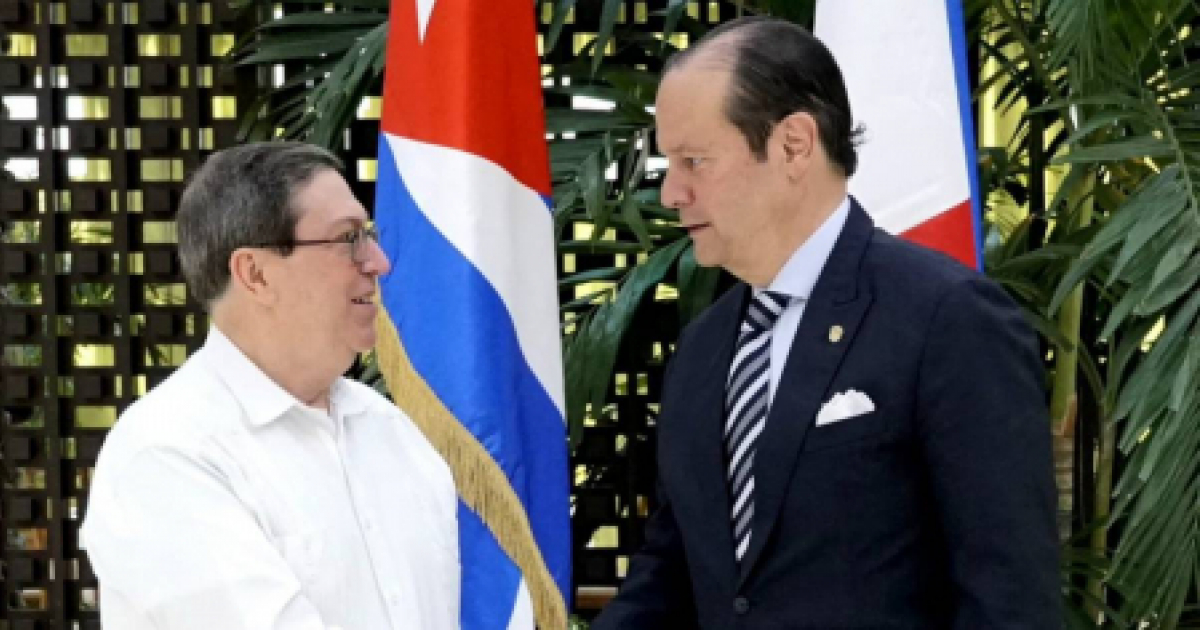
On Monday, Panama's Foreign Minister, Javier Martínez-Acha Vásquez, revealed that his country has formally extended an offer to serve as a neutral venue for diplomatic discussions between Cuba and the United States. The Cuban regime has reportedly responded favorably to this proposal.
The announcement came during a press briefing ahead of the 56th OAS General Assembly held in Panama City. Here, the Panamanian diplomat expressed his government's readiness to act as a mediator between Washington and Havana.
Panama's Role as a Diplomatic Mediator
“Panama has positioned itself as a country where dialogue could occur, grounded in mutual respect and equality,” the foreign minister stated.
Martínez-Acha mentioned that while Cuba has agreed to the idea, the United States has yet to commit, although it remains open to the possibility.
Following his visit to Havana on March 25th, where he met with Cuban Foreign Minister Bruno Rodríguez Parrilla, Martínez-Acha outlined the mediation's goal as fostering gradual concessions that lead to tangible progress on the island.
Challenges and Opportunities in U.S.-Cuban Relations
“Our aim is to encourage dialogue that results in understanding and concessions, advancing Cuban society towards 21st-century progress, economic openness, and eventually, a political process that meets Cuban interests,” he emphasized.
The diplomat acknowledged the external limits on influencing the bilateral relationship: “There are dynamics at play here that even we don't fully grasp.”
Panama's offer arises amid ongoing tensions between Washington and Havana. The Trump administration had imposed over 240 sanctions on Cuba, reinstated the island on the list of state sponsors of terrorism, and extended the embargo until September 14, 2026.
Despite these setbacks, Cuban Deputy Foreign Minister Josefina Vidal stated in late May that the diplomatic channel with Washington remains "open," albeit with "limited progress."
Broader Diplomatic Efforts
Discussions include the sensitive issue of potentially repatriating up to 500,000 Cubans residing in the United States, a matter of significant concern to the Cuban diaspora.
Apart from this mediation initiative, Martínez-Acha disclosed ongoing diplomatic efforts to address the situation of seven Panamanian citizens detained in Cuba on charges of opposition propaganda. Of the ten Panamanians arrested in late February, three have since been released; the remainder are undergoing legal proceedings.
During the same press briefing, the foreign minister reaffirmed Panama's recognition of Edmundo González as Venezuela's elected president, stating, “For Venezuela to integrate into the Latin American community, it must have a government backed by election results.”
Panama has a history of facilitating diplomatic breakthroughs between Cuba and the United States. In April 2015, it hosted the Summit of the Americas, where Raúl Castro and Barack Obama famously shook hands, marking a thaw in relations. The Panamanian government now seeks to revive its role as a diplomatic bridge in the region.
Key Aspects of Panama's Diplomatic Initiative
What has Panama offered in terms of U.S.-Cuba relations?
Panama has proposed to host diplomatic talks between the U.S. and Cuba, serving as a neutral ground for discussions aimed at improving relations.
How have Cuba and the U.S. responded to Panama's offer?
Cuba has accepted Panama's offer for dialogue, while the United States has not yet committed, although it considers the option viable.
What are the main challenges in U.S.-Cuba relations?
Challenges include numerous U.S. sanctions, Cuba's inclusion on the terrorism sponsor list, and issues like potential repatriation of Cuban residents in the U.S.