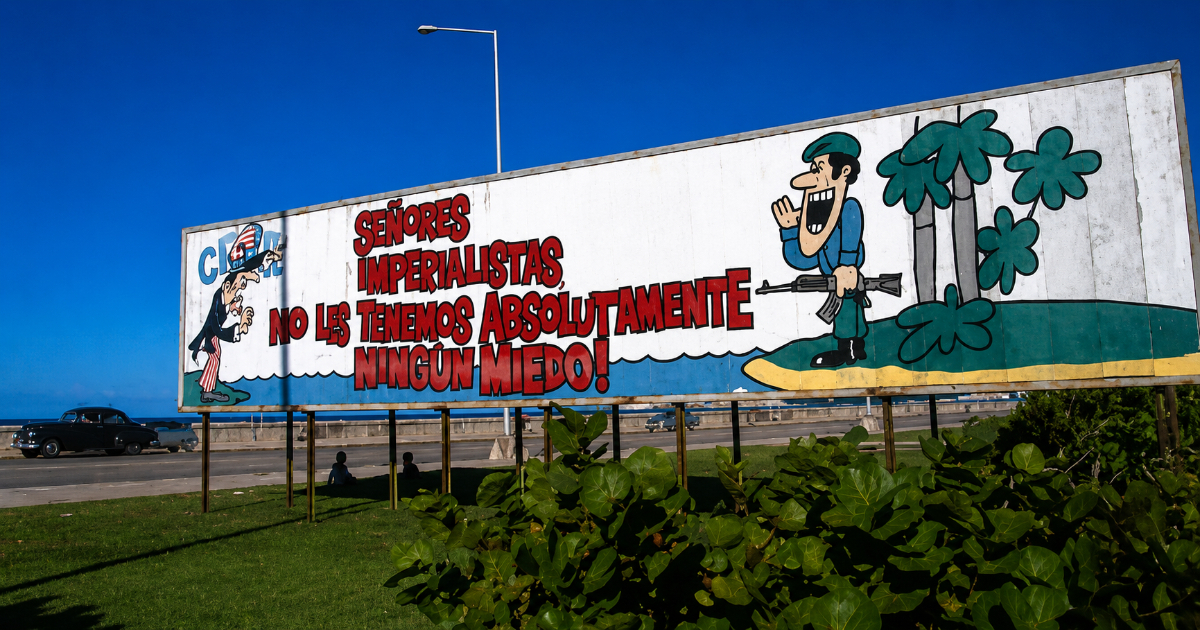
For many years, anti-imperialism was more than just a political slogan in Cuba; it was a foundational element on which the regime built its legitimacy. This concept was used to explain Cuba's foreign policy, justify internal sacrifices, unify the nation against a common adversary, and present the so-called "Cuban revolution" as a symbol of resistance to the United States.
The narrative of anti-imperialism infiltrated all aspects of Cuban life. It was present in the speeches of dictator Fidel Castro, entrenched in Communist Party documents, echoed in school textbooks, and propagated by youth organizations, official media, and revolutionary diplomacy. It was also a central theme in international forums, the Non-Aligned Movement, and solidarity campaigns with Latin America, Africa, and Asia.
For over fifty years, much of the revolution's history was portrayed as a relentless struggle against the "Yankee imperialism." However, it's striking that more recent speeches and statements by those in power have noticeably omitted this language.
The Silent Shift
In his first public interview, Raúl Guillermo Rodríguez Castro, known as El Cangrejo, focused on dialogue, mutual respect, civilized relations, investments, business, and cooperation. There was no mention of imperialism, anti-imperialist struggle, or resistance against imperial forces.
This change in rhetoric is evident across much of the regime's current discourse. Terms that once dominated political dialogue have been pushed aside or diminished in prominence. This shift seems deliberate, reflecting a vastly different context for Cuba's leadership today.
The Role of Anti-Imperialism
During the Cold War and beyond, anti-imperialism served the Cuban regime exceedingly well. It was a tool for explaining international conflicts, criticizing U.S. sanctions, justifying Cuba's political system's uniqueness, and framing economic hardships as results of continuous external aggression. Above all, it helped construct a legitimacy based on resistance.
The revolution was not merely a political project; it was portrayed as a bastion of defiance. The power structure was not only governing but also resisting. This narrative endowed the regime with a moral authority that was difficult to challenge within its ideological framework.
Facing a New Reality
Yet the circumstances that once made this discourse effective have evolved. Cuba is grappling with a severe economic crisis, exacerbated by the fall of Nicolás Maduro and intensified U.S. pressure. The regime needs investments to survive, requiring funding, market access, and stabilization of the National Electric System.
Moreover, Havana is increasingly compelled to engage with the very nation it long portrayed as its "historical enemy." Potential agreements with Washington are no longer a secondary concern but a strategic necessity.
These potential agreements are not solely economic; they also entail demands for openness, institutional reforms, regulatory changes, and transformations that challenge the core of the regime's totalitarian communist model.
The Uncomfortable Legacy
This is the dilemma facing Cuba's ruling elite. They can no longer champion anti-imperialism with the same fervor as in the past. Pragmatism, dialogue, and projecting a stable image to attract capitalist partners are now necessary.
However, they cannot outright reject anti-imperialism either, as it would mean questioning a fundamental part of their historical narrative and admitting that a principal ideological pillar of the "Cuban revolution" no longer serves its intended purpose.
The result is silence. There is no explicit revision or doctrinal shift acknowledged; instead, the topic is simply avoided, as though the issue could disappear through omission.
For decades, the regime instilled in generations that anti-imperialism was a moral and political obligation, a national identity marker, and an inseparable element of revolutionary political culture. Now, the heirs of this system appear more comfortable discussing investments, business, international cooperation, and dialogue with the U.S. than revisiting those old slogans.
This transformation is significant because anti-imperialism was not a peripheral idea within the revolution. It was foundational in justifying policies, sacrifices, and historical decisions for over sixty years.
The problem for the regime may not be that anti-imperialism has ceased to exist, but that it no longer aligns with the reality they must manage. Modern Cuba seeks to attract foreign capital, rebuild diplomatic bridges, and alleviate economic pressures threatening its stability while attempting to preserve the historical legitimacy of a system largely built on confrontation with the United States.
Thus, anti-imperialism has become an uncomfortable legacy, a constant reminder of a narrative that was once crucial for the regime's political survival but now hinders some of its most pressing objectives.
The question is no longer what anti-imperialism meant for the "Cuban revolution." Instead, it is what a political elite does when one of the banners that most legitimized its power becomes an obstacle to ensuring its "continuity." This remains an unanswered question for the regime.
The Future of Anti-Imperialism in Cuba
Why has Cuba's rhetoric shifted away from anti-imperialism?
Cuba's leadership has recognized the need for economic survival, requiring foreign investments and improved international relations. This necessitates a shift in rhetoric to attract capitalist partners and stabilize the economy, moving away from the traditional anti-imperialist narrative.
What role did anti-imperialism play in Cuba's political history?
Anti-imperialism was a central element in legitimizing the Cuban regime, explaining international conflicts, justifying internal policies, and portraying economic challenges as results of external aggression, thereby constructing a moral authority based on resistance.
How does the current economic situation affect Cuba's political narrative?
The severe economic crisis demands foreign investment and cooperation, requiring a rhetoric shift to project stability and pragmatism, making the old anti-imperialist narrative less viable in attracting necessary international support.