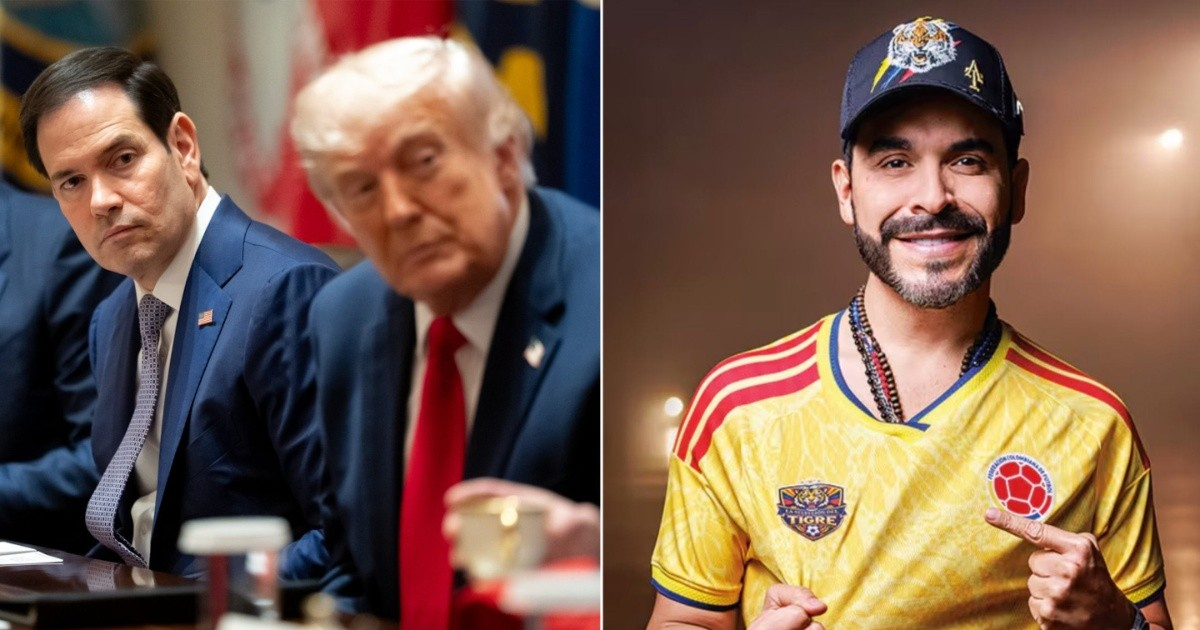
On Sunday, U.S. Secretary of State Marco Rubio reached out via phone to Abelardo de la Espriella, congratulating him on his triumph in Colombia's presidential runoff, as indicated by the preliminary count from the National Registry that names him the president-elect.
Shortly after the polls closed, Rubio took to X to convey his message: "The Trump Administration looks forward to collaborating closely with your upcoming administration to enhance regional security cooperation, curb illegal immigration to the United States, and strengthen our economic ties. Colombia's best days are ahead."
This congratulatory note arrives amidst a narrow right-wing victory in Colombia. De la Espriella garnered 12,941,992 votes, or 49.65%, narrowly edging out Iván Cepeda Castro of the Historic Pact, who received 48.70%, with the margin being just around 250,000 votes.
Although polls had predicted a five to seven percentage point lead, the actual results were much tighter, leading to a tense election night.
De la Espriella's Response and Election Night Tensions
De la Espriella addressed the nation with a conciliatory tone, stating, "We will accept the results; we are democrats, despite being unable to campaign in several regions and facing a president and ministers actively campaigning."
Cepeda acknowledged the preliminary result on the same night, while outgoing President Gustavo Petro refused to endorse the count, citing "numerous irregularities" and questioning E-14 forms lacking jury signatures—a stance he had similarly taken after the first round on May 31, marking an unprecedented move in Colombia's democratic history.
OAS Observations and Future Prospects
Conversely, the OAS Electoral Observation Mission declared that the election day proceeded "without public order disruptions" and urged leaders to peacefully accept the outcomes.
The official tallying is set to begin Monday in the counting commissions, with De la Espriella slated to assume the presidency on August 7, 2026, concluding Petro's four-year term.
Rubio's congratulations highlight the strategic alignment between Washington and Colombia's president-elect. De la Espriella, a criminal lawyer with no prior public office experience, has proposed a "second Plan Colombia" involving U.S. military support with drones and artificial intelligence, alongside diplomatic isolation of Cuba and Venezuela—countries with which Petro maintained close relations during his tenure.
The Trump administration's backing is not new: on June 2, Donald Trump offered his "total and absolute support" to De la Espriella on Truth Social, calling him a "smart, strong, and determined" leader.
The president-elect's profile has drawn comparisons to Javier Milei, Nayib Bukele, and Trump himself, marking a significant shift in Colombia's foreign policy towards a closer alliance with Washington and a confrontational stance against the region's leftist governments.
Key Insights into Colombia's Political Shift
What are Marco Rubio's views on De la Espriella's presidency?
Marco Rubio expressed a positive outlook on De la Espriella's presidency, emphasizing a desire for enhanced cooperation on regional security, immigration, and economic ties, viewing Colombia's future optimistically.
How did the OAS describe the election day in Colombia?
The OAS Electoral Observation Mission reported that the election day in Colombia went ahead without any disruptions to public order, suggesting that leaders peacefully accept the results.
What is De la Espriella's proposed 'second Plan Colombia'?
De la Espriella's 'second Plan Colombia' involves U.S. military support that utilizes drones and artificial intelligence, alongside efforts to diplomatically isolate Cuba and Venezuela.