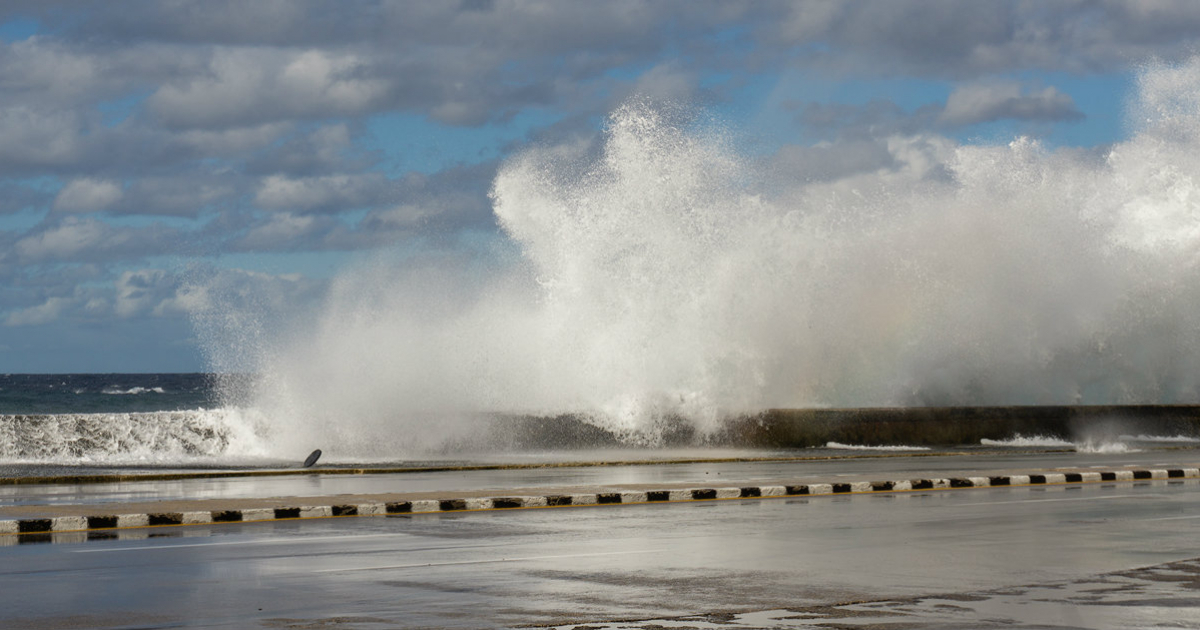
The Cuban meteorologist Yosmelvi Páez Cornell issued a warning this past Sunday concerning the anticipated impact of the El Niño phenomenon on Cuba during the winter of 2026-2027. He forecasts a cold season characterized by heavy rainfall, tornadoes, and severe weather events.
According to Páez's analysis, there's an intriguing climate paradox at play: "While we are experiencing one of the calmest hurricane seasons in decades due to a very strong El Niño, the winter season will be quite the opposite."
The expert notes that El Niño alters the global atmospheric circulation, causing cold fronts from North America to reach the Caribbean with greater frequency and intensity between November and March. This leads to increased occurrences of rain, showers, and thunderstorms over the island.
The Threat of Prefrontal Lines
Among the most significant risks highlighted in the forecast are the so-called prefrontal lines, which are storm systems that develop prior to the arrival of a cold front.
Páez explains, "These systems can produce heavy rainfall, strong winds, and even tornadoes, particularly in the western and central regions of Cuba."
Adding to these factors is a more active subtropical jet stream that promotes the formation of low-pressure systems over the Gulf of Mexico and the western Caribbean. This, combined with increased moisture transported from both basins, fuels persistent rainfall and longer-lasting storms.
Historical Context and Current Predictions
The foreseeable outcome, according to the meteorologist, is a general increase in severe weather events: "In El Niño winters, the likelihood of severe local storms, isolated hail, waterspouts, and some tornadoes rises."
Historical precedents lend weight to this warning. During the El Niño winter of 2009-2010, Cuba recorded seven cold fronts in February 2010, more than double the historical average of 3.34 for that month. The seasonal average for frontal systems in the island is 19.5, with a record of 35 during the 1976-1977 season.
This warning comes just ten days after NOAA officially declared the El Niño phenomenon on June 11, 2026, with a 63% chance of reaching very strong intensity between November of this year and January 2027.
Temperature anomalies in the Niño 3.4 region have already surpassed records from previous strong episodes, including those of 2015 and 1997.
The Dual Nature of El Niño's Impact
The same phenomenon leads experts to predict a less active hurricane season for Cuba, with El Niño naturally suppressing hurricane formation in the Atlantic by increasing wind shear.
However, a calm hurricane season does not equate to a lack of danger. Cuba is still dealing with the aftermath of Hurricane Melissa, which made landfall in the eastern part of the island on October 29, 2025, as a Category 3 storm. It damaged over 116,000 homes and affected more than 3.5 million people in Santiago de Cuba, Holguín, Granma, Las Tunas, and Guantánamo.
In addition, the island is grappling with an energy, food, and basic services crisis, making it especially vulnerable to new meteorological phenomena.
A severe winter, with urban and coastal flooding, agricultural impacts, and additional power outages, would further exacerbate living conditions for the population.
Ken Graham, director of NOAA's National Weather Service, summarized the risk with a warning that applies to both the hurricane season and the upcoming winter: "It only takes one storm to make it a very bad season."
Understanding El Niño's Influence on Cuba's Weather
How does El Niño affect Cuba's winter weather?
El Niño alters the global atmospheric circulation, causing cold fronts from North America to reach the Caribbean with more frequency and intensity, leading to increased rain, storms, and severe weather events in Cuba.
Why is there a concern for severe weather during El Niño winters?
During El Niño winters, the likelihood of severe local storms, isolated hail, waterspouts, and tornadoes increases, posing significant risks to the affected areas, particularly in Cuba.
What historical data supports the forecast of severe weather?
The winter of 2009-2010 during an El Niño event saw Cuba experiencing more than double the average number of cold fronts in February, illustrating the potential for increased severe weather activity.